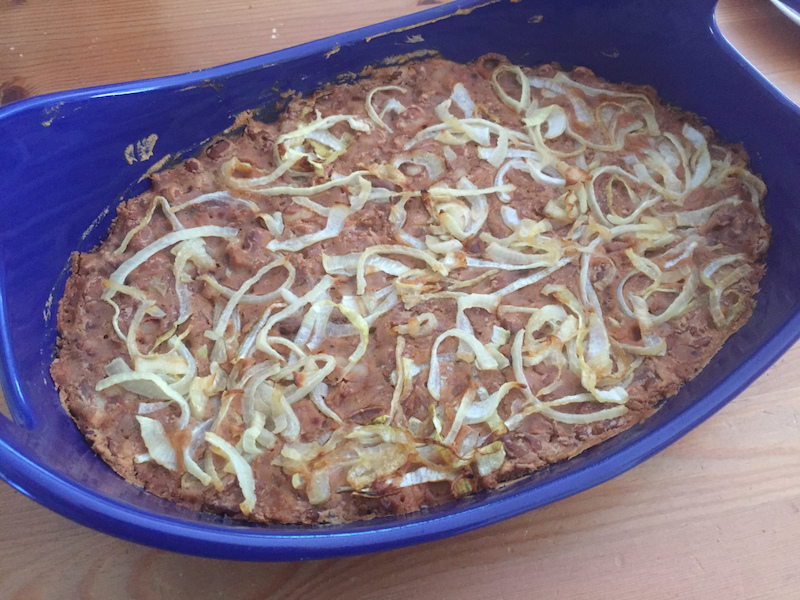
Sweet and Smoky Baked Beans with Caramelized Onions

img_5138
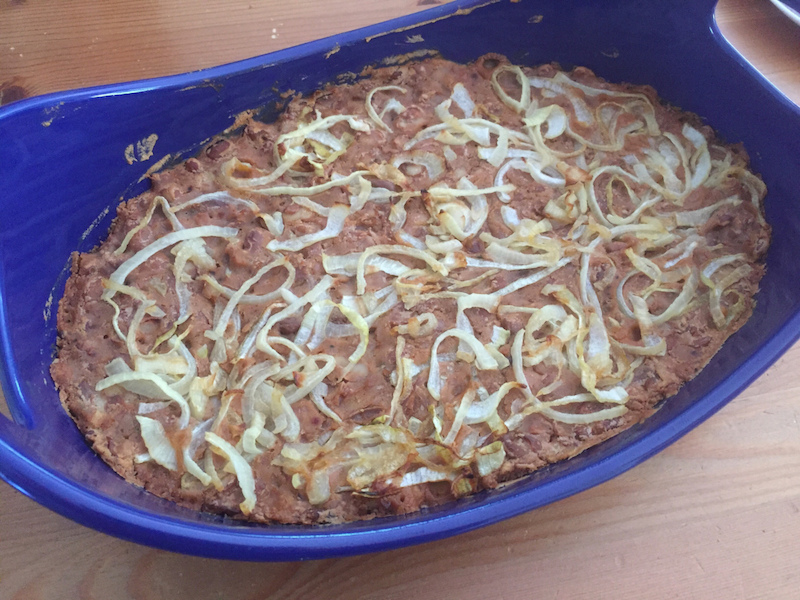
Sweet and Smokey Baked Beans with Caramelized Onions are a perfect side dish for your next BBQ, via Eat the Vegan Rainbow

Grillin’ and chillin’ – that’s what we are all going to be doing for the next couple of months. School is out, summer is here and what better thing to do than to enjoy some grilled foods and outdoor dining. So, if anyone ever asks you “Do vegans (or plant-based eaters) actually grill anything?” all you need to say is “You betcha” and invite them over for a grill and BBQ party. If you are looking for some inspiration, you may want to try these BBQ ribs, or portobello steaks, or grilled tempeh. Besides these you can grill eggplant, lots of other veggies, as well as peaches, pineapple, plums… Grilling is a lovely way to bring intense flavors out and works for a range of fruits and vegetables!

Having the right side dish on your side

Plus, vegetables (and fruit) are essential for making your cookout a really special and memorable treat for everyone. These ingredients get transformed into a lovely array of side dishes, and quite frankly I usually pile up those and completely ignore the “main” course. With things like spicy cole slaw, or corn bread (or corn bread muffins), or Mac’n’Cheese, or delicious collard greens, or potato salad, or… Well, need I say more? Side dishes are what makes these grillin’ and chillin’ cookouts fun!!!

Baked beans are an institution

Although all these side dishes are dear to my heart, none comes even close to baked beans! Baked beans are absolutely an institution, both in the USA where I live, and in the Balkans, where I come from. But we all know that they are more broadly beloved than that, and many countries and cultures across the globe have a very special and prominent place for baked beans. And although many would think that you can’t have an amazing baked beans without some smokey meat component in there, this is far from the truth.

Sweetness and smokey flavors make baked beans special

What makes baked beans really special is a combination of sweetness and smokiness. One way of getting lots of sweetness to your baked beans is to use some dark brown sugar, maple syrup or dark molasses. But, if you are not careful these can quickly overpower the dish. So, I recommend that you go easy on the actual sweetener, and use lots of sweet onion instead for a more subtle sweet flavor. Baked beans are also quite smokey, and here spices like smoked paprika and chili powder, as well as a dash of liquid smoke will go a long way. If you can’t find liquid smoke, ground cumin is an example of a common spice that has a natural smokey flavor, or you could consider adding one or two smoked peppers, whole into the beans and then fishing them out before serving.

Enjoy!!!

Sweet and Smokey Baked Beans with Caramelized Onions

What you’ll need:

1 large sweet onion, finely sliced

3 cups pinto beans, cooked or canned (if using canned rinse and drain the beans first)

2 tablespoons olive oil

2 teaspoons of McCormick® GRILL MATES® BARBECUE seasoning (see note below).

Note: to make your own seasoning that’s enough for this recipe mix 1/2 teaspoon of raw sugar or 1/2 teaspoon of dark molasses, 1/4 teaspoon garlic powder, 1/4 teaspoon smoked paprika, 1/4 teaspoon chili powder, 1/4 teaspoon salt, 1/2 teaspoon liquid smoke.

What you’ll do:

  1. Preheat the oven to 375 F (190 C).
  2. Slice the large onion in half than place the cut side down on your chopping board and slice across to create thin onion ribbons. Once the onion is sliced, use your fingers to pull the ribbons apart.
  3. Place a large pan over medium heat and bring to temperature. Add the oil and onion ribbons and caramelize the onions for 5 minutes with frequent stirring. You want the onions to be soft, and partly browned but not fully caramelized.
  4. Add the beans and the spice mix to a large mixing bowl and use your hands or a large fork to mash and mix everything together. Approximately, half of the beans should be mashed and half should stay whole. This will ensure that your baked beans are creamy, yet have an interesting texture.
  5. Spray the bottom of you baking dish with some cooking spray and spread the beans in an even layer. The best size of the dish for this amount of beans is 8 x 8 in (20 x 20 cm), or about 2 QT (approximately 2 L).
  6. Arrange the partly caramelized onions on the top. Don’t mix them in, just let the onions rest on top of the bean mix. You can get creative here and make a pattern or a design, but I went rustic!
  7. Place in the oven and bake for 20-30 minutes. When you see that the edge of your beans is browned, you are done! Serve as a wonderful side dish for you BBQ party, or use the next day to make a yummy breakfast burrito.
753b5b63-2297-4921-9f90-baef7df4d4ba
Sweet and Smokey Baked Beans with Caramelized Onions, via Eat the Vegan Rainbow – feel free to pin and share!


Copyright © Eat the Vegan Rainbow, 2018

Baked New Potatoes with Cheesy Basil Sauce, CSA Week 5

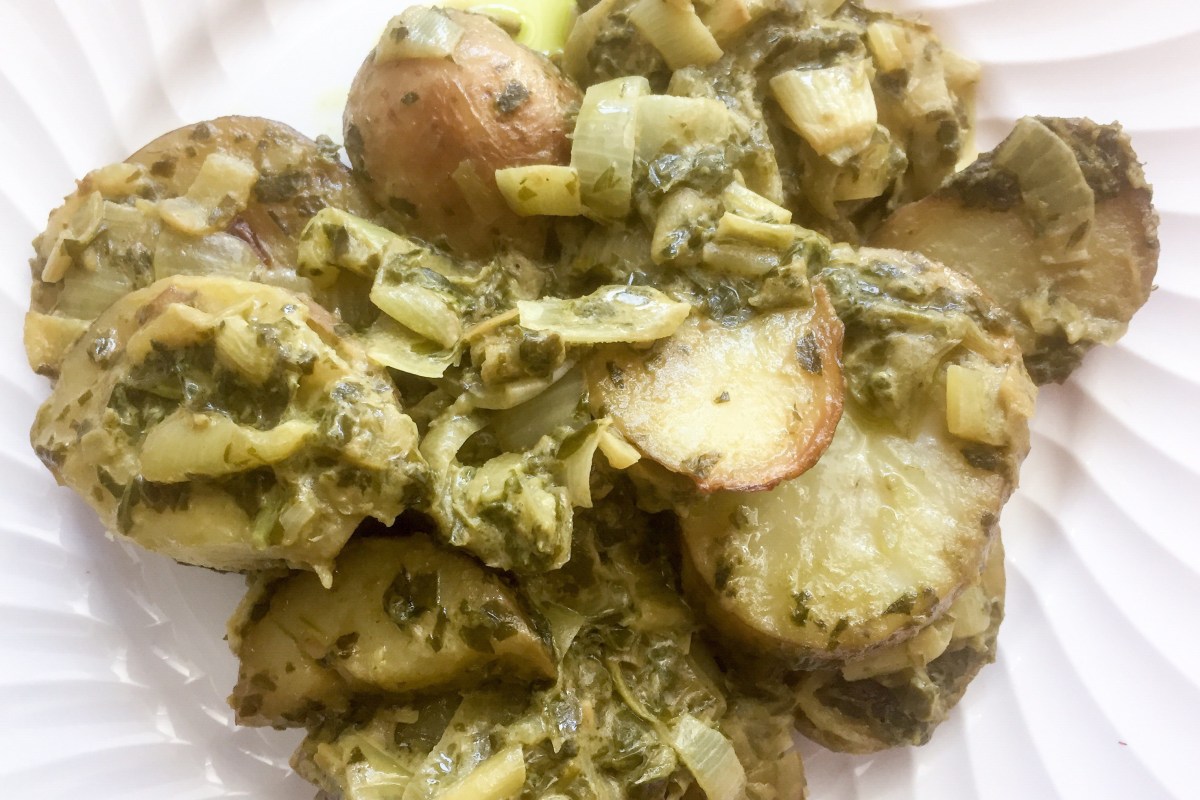
Baked New Potatoes with Cheesy Basil Sauce, via Eat the Vegan Rainbow

This summer is just flying by! I can’t believe we are already on Week 5 of our CSA – Community Supported Agriculture program. This week’s shares from our local farm, Upswing Farm, included one of my very favorite vegetables – new potatoes.

What are new potatoes?

New potatoes are, well, new! They are the first, early harvest of a potato crop, and growing up these types of potatoes were always a treat and a sign that school was out for summer and the fun was kicking into high gear. Since all the produce I ate growing up came from a farmer’s market, these new potatoes were available for couple of weeks only, making them even more special!!! Another thing that makes them special is that they are sweater than fully grown spuds, and that’s because they have higher sugar content than mature spuds, where most of their sugar has been converted into starch and stored away.

How to skin new potatoes?

New potatoes have very soft skin, and they really don’t need much peeling. What I like to do is take a peeling knife and gently go over the surface of the potato to remove only the thin outer skin without cutting in. This also helps remove any specks of dirt that are left over after the washing. An alternative way of skinning new potatoes is to place washed potatoes on a kitchen towel, sprinkle with some kosher salt and then wrap and gently roll. This will serve to exfoliate the potatoes. It may not remove all the skin but it will get rid of most of it. However, I should point out that none of this is really needed and it I purely cosmetic. New potatoes have such a soft and thin skin that you may decide to just leave it and cook them as is!

What to do with new potatoes?

These little suds are very versatile and easy to deal with. Because they are nicely sweet and soft, it is best to let them shine through. Simple boiling, roasting, or pan frying in very little oil will give you really great results (see here for details). But, you can go as wild as you like and new potatoes can be made into a potato salad, or a potato mash. Although I have not tried this yet, you can also put your new potatoes on the grill. In the recipe below I decided to go a bit wild and over the top. I baked new potatoes with some spring onions – those onions that are in between scallions and onions, with their greens still on but with a nice onion bulb now fully formed, which also came in our CSA share, and then topped them with an amazing sauce.

Easy and cheesy basil sauce

The inspiration for the sauce was another ingredient that came home in this week’s CSA share – a large bunch of fresh basil. The sauce is a simple mix of fresh basil, nutritional yeast and olive oil, and is added to the baked potatoes at the very end. The freshness of basil and the cheesy flavors of nutritional yeast make these baked new potatoes really amazing! I could eat this dish all day long – it does not need anything else really other than a cold glass of lemonade and it tastes good hot as well as cold. And if you have a summer pot luck, or a back yard barbecue, this is a great alternative to an old fashioned potato salad that you may want to try.


Baked New Potatoes with Cheesy Basil Sauce

What you’ll need:

1.5 to 2 lb (750g to 1 kg) new potatoes

4 spring onions, roughly diced

1 large bunch of fresh basil (about 2-3 cups, leaves only)

1/3 cup nutritional yeast

1/4 cup + 2 tablespoons olive oil, divided

Kosher salt to taste


What you’ll do:

  1. Preheat the oven to 350 F (175 C).
  2. Wash the new potatoes and gently remove their outermost skin (or leave the skin on if you prefer). Slice them into 1/4 in (5 mm) thick slices. If your new potatoes are really tiny you may only need to half them, or even leave the intact.
  3. Slice your spring onions any way you like. I quartered my bulbs then sliced them across.
  4. Combine your potatoes, spring onions, a pinch of salt (the amount of salt is up to you!) and 2 tablespoons of olive oil. Mix well, then pour into a deep baking dish.
  5. Bake the potatoes for 45 minutes.
  6. Place the basil into a food processor that can comfortably hold this amount of basil. Pulse until the basil is finely chopped.
  7. Add nutritional yeast, and pulse 2-3 times. Then pour in oil gradually while pulsing. Pour the sauce over the hot potatoes, mix well and return to the oven for another 15 minutes.
  8. Serve hot! You can store the leftovers in a fridge for 5-7 days and enjoy cold or reheated.

Copyright © Eat the Vegan Rainbow, 2018
SaveSaveSaveSave

SaveSave

Beet, Carrot and Apple Fritters – CSA Week 4

315c00f7-53f9-450a-b294-9b9cbd514d7a
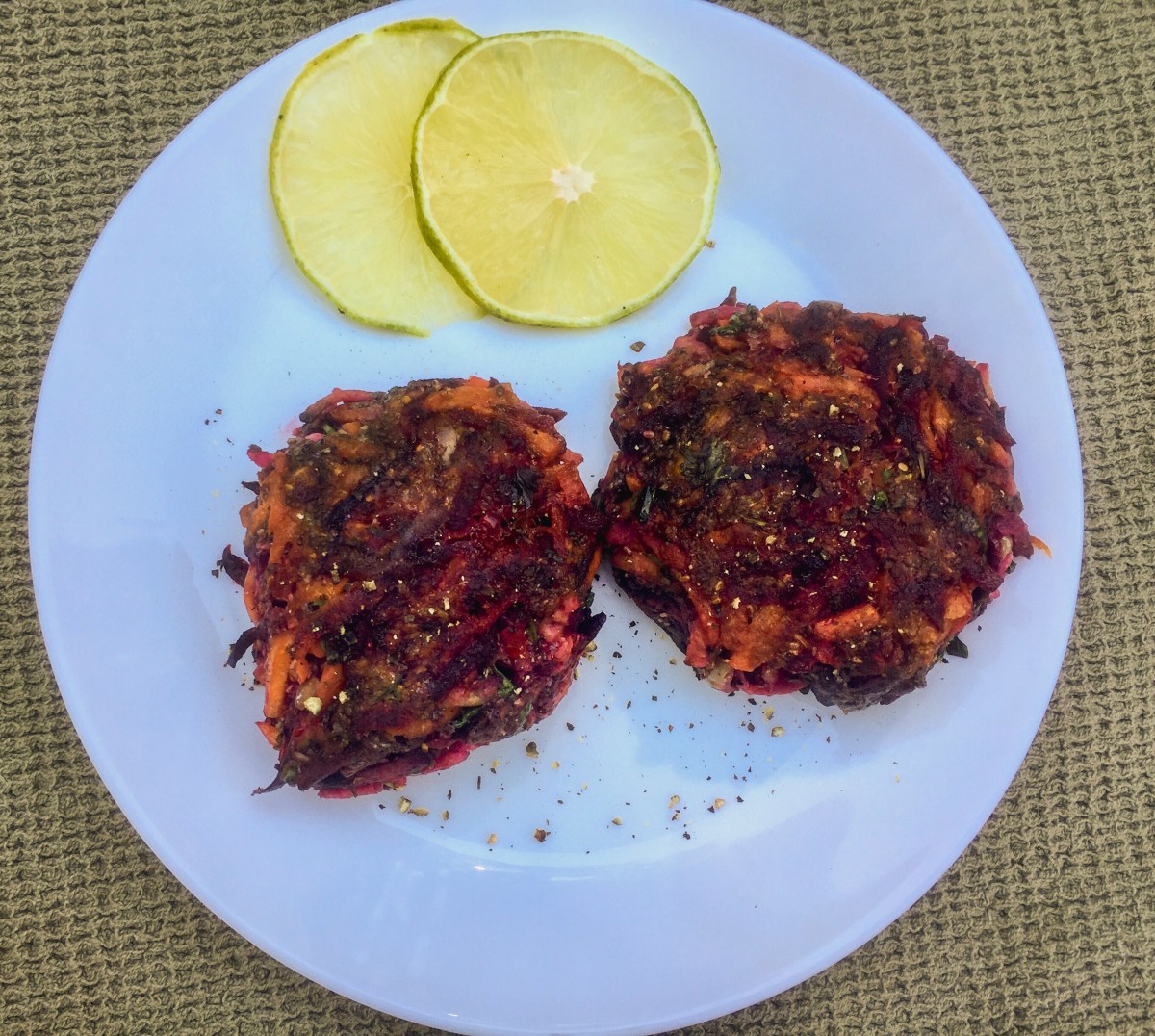
Beets, Carrots and Apple Latkes, via Eat the Vegan Rainbow

It’s early July, and here in New England (which is, for those of you who hail from across the globe, a name for the Northeastern-most part of the United States that includes six states: Rhode Island, Connecticut, Massachusetts, New Hampshire, Maine, and Vermont) the farm activities are in full swing. The greater Boston area is brimming with farms of different size and produce selection. For example, we went cherry picking on July 4th, and ended up with an amazing selection of cherries. We ate a lot, shared some with neighbors, and washed, pitted  and froze the rest. In this way, the frozen cherries are ready for smoothies, sauces or pies later in the year.

What’s in this week’s CSA basket?

At our local farm where we get our CSA (Community Supported Agriculture) share  the Upswing Farm, the vegetables this week included beets, like it did last week (and I shared  about how to pan roast beets and sauté the beet greens few days ago), carrots, zucchini, squash, cucumbers, yellow and green, cilantro, fennel, and so on and so forth. It was a really great week!

Beets are versatile!

If you are skeptical about beets, don’t be – they are versatile! Yes, you may think that I am saying that because I an Eastern European and there is a bit of a beet culture on the Balkans, but beets really can work in many different ways. In addition to the two recipes I shared last week, beets can be made into a hummus (yummy), used as a salad, sandwich or a veggie burger topping, and also made into tasty burgers (see here, and here for some great beet burger recipes to try). And they are an essential, as in not-to-be-skipped-under-any-circumstance, ingredient for fabulous BBQ ribs, either those made with wheat gluten or gluten-free.

So, how about beet fritters?

And this brings us to these fritters. Without a doubt, vegetable, and in some cases fruit, fritters are ubiquitous. Every cuisine has a recipe or two that fall into this category and take advantage of ingredients in season, often times potatoes, zucchini, squash, carrots, a grater, a bit of flour and usually some eggs, to make a quick meal. So, how about beet fritters? And how about vegan and gluten-free? Well, the recipe here answers these question in affirmative.

Chia seeds and flaxseed meal as binding agents

Grated beets, carrots and the apple make the body of these fritters. The easiest way to grate them is using a large grating attachment on your food processors, although, of course, grating by hand will work too! You don’t need to cooked the beets first, but do peel and wash them, as well as the carrots – apple is the only ingredient that does not require peeling. Just before you start grating you should start soaking your flaxseed meal by combining flaxseed meal with hot water in 1 to 3 ratio. Because the grated fruits and veggies have high moisture content, they do need extra binding agents and that’s why I recommend using quite a bit of flaxseed meal as well as chia seeds. Together, flaxseed meal and chia seeds work together to created fritters that hold their shape well without any eggs or flour.

Don’t forget the spices

I recommend using lime juice and zest, as well as freshly grated ginger and finely chopped fresh cilantro to enhance the flavors. The result are light fritters with interesting texture and


Beet, Carrot and Apple Fritters

What you’ll need:

1/4 cup golden flaxseed meal (you can use other types of flaxseed meal as well)

3/4 cup hot water

2 cups shredded carrots (4-6 carrots depending on size)

2 cups shredded beets (3-4 beets or so)

1 shredded Granny Smith apple

1 teaspoon baking soda

1 teaspoon onion powder

1 teaspoon garlic powder

1/2 lime, zest an juice

1/2 inch ginger root, grated

1/2 cup chia seeds

1/4 cup chopped fresh cilantro

Oil or cooking spray for the pan

Extra lime slices, coarsely ground black pepper and/or apple sauce for serving

What you’ll do:

  1. Place the flaxseed meal and hot water into a bowl and mix well. Let the “flax egg” rest for at least 10 minutes. The final result will be a very gooey mix that will work together with chia seeds to bind the fritters together.
  2. While the “flax egg” is resting, grate beets, carrots and an apple by hand or using a food processor equipped with a grating attachment, then transfer into a large mixing bowl. Add all the rest of ingredients, including the “flax egg”, mix well and let stand for 20-30 minutes. This resting time is needed for chia seeds to soak the extra liquid released by the grated beets, carrots and apple, and transform into a gel-like substance.
  3. Place a large pan over high heat and let it get nice and hot. Add oil or some cooking spray – if you do have a great non-stick pan you can omit the oil – and place small firm patties in. To form a patty, take about 1/4 cup worth of your mix, and using your hands form a 1/2 inch thick patty. Brown over high heat for 2 minutes then lower the heat down to medium and continue browning for 3 more minutes.
  4. Flip the patties over and brown on the other side for 3-4 minutes.
  5. Serve warm as a side dish, or even as an alternative to breakfast pancakes. These fritters go well with yogurt, as well as maple sauce, and I bet they would be delicious cold as well!
BeetCarrotApple_Fritters
Beet, Carrot and Apple Fritters, via Eat the Vegan Rainbow on Pinterest

Copyright © Eat the Vegan Rainbow, 2018

CSA Week 3, Part 2: Balsamic Vinegar Glazed Beets and Turnips

img_5245
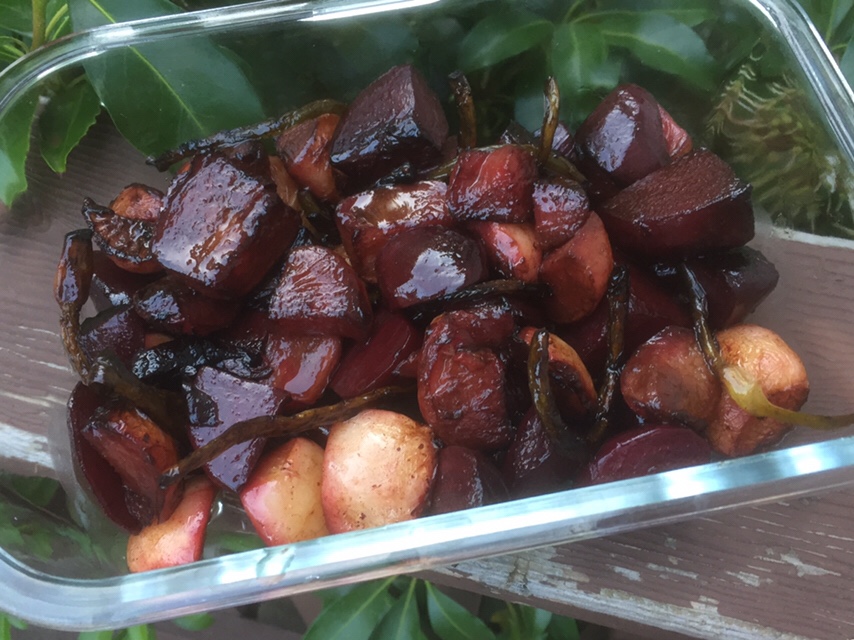
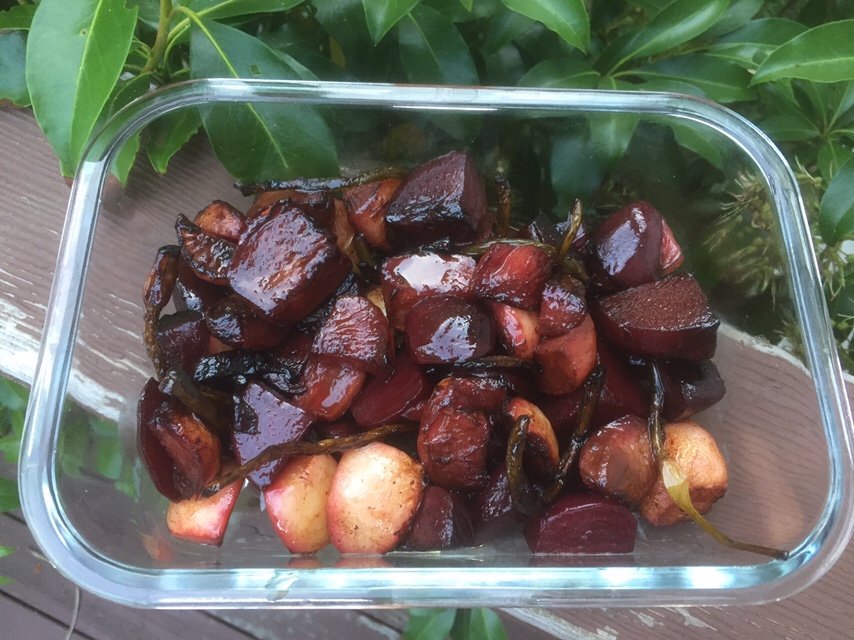
Balsamic Vinegar Glazed Beets and Turnips, via Eat the Vegan Rainbow

Community Supported Agriculture (CSA) is a lovely way to support your local farmers, enjoy the freshest produce and diversify what’s on your plate. This summer I signed up for a share at Upswing Farm, our local, small scale farm that’s relatively new – it opened it’s doors just 2 years ago. So far, the shares were great, with excellent quality of local produce as well as a couple of items that I’ve never seen in my life before.

Introducing garlic scapes

CSA-Garlic-Scapes
By Evan-Amos [Public domain], from Wikimedia Commons
In week 3, one such item were garlic scapes, which are twisty and curly green stalks that grow out of garlic plant and if left alone would develop a flower at the top. However, they are removed, usually in late spring and early summer, in order to help the growing garlic channel its energy into the bulb not the flower. The scapes are edible – who knew! – and full of the same garlic flavor so you can use them instead or in addition to (if you really love your garlic) the garlic cloves. I usually chop them finely, but they are funny looking and for this pan roast I decided to leave them intact, after trimming off the ends. If you don’t have garlic scapes, you could use garlic cloves, or whole scallions (green onions), or green (young) garlic. Any one of these will work to infuse your beets and young turnips with some nice flavors.

Pan roasting beets and turnips

The stars of our Week 3 CSA share were a bunch of beets and a bunch of baby turnips. Unlike huge and heavy turnips you usually find in the grocery store, these turnips are smaller and softer. You can cook them without peeling, and they require much less prep time then their more mature versions. They are delicious roasted, as are the beets.

But, we are in the middle of a heat wave and turning the oven on seems extremely unappealing. So, Dutch oven to the rescue! If you don’t know what a Dutch oven is, it’s a very heavy cast iron pot that is perfect for achieving nice caramelization without actual roasting. The best way to do this is to be patient, keep the heat on medium, put the lid on, and stir infrequently. This will help cook the veggies through while at the same time giving them nice roasted look and feel.

Don’t forget the glaze

What also helps the stove top roasting process is a simple balsamic vinegar glaze. This is nothing more than a splash of good quality balsamic vinegar that gets cooked and concentrated with the beets and turnip. The result is a shiny and rich side dish that works well warm as well as cold, especially as a topping for salads.

Don’t throw away the leaves

And since these are all really fresh pieces of produce, don’t forget that you can use the entire plant. So, don’t throw away the leafy parts of your beets and turnips as they can be made into a yummy side dish!


Balsamic Vinegar Glazed Beets and Turnips

What you’ll need:

1 bunch (5-6 medium) beets, washed, peeled and cubed

1 bunch young turnips, washed and cubed

5-6 garlic scapes, washed, trimmed, and roughly chopped into long pieces

2 tablespoons olive oil

1/4 cup balsamic vinegar


What you’ll do:

  1. Place a large Dutch oven or a cast iron pan over the medium high heat. Add the oil and garlic scapes. Brown for 1-2 minutes than add the cubed beets and turnips.
  2. Let the vegetables brown on one side before turning them over. This will take 5 minutes or so per side.
  3. After they’ve browned on two sides, add the vinegar and deglaze the bottom of the pan.
  4. Lower the heat to medium low, put the lid on and “roast” the vegetables for 20-25 minutes. Stir occasionally. Both beets and turnips should be soft when you pierce them with a fork, but not mushy or falling apart.
  5. Serve warm, or enjoy cold. The “roasted” beets and turnips will keep for close to a week in the fridge.

Copyright © Eat the Vegan Rainbow, 2018

CSA Week 3, Part 1: Beet and Turnip Greens

img_5195
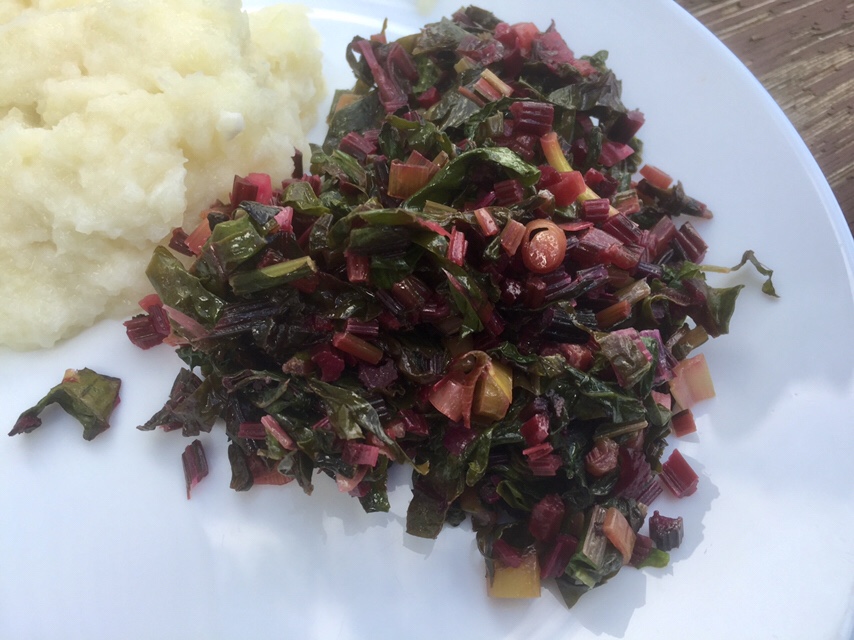
Sautéd Beet and Turnip Greens, via Eat the Vegan Rainbow

This summer I am doing something new – getting some of my produce from a local farm via the CSA, which stands for Community Supported Agriculture. I signed up for a large share at Upswing Farm, where the farmers Brittany and Kevin Overshiner are trying to protect the land they are using from the pressure to develop it into housing, as well as growing some yummy vegetables and beautiful flowers all while respecting the nature and the environment.

Beets and turnips in our CSA share

We are already in Week 3 of our CSA share, and this week the loot included a bunch of beets and a bunch of baby (young) turnips. Although I usually get both beets and turnips when they are much more mature and without any leaves to speak of, knowing how fresh this produce is made me think that I should really be using the entire plant. So, I looked around for recipes and decided that a simple saute would work well. And it did – the greens spoke for themselves with just a bit of help from young garlic* and olive oil!

The result is a wonderfully colorful side dish that goes with anything really. You can serve it with your veggie burgers, rice, pasta, mashed potatoes, or make it into a sandwich. I personally like to combine this sauté with some meatless meatballs and almond yogurt. Yummy!

And if you are wondering what to do with the rest of your beets and turnips, why not try pan roasting them on the stove top?

* Note: if you do have green garlic on hand, use both the white and the green bits, and if you don’t have access to green garlic, just use the regular kind. You can crush it, but I prefer slicing the cloves very thinly – it adds not only flavor but a bit of an interesting bite to the dish.

Sautéd Beet and Turnip Greens

What you’ll need:

3-4 cups beets greens, washed and chopped (leaves and stems from one bunch of beets)

3-4 cups turnip greens, washed and chopped (leaves and stems from one bunch of young turnips)

4 cloves garlic or 4 young (green) garlics, finely chopped

2 tablespoons olive oil


What you’ll need:

  1. Place a large sauté pan over medium heat. Add the sliced garlic and sauté for 1-2 minutes with stirring. Garlic can burn quickly, so do keep an eye on it!
  2. When garlic is slightly browned, add the chopped greens. The volume is going to be huge at the beginning but be patient and let the greens wilt slowly and gradually. I like to use a pair of tongs and keep turning the greens over every few minutes.
  3. Once the leaves are fully wilted, lower the heat and sauté for 15-20 minutes. This will help the bits of stems soften and cook through.
  4. Serve with mashed turnips, or pan roasted beets and turnips for a lovely and healthy meal!

Copyright © Eat the Vegan Rainbow, 2018

Sunday Morning Cookbook Review: YamChops

YamChops
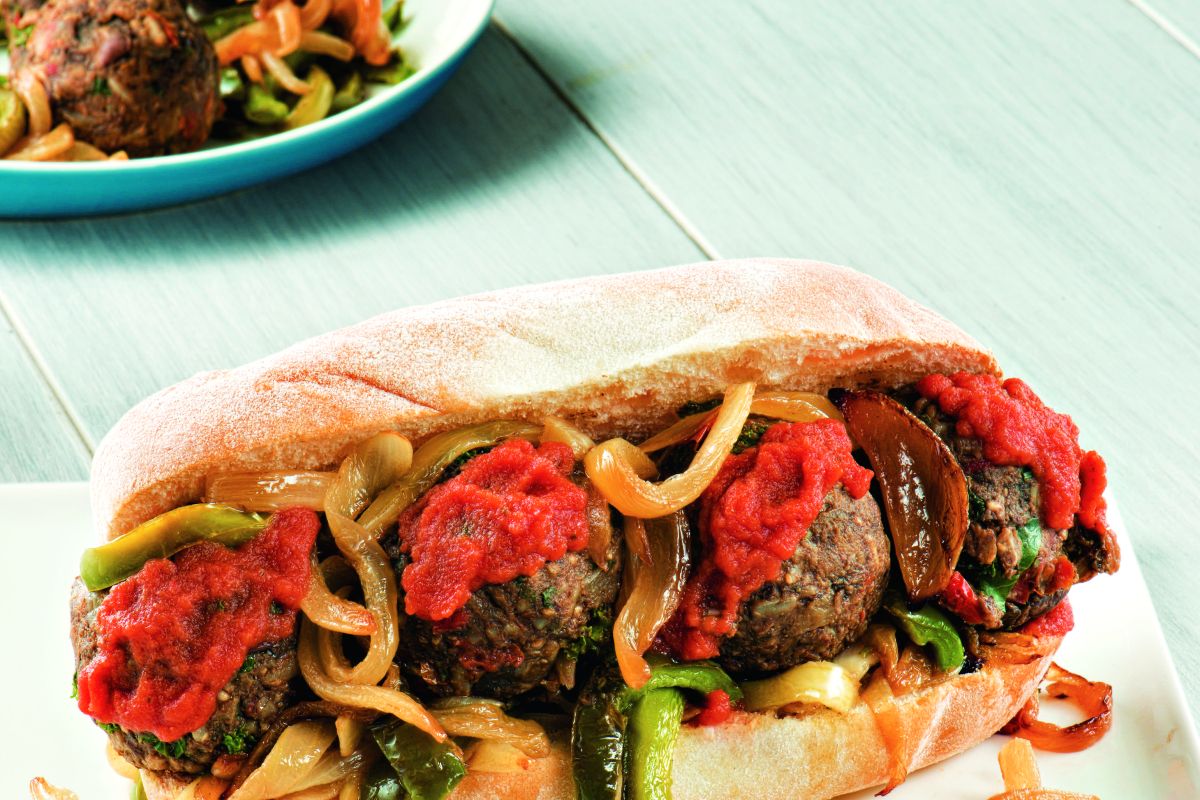
Reprinted with permission from “From the Kitchen of YamChops” by Michael Abramson, Page Street Publishing Co. 2018. Photo credit: Vincenzo Pistritto

Many of you transitioning into plant-based eating and/or vegan lifestyle may feel overwhelmed. Overwhelmed with all the details, discouraged with too many restrictions, and crushed by the broader society that has not adjusted to support our growing plant-based eating habits. I get it – I’ve been there!

What helped me are some excellent cookbooks that provided initial inspiration, especially the America’s Test Kitchen “Vegan for Everybody“, and an entire community of vegan blogs and bloggers that I discovered – Finding Vegan.  Over time, plant-based cooking and eating stopped being about the restrictions and things you can’t eat, and became about the abundance of ingredients and flavors.

Trying new recipes and ideas remains one of my favorite things to do, and I am always on a lookout for the latests cookbooks. The “From the Kitchen of YamChops” by Michael Abramson is the newest of my acquisitions. If you don’t know about YamChops, let me give some background. YamChops is a plant-based butcher shop, and when it opened in 2014 it was the first of its kind in Canada, and at that time one of only a handful vegetarian butcher shops in North America. Since then, YamChops has become well-known in Toronto, where it is located, and beyond, even earning a spot in USA Today’s list of 10 Best Gourmet Stores. They now offer lots of their products for sale on their website for those of you who live in Canada.

For the rest of us outside Canada, we now have the “From the Kitchen of YamChops” to fall back to and re-create the tastes at home. As could have been expected for a cookbook celebrating the vegan butchers in all of us, the opening chapter is all about meatless main dishes, with a range of burgers, meatballs, steaks, and even a schnitzel! There’s lots of comfort food recipes in there, and I highly recommend giving their Butternut Squash Cheeze ‘n’ Mac Casserole a try – it was delicious!!!

The story does not end at main dishes, and you will find a lot of great recipes for appetizers (including four different “ba-con” recipes – my favorite is coconut flakes ba-con, but that may change as I am looking forward to trying shiitake mushroom ba-con next), soups, salads, sauces, chutneys, dips and dressings. The final chapter is one big homage to chocolate, so your sweet tooth will not remain unsatisfied!

Out of many options, I decided to test a simple meatball recipe. My cooking is not only plant-based, but as gluten-free as possible, so recipes with gluten are a bit of a no-go for me. So, Black Bean Meatless Meatball recipe was definitely appealing because it is naturally gluten-free (if you get the right oats, so do read your labels carefully), and uses common ingredients that I always keep on hand. This made the prep easy and convenient, and these meatballs came together in a snap. You can see the full recipe below, courtesy of “From the Kitchen of YamChops” by Michael Abramson, Page Street Publishing Co. 2018.

Basically, I followed the recipe as provided, and everything came together really well. The meatballs were the right consistency, not too sticky, and not too loose, and came out moist and flavorful. The recipe is also perfect for those who are trying to cut down on their oil and fat consumption because it does not use any!

Having said that, there is one adjustment that I plan to incorporate next time I make these and that’s to sauté the green onions, red pepper and garlic for couple of minutes before mixing them in with the rest of ingredients. I found that these three components were a bit undercooked for my taste and the baking was not able to get the nice caramelized onion/garlic/pepper flavor that I prefer.

But, even without this minor change, these meatballs get a thumbs up! They were easy to make, the recipe yielded quite a good amount, and overall it is very budget friendly. So, definitely worth keeping on hand especially on busy evenings. I look forward to trying some of the other recipes included in “From the Kitchen of YamChops” by Michael Abramson, and if I am ever in Toronto again, I will definitely stop by and feast on what YamChops has to offer!!!

Photo by Vincenzo Pistritto Photo
With permission from “From the Kitchen of YamChops” by Michael Abramson, Page Street Publishing Co. 2018. Photo credit: Vincenzo Pistritto

Black Bean Meatless Meatballs

(Makes 2 Dozen (2 ounce) Meatballs)

What you’ll need: 

½ cup rolled oats

1 ½ cups canned black beans, rinsed and drained

1 tbsp egg replacer mixed with 3 tbsp (45 ml) water

1/3 cup fresh or frozen corn kernels, thawed if using frozen

¼ cup chopped green onion

¼ cup diced red pepper

3 tbsp salsa, homemade or store-bought

3 small cloves garlic, minced

2 tsp ground cumin

½ tsp dried oregano

½ tsp dried basil

½ tsp smoked paprika

¼ tsp cayenne pepper

1/8 tsp sea salt

Large pinch cinnamon

Large pinch black pepper

What you’ll do:

  1. Preheat the oven to 350F
  2. Pulse the rolled oats 3 or 4 times in a food processor. Add the rinsed beans and continue to pulse until the beans are roughly chopped. You want to keep some texture in the beans, so be sure not to over-process them.
  3. Whisk the egg replacer and water together until smooth and set it aside to rest for a couple of minutes.
  4. Empty the contents of the processor into a large bowl and add the corn, onion, red pepper, salsa, garlic, cumin, oregano, basil, paprika, cayenne, salt, cinnamon and pepper. Mix together until all ingredients are evenly distributed. Your hands are the best tool for this job.
  5. Add the egg replacer mixture, and mix everything together until the egg replacer mixture is fully incorporated.
  6. Take a small handful of the mixture, a little bigger than a golf ball, and form it into a fairly tight-packed ball. If the mixture holds together, you’re good to go. If the mixture is too wet, add 1 to 2 teaspoons of pulsed rolled oats. If the mixture is too dry, add 1 to 2 teaspoons of water. At YamChops, we use a 2 ounce scoop to measure these meatballs.
  7. Place the formed meatballs on a parchment paper lined baking sheet and place in your preheated oven for approximately 20 minutes or until firm to the touch. Gently turn the meatballs every 5 minutes to ensure even browning.
Recipe reprinted with permission from “From the Kitchen of YamChops” by Michael Abramson, Page Street Publishing Co. 2018. No further re-publishing allowed without explicit permission of the original content creators.

Disclosure: I received a free copy of this cookbook through a community of vegan bloggers. This did not influence my views about the recipes I tried thus far and mentioned above.

Gluten-free Vegan BBQ Ribs

F3265A16-4525-47CB-BDAF-363E0887C4BE
Gluten-free, Vegan BBQ Ribs, via Eat the Vegan Rainbow

For all of you out there who’s mouths have been watering when you see people share their vegan BBQ ribs recipes but don’t eat gluten, this one is for you! Of course, all of you who are gluten-lovers, I hope you check this recipe out as well – you will not be disappointed!

Big credit for these ribs goes to Linda and Alex Meyerson and their amazing new cookbook “Great Vegan BBQ without a Grill” (read my review here). Their recipe for BBQ ribs (or RIBZ, as they call them!) is amazing and I love it, but my husband has been avoiding gluten so I had to come up with an alternative.

After few trials and errors, I came across couple of recipes that use quinoa as a replacement for gluten. I have been trying to include quinoa into my cooking more often (in a gumbo-jambalaya fusion, as a stuffing for roasted eggplant, and as a perfect side dish for winter holidays), because, although almost impossible for me to pronounce it properly (is it keen-wah or kee-noah or something else?), it is super nutritious. Loads and loads of plant-based protein, fiber, minerals and vitamins!

It also has a subtle flavor which makes many people think of quinoa as bland, while I view it as versatile. This absence of strong flavor means that I can dress quinoa any way I like, and make it come out flavorful and different every time. These BBQ ribs are the proof!

As I said, the real credit goes to Alex and Linda because their idea to bake the rib meat before grilling it further is a real breakthrough. This lets your meat come together, and makes grilling a breeze. These ribs will withstand the indoor and the outdoor grilling so go crazy – and remember that you can prep your “meat” a day or two in advance and store it in the fridge, which can be a real lifesaver if you are having a large party over. All you will need to do is get your “meat” out, cut into the ribs, and grill before serving. This recipe is so fantastic that you can easily serve it to your omni friends and family, and they will not know the difference. Happy grilling!!!

Tip: this is definitely a recipe that you make in stages. You need to cook quinoa, roast some beets, sauté mushrooms, cook the beans (if not using store bought) – all before everything goes into the food processor, so be patient and plan ahead. It will be worth it!

Gluten-free Vegan BBQ Ribs

What you’ll need:

1 cup quinoa

1 1/2 cup vegetable broth

10 oz mushrooms, sautéed

2 tablespoons olive oil

1/2 beet, roasted

2 cups dark red beans (canned or homemade)

2 tablespoons tapioca starch

1 tablespoon tamari

1 tablespoon Worcestershire sauce

1 tablespoon liquid smoke (or less, depending on your taste)

2 teaspoons onion powder

2 teaspoons smoked paprika

1 teaspoon garlic powder

1/4 cup BBQ sauce (homemade or store bought, I love Stubb’s Original)

Oil or cooking spray for preparing the grill or a grill pan

Extra BBQ sauce for serving!

What you’ll do:

  1. Roast the beet – actually, instead of roasting one lonely beet, I recommend roasting a whole bunch of beets at the same time, at 425 F (220 C) for 45 minutes or so, and then using them to make these ribs, as well as eat them in a salad or make them into a hummus. This can be done on the grill too – wrap the beets in some foil and let them hang on the grill for about 45 minutes as you grill other things! You can make the beets in advance and store in the fridge for up to a week, and use in this, and many other recipes as needed. If you are in a tight time crunch you can use canned beets as well, but the roasted ones do add a bit of nice, earthy aroma that the canned ones simply don’t have.
  2. Combine quinoa and vegetable broth into a pot large enough to hold it all, place over high heat, bring to boil, then reduce the heat and simmer for 10-15 minutes until all liquid is absorbed. Set aside.
  3. Preheat the oven to 375 F (190 C).
  4. Place a large frying pan over medium high heat, add the oil then sliced mushrooms, and sauté the mushrooms until nicely browned.
  5. If you have a large food processor, you can combine cooked quinoa, sautéd mushrooms, beans, 1/2 beet, and all the rest of the ingredients – except the BBQ sauce! – in the food processor and process until smooth and homogenous. If you don’t have a large food processor, but have a stick blender you can place everything into a large mixing bowl and then use the stick blender to blend it all together. This is your rib “meat” mix.
  6. Line a 9 x 13 in (23 x 33 cm) baking dish with parchment paper and spray the bottom and the sides with some cooking spray. Pour your rib “meat” mix into the pan, even out and bake for 30 minutes, or until baked through, and browned at the edges. Let the baked rib “meat” cool. This is also a good stopping point, as the “meat” can stay in the fridge overnight and be used the next day.
  7. When you are ready to grill, slice the rib “meat” into strips – they should be roughly the same size as the real ribs, which is about 1 inch or 2-3 cm.
  8. Prepare your grill pan or your outdoor grill as you normally do. For me, this means turning on the heat to high and letting the pan heat up nice and good before brushing with a little bit of oil or spraying with some cooking spray. For the outdoor grill, I turn the burners on to the max (I have a gas grill) and leave the grill covered for 10 minutes, then I use the brush to scrape the grates, oil them with a paper towel dipped into some oil (use your heat proof tongs to handle the towel paper and stay safe), and they are ready (note that the type of a brush you use depends on the kind of the grill grates you have, so follow the manufacturer instruction closely otherwise you may permanently damage your grill!).
  9. Place the ribs on the grill or the grill pan and brush the top with some BBQ sauce. Let them grill for 3-4 minutes on one side then flip over, brush with some BBQ sauce and repeat. I usually flip the ribs three times so that each side has 2 brushes of BBQ sauce and two grilling periods, for a total of about 6 – 8 minutes per side.
  10. Serve hot with the side of your favorite BBQ sauce (I recommend warming the sauce just slightly), and enjoy with your favorite sides, such as grilled corn, spicy cole slaw, or this fantastic arugula and watermelon salad that I just discovered!

Copyright © Eat the Vegan Rainbow, 2018

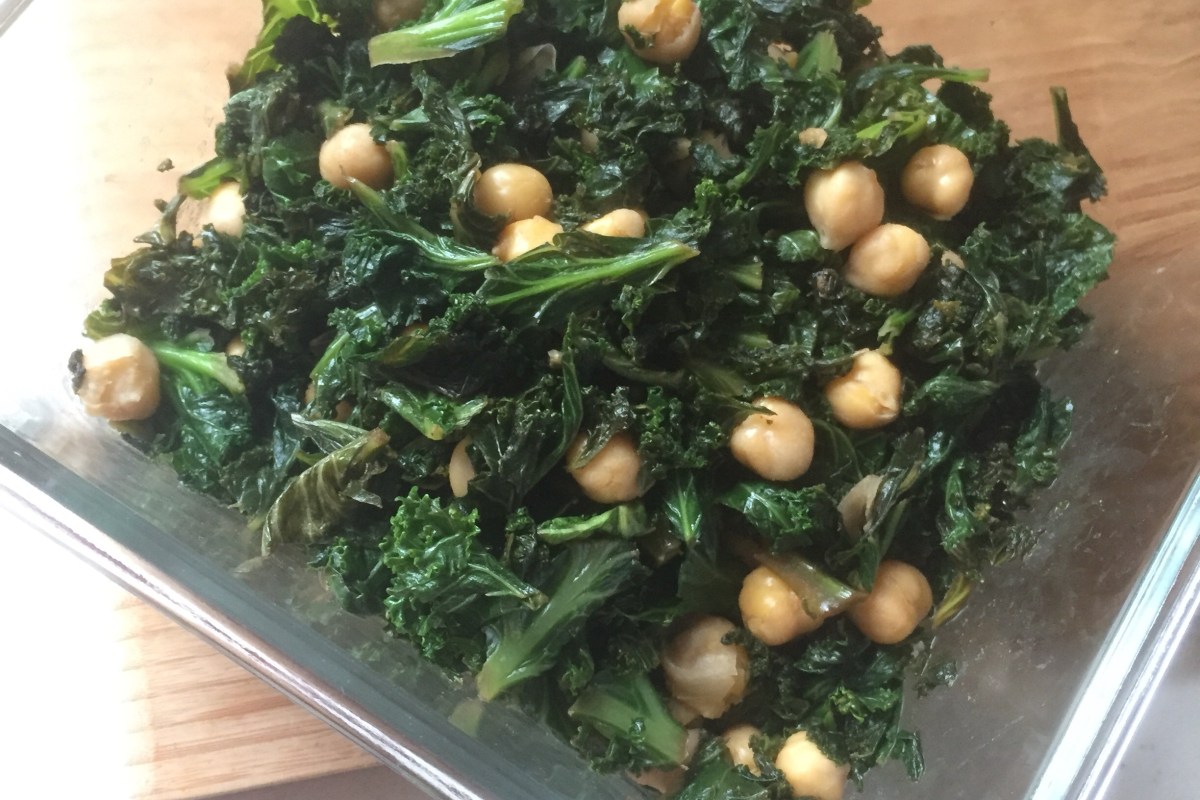
Warm Kale and Chickpea Salad

img_4717
Warm Kale and Chickpea Salad, via Eat the Vegan Rainbow

Everybody is raving about kale. It’s a must-have super food and I’ve seen so many requests from people asking for suggestions and ideas on what to do with it. An obvious choice for kale is a soup, where the earthiness of kale and it’s sturdy structure add an interesting bite to it. Many also recommend using kale in smoothies, which I am not really all that interested in doing.

Another obvious choice is to use kale in salads. Unfortunately, kale is really sturdy and the only option you have for using it in salads is to go with baby kale. I used baby kale in the past, like in this salad full of great flavors of roasted beets, leeks, baby kale, and lemon vinaigrette.

But, recently I started playing around with ways to make kale work in a salad form, and discovered that the best way to do it is to sauté the kale to soften it. Also important is to remove all the big stems first – they are tough and chewy, so best removed before cooking. This makes the prepping process a bit tedious – you need to take a bunch of kale, wash it, remove the stems, and chop it – and very often I don’t really feel like doing it. You can buy chopped kale these days; however, most brands don’t do a great job at removing the pesky stems, so you will still need to inspect the kale carefully and ensure that all stem bits are out.

So, is this salad worth the fuss? Perhaps the best way to determine is to try it once and see what you think. I recommend serving it warm, just a bit above the body temperature, but cold works too!

img_4719

Warm Kale and Chickpea Salad

What you’ll need:

1 lbs (454 g – call it 500 g) stemmed and chopped kale

4 cloves of garlic, thinly sliced

2 tablespoons balsamic vinegar

1 cup cooked chickpeas (from the can or homemade)

1 tablespoon olive oil

Salt and freshly ground black pepper to taste


What you’ll do:

  1. De-stem kale with care, and chop roughly.
  2. Place a large frying or sauté pan over a medium heat and add the olive oil.
  3. Next, add the sliced garlic and let it sauté for just a minute.
  4. Add the kale and mix well to incorporate all the garlic. Let the kale sauté for 8-10 minutes. The kale should be fully cooked!
  5. Add balsamic vinegar, mix well and keep the heat on for 1-2 more minutes.
  6. Turn the heat off, add the chickpeas, and salt and pepper (if using) and mix well.
  7. Transfer the salad into a serving dish, and let it stand until just warm. The leftovers will store well in the fridge for 2-3 days, and you can enjoy this salad without reheating. Makes a great stuffing for a pita bread sandwich!

Copyright © Eat the Vegan Rainbow, 2018


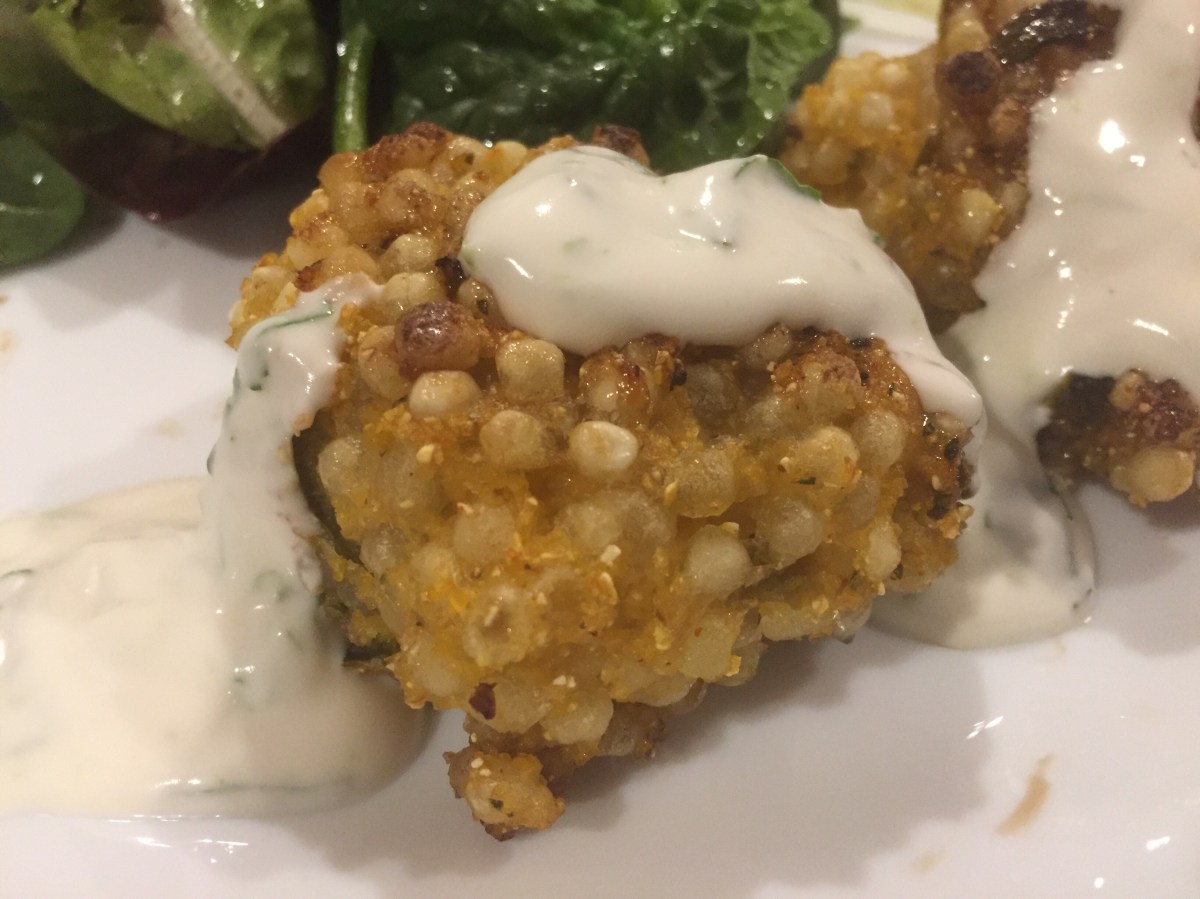
Oven-fried Jalapeño Tapioca Pearl Fritters with Yogurt Sauce

img_3423
Oven-fried Jalapeño Tapioca Pearls Fritters with Yogurt Sauce, via Eat the Vegan Rainbow

You are probably thinking to yourself “Baked Jalapeño Tapioca Pearl Fritters!? What on Earth is that? And why would anyone want to try it?”. Well, I can’t blame you for feeling that way. I would not have made these ever has it not been for a huge kitchen mistake. What I wanted to do was make a batch of Sabudana Khichdi, but my mind was on autopilot and instead of using cold water, I soaked the tapioca pearls in hot water. Unfortunately, this resulted in a pile of messy and sticky tapioca pearls, definitely not fit for Sabudana Khichdi.

It seemed such a waste to just dump everything out, so I threw in some roasted jalapeño peppers, roasted green chilis, coarse corn meal and some nutritional yeast, with a dash of oregano and garlic, and created little fritters. These went into the oven – no deep frying in my house – and came out fragrant, crunchy and delicious.

They had quite a bit of heat and punch, so I paired them with a yogurt sauce to take the edge off. If you prefer less heat in your food, dial back on the amount of jalapeños you use, or just use more yogurt sauce which has a gentle, soothing effect on the overheated taste buds. Enjoy with the side of a salad for a light meal, or serve as an appetizer with a punch.

66DBC493-49E1-4E11-A444-8BA5EB327C2E

Oven-fried Jalapeño Tapioca Pearl Fritters with Yogurt Sauce

What you’ll need:

2 cups tapioca pearls

4 cups hot water

3 tablespoon nutritional yeast

1 can chilies

1 can jalapeño

1 tablespoon oregano

2 teaspoon garlic

1 cup coarse corn meal

1 cup almond or cashew yogurt

1 tablespoon chopped cilantro

1 tablespoon lime juice

Cooking spray

What you’ll do:

  1. Start by soaking tapioca pearls in hot water for 2-3 hours. The pearls should absorb all the water and be very sticky.
  2. Add all the rest of the ingredients except yogurt, cilantro and lime juice and mix everything well together.
  3. Using your hands, form tapioca pearl balls that are about 2 in (4-5 cm) in diameter and arrange them on a baking sheet lined up with parchment paper. Spray the fritters with some cooking spray and place in the oven that has been preheated to 350 F (175 F). Bake for 20 minutes or so, until the fritters get that nice golden-brown look.
  4. Let the fritters cool before serving, and while they are cooling whisk together the yogurt sauce by mixing yogurt, cilantro and lime juice together. Serve drizzelded over the fritters or as a dipping sauce.

Copyright ©Eat the Vegan Rainbow, 2018

Meat-less Keema Matar

img_2947
Meat-less Keema Matar, via Eat the Vegan Rainbow

By now you probably figured out that I am a huge fan of Indian cuisine. Perhaps it’s the spices, perhaps it’s the long and slow simmering, perhaps is the whole culture of not eating meat that produced an abundance of vegan-friendly recipes and ingredient combinations [EDIT: I was alerted that current facts suggest that India may not be as vegetarian as previously thought; it seems that it’s a myth that India is mostly vegetarian]. Whatever it is, Indian cuisine has always been a huge inspiration for me, and I’ve been sharing some of the results on this blog. Past successes include Jackfruit Tikka Masala, as well as Chicken-less Tikka Masala made with soya chunks, and my version of Sabudana Khichdi.

This recipe is a vegan version of a minced lamb dish called Keema Matar. The recipe uses minced soya chunks that give the final dish the same consistency and appearance as the original recipe. You could use TVP (textured vegetable protein) but note that the food will probably have a softer, less chewy bite to it.

What makes this recipe work are, of course, the spices. I use some pretty standard spices like garlic powder, freshly grated ginger, chili powder, a cinnamon stick, some more specialized spices like turmeric, coriander powder and coriander pods, and some spices that you can only find in an Indian grocery store, like Indian bay leaves and matar masala.  Fear not if you don’t have easy access to these last two spices because you can use regular bay leaves and some cumin powder instead.

The best way to ensure that your soya chunks absorb all the flavors is to cook them according to instructions, which usually say “boil in water for 5 minutes”, rinse, drain, gently squeeze to remove some of the excess water, and mince them – I use a food processor for mincing – and then mix the minced chunks with spices and let them marinate for a while. (Note: if you are using TVP, you will not need to mince since the TVP flakes are already about the right size once they are fully soaked. Although hard to remove access water from TVP once it’s fully soaked, I do suggest you give it a gentle squeeze before marinating!)

Another ingredient that is needed for this dish are green peas. I use frozen peas, and I don’t bother with defrosting – just mix them into the simmering minced soya chunks and they’ll be fine. Once done, serve over  some Basmati Rice, sprinkle with some fresh cilantro and add a side of raita (yogurt sauce with chopped cucumbers and mint – I make mine with cashew yogurt and it comes out great!) or even a piece of naan and you will have an unbelievable restaurant-style dinner right in the comfort of your home.

img_2947

Meatless Keema Matar

What you’ll need:

200 g soya chunks

2 teaspoon coriander powder

2 teaspoon chili powder

2 teaspoon mattar masala

1 tablespoon grated ginger, fresh

1 teaspoon garlic powder

1 teaspoon turmeric

2-3 tablespoon oil

3-4 Indian bay leaves

1 cinnamon stick

10-15 cardamom pods

4 cloves garlic, sliced

1 onion, diced

1 tablespoon tomato paste

1 15 oz can petit diced tomatoes

1 1/2 cup green peas, frozen

Fresh cilantro for garnish

What you’ll do:

  1. Place soya chunks in a large pot, cover with water, bring to boil, and cook for 5 minutes, or according to the instructions on the box. Drain and rinse with cold water. Squeeze the soya chunks gently to remove some of the excess water, them place in the food processor.
  2. Add all the spices up to the oil and bay leaves, and process until soya chunks get a consistency of minced meat. Let the minced soya chunks and spices marinate for an hour or so on the kitchen counter at room temperature.
  3. In a heavy pot, like a Dutch oven, heat the oil over medium high heat then add the Indian bay leaves, cinnamon stick and the cardamom pods and let the aromas bloom for a minute.
  4. Add the onions and garlic, and sauté them for 5-6 minutes.
  5. Add the tomato paste, mix well and continue sautéing for another minute to brown the tomato paste just slightly.
  6. Add the minced soya chunks with all the spices they have been combined with as well as the diced tomatoes and simmer for 10-15 minutes.
  7. Add the peas, mix well and simmer for another 10 minutes. By this point, your food will be ready and your kitchen will smell fantastic. Serve and enjoy with Basmati Rice, and/or naan, and/or raita.

Copyright © Eat the Vegan Rainbow, 2018

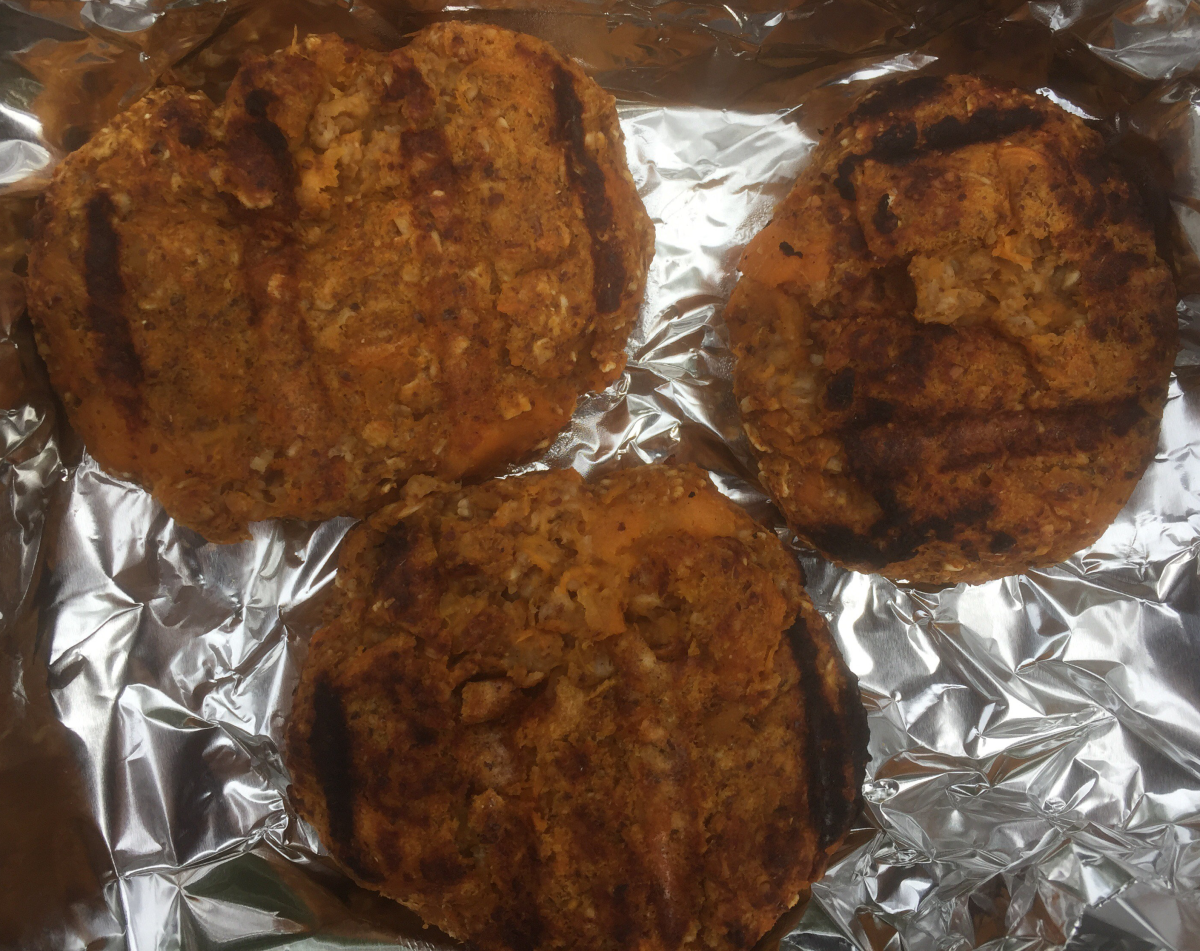
Sweet Potato Burgers

img_2978
Sweet Potatoe Burgers, via Eat the Vegan Rainbow

Let me make one thing clear – if you are looking for a veggie burger recipe that looks and tastes like meat, you really should look elsewhere since this ain’t it! But, if you are looking for a different type of burger, that is unusual yet appealing, and that is amazingly nutritious then you have come to the right place.

This is my Sweet Potato Burger which is made of roasted sweet potatoes, oats, flax meal “egg”, and a dash of very spicy adobo sauce. The patties are held together by the joined action of oats and the flax meal egg, and do just fine on the outdoor grill. The flavor is nicely sweet, perfect for combining with some mustard, pickles and lettuce. In my view, tomatoes, mayo and cheese do not work well on this burger, but caramelized onions, sautéed mushrooms, or sliced avocado would add to it. Feel free to experiment and see how it goes!

Sweet Potato Burgers

What you’ll need:

2 cups roasted sweet potatoes, mashed

1 cup rolled oats

3 tablespoons flax meal

6 tablespoons water

1 tablespoon adobo sauce

1 teaspoon maple flavor

1 teaspoon coriander powder

1/4 teaspoon cinnamon

1/8 teaspoon nutmeg


What you’ll do:

  1. Roast sweet potatoes as you would normally. I usually roast them at 425 F (220 C) without peeling for 45 minutes or so, then let them cool completely before handling. My usual batch is about 8 large potatoes and I store them roasted in the refrigerator and use them through the week.
  2. Start soaking flax meal in hot water 15-20 minutes prior to use. You can find detailed instructions on making the flax egg here.
  3. Peel two potatoes and mash them with a fork or a potatoe masher. This should yield 2 cups of sweet potatoes. Measure it out and adjust by adding and removing the mashed sweet potato. The final amount does not need to be absolutely precise but do keep it close to the recipe.
  4. Place the mashed sweet potatoe into a large mixing bowl, and add all the rest of the ingredients. Mix well, and use the immersion (stick) blender to get the consistency nice and smooth, and the oats broken up. If you don’t have the stick blender you can always use your food processor. Let the mix stand for 20 minutes or so to allow the oats to begin soaking up the excess moisture and swell.
  5. Form the burger patties, and place them on a wax paper lined platter. Place the patties in a refrigerator for up to an hour to firm up.
  6. Prepare and preheat your outdoor or indoor grill, or your grill pan in a usual way. I recommend oiling the grill grates well and grilling the burgers at medium heat. You can also use a grill pan or a regular pan – the burger will come out as delicious albeit without the lovely, charred grill marks. Sweet Potato Burgers need about 4-5 minutes per side, and they are ready to enjoy!

Copyright © Eat the Vegan Rainbow, 2018
Gluten-free and Vegan Scones with Chia and Coconut

IMG_5069
Gluten-free and Vegan Scone with Chia and Coconut, via Eat the Vegan Rainbow

I recently had a pleasure of teaching an evening plant-based cooking class at our local technical and vocational school. I enjoyed the experience immensely and in addition to having a really very pleasant evening  I have also learned about some of the things that people who are relatively new to plant-based cooking wonder and care about.

For example, I had several conversations about vegan breakfast items and whether it is possible to make vegan pancakes (yes!) and vegan crêpes (also yes!). And based on many conversations online, people are just having hard time figuring out what their plant-based breakfast options are.

What’s for vegan breakfast?

Breakfast is not as limited as people usually think. After all oatmeal, cereal with nut milk, fruits, vegetables, toast (including with avocado), smoothies, muffins, cauliflower tofu burritos, vegan “scrambled eggs”, and many, many more options are currently available. Some require a bit more hands on preparation but the offerings are as diverse as for people that eat meat, eggs and cheese. For me, a roasted sweet potato is a great breakfast that keeps me going well into the afternoon!

How about vegan baked breakfast treats?

Of course the number of options increases vastly on those days when you find yourself with extra time to do some baking. Vegan baking is actually not all that difficult. There are quite a few vegan options when it comes to replacing eggs, and nut milks usually work just as well as dairy. Plus: there are now a couple of vegan butters on the market so if the recipe asks for butter there are now alternatives to be used (including the dreaded margarine, but I don’t recommend you go there!)

Are gluten-free vegan treats possible?

Having said all that, if you are trying to be vegan and gluten-free you may be out of luck. In gluten-free baking, gluten, a protein that makes some people unhappy yet provides baked goods with their lovely structure, is usually replaced by extra eggs to keep the levels of protein high. Unfortunately, finding a plant-based replacement for eggs in this context is not easy because most options, like flax meal, bananas, apple sauce, and various starches are not protein rich; they are mostly carb heavy.

Chia seeds as an egg replacer for gluten-free vegan baking

Enter chia seeds! These little seeds are one of my current favorites. Chia seeds can be made into a pudding and they are an excellent binding agent for making seed crackers – and in this category nothing compares to Oh She Glows Endurance Crackers, so give them a try! Amazingly, they also work in these super easy and quick scones. A critical step in this recipe is soaking chia seeds for 15-30 minutes in some warm water. This will transform them into a gel like substance that will keep your scone batter together. And that’s more than half a battle won! The rest is all about mixing things together, adding the right leavening agents to helps things rise high, and some flavors in.

Vegan buttermilk trick

A common way to help a leavening agent like baking powder and baking soda is to add some buttermilk. Acidity is what makes buttermilk so special, and what provides an extra push for the baking powder and baking soda. The easiest way to make a vegan buttermilk is to add some lemon juice or lime juice to your plant-based milk, mix it together and let it stand for 5 minutes or so. And, if you don’t have any sour citrus on hand, you can also use some apple cider vinegar as well. If you are using milk with lots of protein, like soy or pea protein milk, you may see quite a bit of curdling – that’s normal.

These delicious scone will please your entire household – so you may want to make a double batch. So, next time when someone asks you what’s for breakfast you can tell them: freshly baked scones. Enjoy!


Gluten-free and Vegan Scones with Chia and Coconut

What you’ll need:

3 tablespoon chia seeds
6 tablespoon warm water

1/3 cup almond milk, unsweetened (vanilla flavor or plain)
1 teaspoon lime juice

1 cup brown rice flour
1/3 cup corn starch
1/3 cup almond flour
1/3 cup shredded coconut unsweetened
1/6 cup tapioca starch
1 teaspoon psyllium powder
1 teaspoon baking soda
1 teaspoon baking powder
1/4 teaspoon salt
1/3 cup agave syrup
1/3 cup coconut oil, melted
Unsweetened coconut flakes and raw sugar, for sprinkling on top

ChiaSeedsCoconutScones_2018


What you’ll do:

  1. Preheat the oven to 375 F (190 C).
  2. Mix chia seeds and warm water together and set it aside for 15-30 minutes until a sticky gel-like substance forms.
  3. Measure out the almond milk and add the lime juice to it. Let that stand for 5 minutes before using.
  4. In a large mixing bowl measure out and mix all your dry ingredients.
  5. Mix your wet ingredients (almond buttermilk, agave syrup, soaked chia seeds, and melted coconut oil), then add to your dry ingredients. Combine everything together. The batter will be sticky but not falling apart.
  6. Line a large baking sheet with some parchment paper. Place your batter in the middle of the sheet, and form a round, domed structure. Using a thin and sharp knife, cut your dough into six even pieces. Use your knife to separate the cur pieces out just a bit, but you don’t need to pull them apart. The scones will bake well and break of easily when they are done.
  7. Top the scones with some extra coconut flakes and sugar, then place in the oven for 20-25 minutes. Let the scones cool for 15 minutes or so before serving, then enjoy with some butter and/or jam, like his 10 minute, no sugar added blueberry jam I shared some time ago.

Copyright © Eat the Vegan Rainbow, 2018