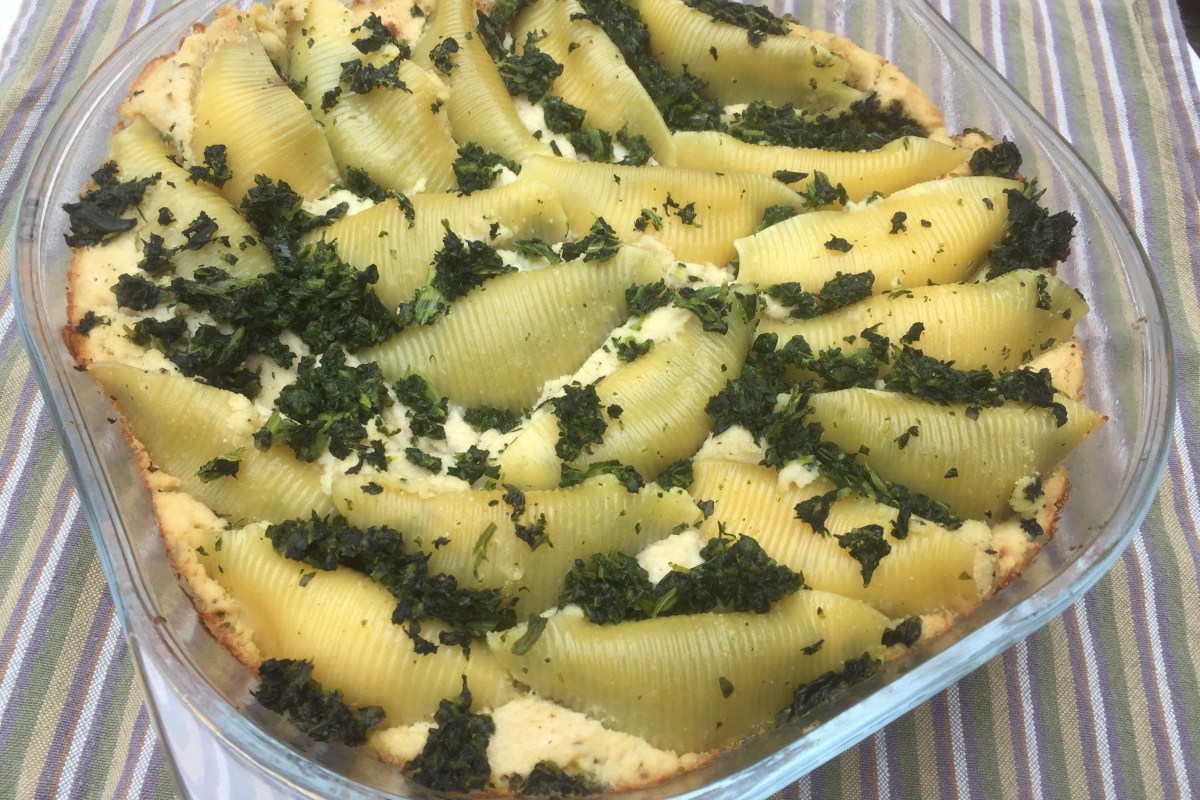
Cauliflower Ricotta and Spinach Stuffed Shells

img_3467
Cauliflower Ricotta and Spinach Stuffed Shells, via Eat the Vegan Rainbow

Ever since I’ve decided to transition into 100% plant-based eating, I’ve been going easy on pasta mostly because it is yummy and enjoyable, yet not really all that great for you given the calories and starch. I’ve tried some replacements, like spaghetti squash, which made a great Pad Thai, and black bean pasta, which made an awful base for my “Clam” Sauce.

Of all the things I’ve tried, zucchini noodles are simply the best! They work really well with meatballs or even lighter veggie toppings that I’m thinking of ditching spaghetti all together.

But, there are some dishes that are hard to imagine without pasta, like a very simple yet incredibly delicious pasta salad I made at the height of summer season, and these stuffed jumbo shells right here.

The shells are stuffed with cauliflower “ricotta” and spinach mirroring a very traditional ricotta cheese and spinach stuffed shell recipe. The shells I use here are the “jumbo” kind, and their name is well-deserved. Two or three of these makes a solid serving size, so the recipe below ought to serve four people easy.

The main departure I took from the traditional recipe, which is vegetarian, is to skip the tomato sauce, usually a simple marinara, and to use my own creation, a cauliflower “ricotta” cheese, which makes this recipe dairy-free, vegan, and plant-based.

The cauliflower “ricotta” is inspired by cashew ricotta that I’ve made in the past. I was very curious about whether cauliflower can help the basic cashew ricotta recipe (some great examples here and here), and retain all the creaminess while cutting down the cost (frozen cauliflower is cheaper than raw cashews), and the calories and fat (cauliflower has far less calories than cashews and no fat!).

The cauliflower “ricotta” works well here, and it’s a useful cheese alternative to have for other pasta dishes, or a lasagna. Amazingly, what puts this entire dish over the edge is actually a tiny bit of nutmeg. Just a pinch goes a long way, so be careful not to overdo it.

Cauliflower Ricotta and Spinach Stuffed Shells

What you’ll need:

16 jumbo shells, boiled

1 bag (1 lbs; 454 g) frozen chopped spinach

1 bag (1 lbs; 454 g) frozen cauliflower

1 cup cashews, soaked overnight

1 tablespoon white miso paste

1 teaspoon yellow mustard

1 teaspoon onion powder

1 teaspoon garlic

1/2 teaspoon ground nutmeg

Cooking spray

What you’ll do:

  1. Bring a large pot of water to boil, add the shells and let them boil for 8-10 minutes. Take the shells out, rinse with cold water, and place them aside.
  2. Preheat the oven to 350 F (175 C).
  3. Cook the cauliflower and spinach according to the instructions on the bag. You can use a microwave or a stove top method and you don’t need to thaw the vegetables but I recommend that you squeeze the access water out before using. Keep the cauliflower and the spinach in separate bowls. Cauliflower should take about 10-15 minutes to cook, and spinach about 5 minutes.
  4. Place the cooked cauliflower, soaked cashews, and the rest of the ingredients into a food processor and process until you reach the consistency of ricotta cheese.
  5. Spray the bottom of 8 x 8 in (20 x 20 cm) with cooking spray and pour in 1/2 cup of cauliflower “ricotta” and spread around to cover the bottom.
  6. Using a tablespoon, spoon some cauliflower cheese into a shell, then some spinach, and place into the baking dish. Continue with the rest of the ingredients until all the shells have been filled.
  7. Spread any leftover spinach and/or cauliflower ricotta over the top, spray with a bit more cooking spray, cover with foil and bake for 20 minutes. Uncover and bake for 10-15 minutes more until the top is golden and sides are slightly browned.
  8. Let the stuffed shells rest for 5 minutes before serving then enjoy!

Copyright © Eat the Vegan Rainbow, 2018

Vegan Zucchini Fruitcake

img_4057
Vegan Fruitcake with Zucchini, via Eat the Vegan Rainbow

Fruitcake has a bad reputation. Nobody loves it, yet puts up with it because of the tradition and whatnot. And although some of you may find it hard to believe, fruitcake can be really delicious!

In this veganized version of the milenia-old (oh, yes – fruitcake dates back to Ancient Rome) tradition, I skip the butter, extra sugar, and eggs and go really wild with dried fruits. I combined everything I could get my hands on – figs, dates, cranberries, apricots, prunes, and pineapple – with a nice selection of spices featuring orange and lime zest, as well as almond extract, cinnamon, cloves, and nutmeg. I also used some finely grated, almost sauced, zucchini as a binder, and roughly chopped walnuts and red maraschino cherries for some added texture.

The key to this cake is soaking the fruit and although you could soak the fruit in rum, as is the custom, I soaked mine in water to avoid being too over the top with the flavors and the kick to the system this cake delivers. Although most of the alcohol would evaporate as the cake bakes, I wanted to keep this one rated G so that both kids and adults can enjoy as much of it as they like and decided to skip the rum altogether. At the end, the most important thing is to let the fruit soak in liquid (alcoholic or non-alcoholic) because that will help keep the cake moist and soft.

This fruitcake is pretty rich and filling. It makes for a lovely treat, as well as an excellent breakfast choice. It is definitely one more thing to add to your list of vegan Holiday treats and traditions, like the Peppermint Bark and the Gluten-free Sweet Potato Pancakes. If you are wondering whether this cake can be made gluten-free, the answer is yes, absolutely! Just use your favorite all-purpose gluten-free flour and go for it.


Vegan Fruitcake with Zucchini

What you’ll need:

1 zucchini, small (1 1/2 cup grated)

5 medjool dates

15 dried apricots

1/2 cup dried cranberries

2/3 cup dried pineapple

5 dried figs

1/3 cup prunes

1 cup maraschino cherries, drained and roughly chopped

1 cup flour

1 cup walnuts, chopped

1 tablespoon almond extract

2 teaspoon baking powder

1 teaspoon baking soda

1 teaspoon cinnamon

1/2 teaspoon nutmeg

1/4 teaspoon cloves

Zest of 1 orange

Zest of 1 lime


What you’ll do:

  1. Combine all the dried fruits in a large bowl, cover with warm to hot water, and let soak for 30-60 minutes. Drain the fruit, pat dry to remove excess water, and chop to bits and pieces of different size. Place into a large mixing bowl.
  2. Preheat the oven to 350 F (175 C).
  3. Grate the zucchini using a fine grater or a food processor. The finer the grating the better!
  4. Add the zucchini and the rest of the ingredients to the chopped fruit and mix well until everything is combined.
  5. Line the bread pan, or any other baking pan (I used a spring form pan because it makes getting the cake out a breeze), with some parchment paper. Pour in the fruitcake batter and spread around to form a 1.5 in (3-4 cm) thick layer. The cake will not rise much, and it will be quite moist, so don’t make it too thick as your surface will burn while you wait for your center to bake.
  6. Bake for 35 min or until a toothpick comes out clean. Let the cake stand for at least 15 minutes, ideally an hour, before cutting and serving. Serve with some vegan whip cream, ice cream, or with a glass of eggnog, and enjoy the season!

Copyright © Eat the Vegan Rainbow, 2017

Bubble and Squeak – Just in Time for the Holiday Leftovers

img_3704
Bubble and Squeak, via Eat the Vegan Rainbow

Don’t worry if you have never heard about Bubble and Squeak – that just means you are not English, you don’t have any friends or family members that are English, and you have never lived in England, all of which is OK. But, if you know what Bubble and Squeak is, you are probably already smiling to yourself and licking your lips in anticipation.

My own links to England are mostly literary, as I adore Agatha Christie and Terry Prachett, and have a special place in my life for J.R.R. Tolkien, Jane Austen, A.A. Milne and Lewis Caroll, although I’ve also ingested a huge amount of TV shows, devouring every episode of Midsomer Murders, Inspector Morse,  Inspector Lewis, Poirot, Miss Marple (with all different lead actresses), and Sherlock Holmes (with Jeremy Brett!) ever made. I also have a few English friends, who enjoy sharing their recipes with me, and that’s how Bubble and Squeak came up. With an adorable name like that I had to go for it.

Now, if I was naming this dish I would call it Leftover Mash, because that’s what it is. It is used in England to revive any leftover from a roast dinner or another large, formal meal that includes potatoes, meat and veggies. The leftovers are chopped up and fried together and apparently if you are using cabbage you will hear bubbling and squeaking.

For me, it was not a large amount of leftover that made me do it, it was my attempt to give way to give Brussels sprouts another chance. I grew up eating huge amounts of cabbage – it’s one of those cultural things mixed with practical where cabbage, and especially fermented cabbage (sauerkraut) can carry you through a rough and long winter at a time when fruits and veggies were a seasonal thing (those days are gone now, by the way, with  year round availability of almost everything!). And I love cabbage, and many of it’s cousins, like cauliflower (which I used here, here), broccoli, kale (like in this soup), radishes, and many, many more. the cruciferous vegetables, as they are collectively known, are numerous and diverse, and include many things I like to eat… and there is the Brussels sprouts.

I tried Brussels sprouts several times before, mostly roasted and once boiled (never again on that one!), and was left unimpressed. But, when Bubble and Squeak was mentioned it sounded like I should give the Brussels another chance. And it worked! At the end, I am not at all sure that what I made qualifies as a traditional Bubble and Squeak, however it is a good dish for anyone looking to jazz up their potatoes, or use leftover cabbage or Brussels sprouts. I think it would probably work with leftover collard greens and spinach as well, and will probably work with leftover sweet potatoes or mashed squash.

Having said all that I did have to add one secret ingredient to make this work. My secret is bacon, or to be more precise Rice Paper Bacon. The recipe for this bacon is very similar to the one for Tofu Bacon, which I loved, so I jumped on the opportunity to give this new thing a try. The rice paper bacon worked well, it delivered on the bacon aroma, and it was very crispy, so perfect for sandwiches or similar. It also worked well with the Bubble and Squeak to add the aroma and a boost the flavor. At the end, I think tofu bacon would have worked better for this dish, but rice bacon gets big thumbs up for being a very good meat-free, homemade bacon alternative.

So with some boiled potatoes, boiled Brussels sprouts, diced onions, and rice paper bacon in hand, you will be ready for the Bubble and Squeak. All you need to do is fry it all together, or if you are a bit more health conscious sauté with only a tiny bit of oil to help everything come together. Although I have not done so myself this time around – I was in a bit of a time pinch – you can finish the dish in the oven. In retrospect, letting Bubble and Squeak sit under a broiler for less than five minutes would have given it a nice look and an interesting crunch. For those of you who are traditionalists, you are supposed to flip the whole thing half way through and brown both sides that way. I’d say, with just a bit of broiling you can skip the flipping. The whole thing is supposed to be able to slide out of the pan, but even if it doesn’t it’s still an interesting dish!

This slideshow requires JavaScript.


Bubble and Squeak

What you’ll need:

1 yellow onion, finely diced

1 red onion, finely diced

4 potatoes, boiled and mashed, or 2 cups of leftover mashed potatoes

2 lbs (900 g) or 1 stalk Brussels sprouts, boiled and chopped, 2-3 cups leftover roasted or boiled Brussels sprouts, chopped

1 cup crumbled rice paper bacon or finely chopped tofu bacon, store-bought or home-made

2 tablespoons oil, vegetable or canola


What you’ll do:

  1. In a heavy pan – oven proof if you plan to finish the dish under a broiler – heat the oil over the medium high heat. Add the onions and let them sauté until fully caramelized. This will take about 10 minutes. Note: if you are using store-bought “bacon”, chop it finely and add it now, so that it had time to render any fat, as well as brown. If you are using rice paper bacon you will add it towards the end of the cooking process.
  2. Add the mashed potatoes. If you are using the leftovers, you don’t need to worry about making mashed potato from scratch. But if you are making this dish de novo then peel, wash, chop into cubes and boil the potatoes for 30 minutes or so, than mash until rustic – no perfect smoothness required here.
  3. Add the finely chopped Brussels sprouts. Same as with the mashed potatoes, if you are using the leftovers just chop and drop, if you are starting from raw boil the sprouts for 15 minutes or so, drain and squeeze the access water out, then chop finely and add to the pan.
  4. Mix well until everything is well-incorporated.
  5. Decrease the heat to medium and let your bottom get crunchy, if not even slightly burned. Add the bacon bits, mix in gently without disturbing your crunchy bottom (no jokes, please!), then flip the Bubble and Squeak so that the top can brown, or stick the whole thing under a broiler without flipping. You can also skip the flipping/broiling and enjoy as is!

Copyright © Eat the Vegan Rainbow, 2017

Gluten-free Sweet Potato Pancakes

img_2997
Gluten-free Sweet Potato Pancakes, via Eat the Vegan Rainbow

One thing that sweet potatoes have going for them is their amazing natural sweetness. Another thing they have going for them  is their price – they are super affordable. And, for those of you keeping a nutritional score, sweet potatoes are an amazing source of vitamins, fiber and even protein.

Speaking from a recipe developer’s perspective, sweet potatoes are a versatile ingredient that lends itself to a range of recipes, from main dishes to desserts. The very first recipe I shared on this blog was the Sweet Potato Butter. More recently, I used sweet potatoes as a key ingredient in a red curry. And now it’s time to introduce Gluten-free Sweet Potato Pancakes.

The key ingredient for the Gluten-free Sweet Potato Pancakes are the roasted sweet potatoes. Roasting sweet potatoes brings out their sweetness and adds nice caramelized overtones. Plus it makes the otherwise hard potatoes easy to mash. You could boil the sweet potatoes as well, or put them in the microwave for ten minutes to soften them up, but none of these methods will help the sweetness fully develop. So, unless you are in a super huge rush do take the time to roast your spuds. What I do is roast the whole pile of sweet potatoes at the same time and stash them into the refrigerator. Then I have a roasted sweet potato on hand to use for all sort of different applications, like these pancakes.

The pancake recipe asks for two large sweet potatoes, and I mean large. They should yield anywhere between cup and a half to two cups of sweet potato purée, so find some good, big specimens for this one. Roasting sweet potatoes could not be easier. You will need to wash the potatoes, pat them dry and place them on a baking sheet – I like to line mine with either parchment paper or aluminum foil to easy cleanup more than anything else. Put the baking sheet into a hot oven – I recommend 425 F (220 C) and roast the potatoes for about thirty to forty five minutes. Take them out and let them cool completely before handling. And thats’ why is handy to have a stockpile of roasted sweet potatoes in your fridge!

One note on the flour. This recipe is gluten-free and uses a combination of white rice flour and corn starch, but if you are not looking to restrict your gluten intake feel free to use all-purpose flour. In that case you can skip corn starch and you don’t need to replace it with anything else. Two cups of all-purpose flour should work well enough.

Gluten-free Sweet Potato Pancakes

What you’ll need:

2 large sweet potatoes, roasted and peeled

2 cups rice flour

3 tablespoons corn starch

2 teaspoons baking powder

1 teaspoon baking soda

2 teaspoons imitation maple syrup flavor (or vanilla extract)

1 teaspoon cinnamon

1/4 teaspoon nutmeg

3 cups vanilla almond milk, unsweetened

Cooking spray (optional)

Topping suggestions: fresh fruit, powdered sugar, jam, maple syrup, vegan butter or cream cheese, nut butter, melted vegan chocolate…

What you’ll do:

  1. Place all the ingredients in a large blender or a food processor. Blend untill a smooth, lump-free batter forms. Pour the batter into a large bowl – this will make it easier fo you to ladle out the pancakes. If you don’t a blender or a food processor, all this can be done by hand in an old fashioned, whisk-based sort of way. If you are doing everything by hand, do spend some time on mashing the sweet potatoes – the smoother you get them the better the pancakes. Let the batter rest for about 10 to 15 minutes.
  2. Place a large frying pan over high heat. You can also use a griddle if you have one. In both cases make sure your surface is nice and hot before using. You could spray with some cooking spray if needed – some pans have a lovely non-stick surface and you can definitely skip the oil.
  3. Pour out half a cup worth of the pancake batter per pancake. This should make 5 inch (12 cm) pancakes, and the amount of batter will be enough to serve 4 to 6 people. After the first 1-2 minutes lower the heat to medium-high and let the pancakes brown. You will know that it is time to flip them when the top surface becomes nice and bubbly and almost dry. Flip the pancakes, let them brown on the other side, which will take just a minute or two, them slide them to a serving plate. To keep the pancakes warm as you work you can keep the done batch in a warm oven or under some foil or a kitchen towel. To get the pan ready for a new batch increase the heat to high, let the pan come up to temperature again and repeat…
  4. Serve warm with any topping you like, fruit, maple syrup, powdered sugar, chocolate syrup… I used sliced banana and a drizzle of softened almond butter. Yummy!!!

Note: These pancakes freeze well, so if you do end up with leftovers, let them cool than place them into a freezer safe bag or container, and you’ll have great pancakes to enjoy on another day. One trick to prevent frozen pancakes for sticking to each other is to use wax paper to separate the pancakes. You can separate them one by one, two by two, three by three, whatever is you preferred serving size. Then, when you are in a need for a quick breakfast, snack or even dessert you can take the batch out with ease. I usually zap mine in a microwave for a minute or so and they are ready. You can also use a toaster oven to heat them up, just remember that the toaster oven will dry them out a bit, so they will come out a bit less soft.

Copyright © Eat the Vegan Rainbow, 2017

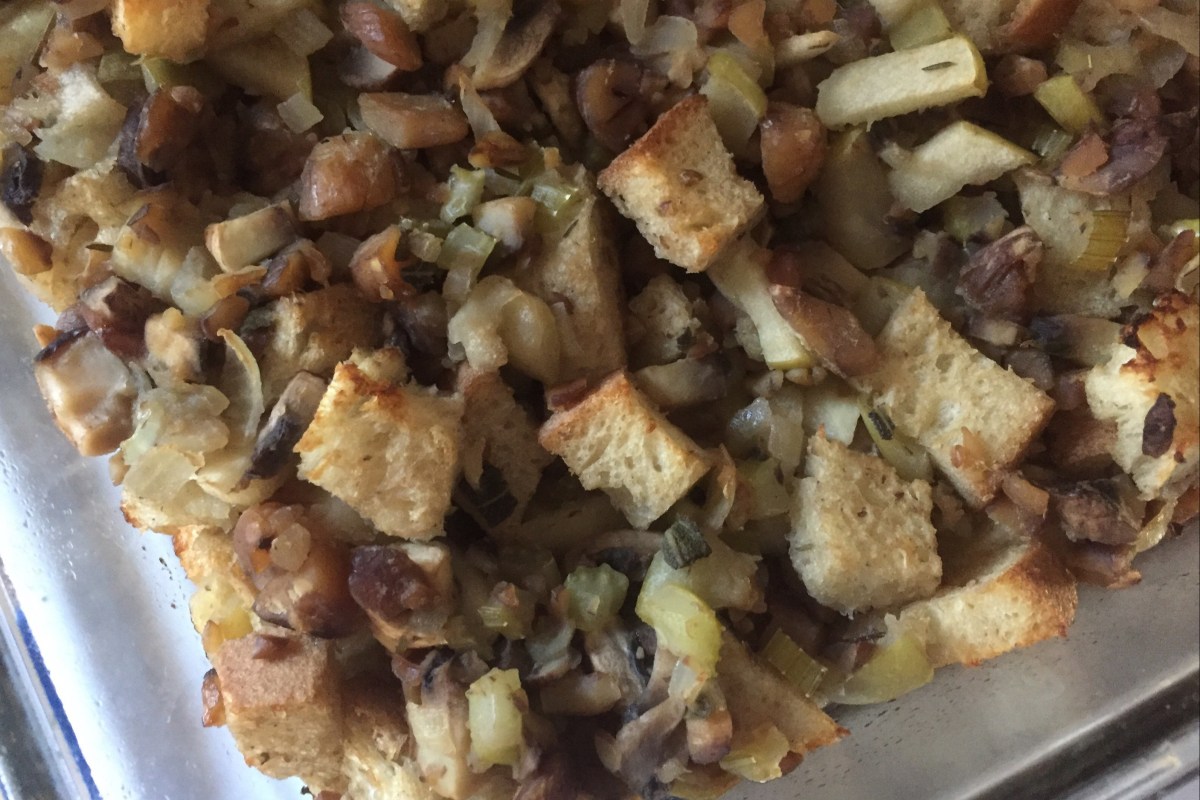
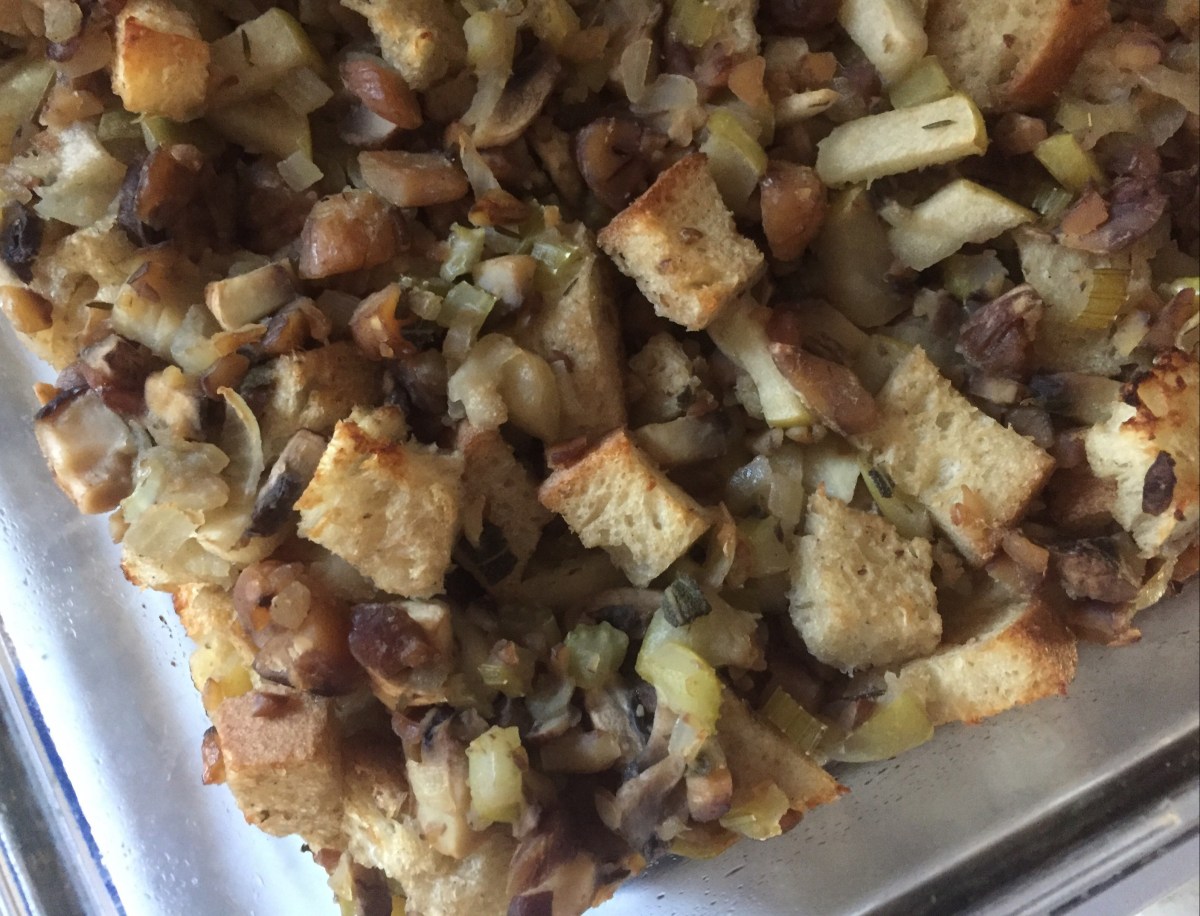
Chestnut and Mushroom Stuffing for the Best Thanksgiving Dinner Ever

img_3602
Chestnut and Mushroom Stuffing, via Eat the Vegan Rainbow

If you think you can’t live without the traditional Thanksgiving dinner with the roasted turkey, mashed potatoes full of butter, the stuffing made with rich sausage, gravy made from turkey fat, sweet potato casserole topped with marshmallows, corn bread with cheese, pumpkin pie with vanilla ice cream, and so on and so forth, let me reassure you – you can give this all up, and replace it with an amazing and creative plant-based feast that celebrates the season and gives thanks for the bountiful harvest, our friends and families, and our beautiful and extraordinary planet.

I put together this menu as a testament that food can be colorful, flavorful, aromatic, and delicious without major time and money investment. This entire menu will cost you far less than the regular Thanksgiving feast, and instead of leaving you tired and sluggish, it will leave you filling energized and elevated… and ready for whatever Black Friday may bring!

Joking aside, this menu is meant for entertaining and for making a huge impression. As any well-structure feast, my Thanksgiving offerings begin with appetizers. And since the meal is supposed to go on for an hour or more, and includes two dessert options, I am going light with the appetizer spread. My tray includes couple of different types of olives, Roasted Beets Hummus, Baked Almond Feta Cheese, and pita chips. You can make the pita chips by slicing some pita bread into wedges, spraying them with some oil or cooking spray and letting them toast for couple of minutes until golden-brown. Or you can get them at a supermarket, like I did on this occasion.

Do remind your guests to take it easy with the appetizers, because what’s coming next is the most amazing soup ever, the Creamy Cauliflower Winter Soup that owes it’s creaminess entirely to puréed cauliflower. The soup is white with slight gold overtones, which in my view frames the season perfectly. Plus corn and peas give this soup some substance and fresh thyme sets the stage for herbs to come.

img_3507
Creamy Cauliflower Winter Soup, via Eat the Vegan Rainbow

Main course is a real harvest celebration, with fireworks of flavors and all the trimmings working together to feed the bodies and the souls. The main dish is a lovely Harvest Roast with cubed sweet potatoes, turnips, carrots, parsnips, apples and squash, lightly oiled and flavored with herbs of the season. Complementing the Harvest Roast is the Chesnut and Mushroom Stuffing (recipe below). Add to that a protein rich Quinoa with Roasted Cranberries and Pistachios and you have your self an amazing feast!

img_3592
Quinoa with Roasted Cranberries and Pistachios, via Eat the Vegan Rainbow

Last but not the least, the meal ends with a glass of Fizzy Cranberry Mocktail, and two desserts that pay homage to the traditionally served pies, pumpkin and apple. The desserts I feature are Pumpkin Truffles, inspired by the traditional pumpkin pie recipe and spices that go into it, and Pecan Apple Baklava with Orange Maple Syrup, which combines the best of pecan and apple pies into one ultra scrumptious dessert.

Have a thankful, wonderful, healthy and delicious Thanksgiving feast!!!


Chestnut and Mushroom Stuffing

What you’ll need:

1 yellow onion, finely diced

6 stalks celery, finely diced

2 Granny Smith (or another variety of tart) apples, diced

10 oz. (285 g) mushrooms, finely chopped (white, oyster, shiitake, baby bella – any combination of these will work)

10 oz. (285 g) chestnuts, boiled and chopped

4-6 slices of hearty sourdough bread (depending on the size of the slices)

Fresh sage, 4 leaves, chopped

Fresh thyme, 8 springs, pulled
Fresh rosemary, 2 springs, whole

Cooking spray

What you’ll do:

  1. One day prior to making the stuffing cut the bread into medium sized cubes, and leave them uncovered to dry. If you forget to do this a day ahead, don’t worry – you can cube the bread and put it in the oven to roast/toast. 10 minutes at 350 F (175 C) should be enough.
  2. Next day, place a large skillet over the medium-high heat. Add the olive oil, onions, celery and apple. Mix well and let it sauté with occasional stirring for 15 minutes.
  3. Add the mushrooms and two whole springs of rosemary (no need to chop, you’ll pull them out at the end), and continue sautéing for another 5 minutes.
  4. Add the chopped chestnuts, mix well to incorporate, and cook for another 10 minutes.
  5. Add chopped sage and thyme, mix in the bread cubes, and once everything is incorporated well transfer the stuffing to a large baking dish.
  6. Cover the stuffing with foil and bake for 20 minutes at 350 F (175 C), then remove the foil, bring the temperature to 400 F (190 C) and bake for another 10 minutes.
  7. Let the stuffing cool for 5-10 minutes before serving. The leftover stuffing, if you have any, can be an easy lunch on its own!!!

Copyright © Eat the Vegan Rainbow, 2017

Quinoa with Roasted Cranberries and Pistachios

img_3592
Quinoa with Roasted Cranberries and Pistachios, via Eat the Vegan Rainbow

Like a fabulous supporting actor in a movie, the perfect side dish for a rich, holiday meal is subtle and complementary to the lead actors laid out on the festive table, yet able to make a lasting impression of its own.

This Holiday Quinoa with Cranberries and Pistachios is just that – visually pleasing, with layers of complexity in terms of texture and flavors, yet not overwhelming. Additionally, for anyone putting together a vegan, fully plant-based feast this side dish will add lots of protein to your plate.

Quinoa, just in case you are not familiar with it, is a grain, not a cereal, like wheat, but more like rice, and you would cook it like rice as well. When cooked it actually looks like couscous, and you will need to fork it up the same way. Although quinoa is fine served by itself, given that we are in the midst of fall/winter holiday season I decided to add just a bit to it, by adding some chopped pistachios and some oven-roasted cranberries.

One note on cranberries: fresh cranberries are very tart, and almost impossible to eat without adding a huge amount of sugar to them. I decided to try roasting and that worked to a point. Roasted cranberries are still tart, but a bit of tartness in this dish is actually a nice thing. If you prefer something with less bite, toss your cranberries with some sugar or a sweetener of choice, or simply chop some dried cranberries up – those are most certainly sweet.

Quinoa with Roasted Cranberries and Pistachios

What you’ll need:

1 cup quinoa

1 1/2 cup water or vegetable stock

1 shallot, finely diced

1 cup pistachios, chopped

1 1/2 cup fresh cranberries – this will yield about 3/4 cup roasted

Cooking spray

What you’ll do:

  1. Preheat the oven to 425 F (220 C).
  2. Wash and sort the cranberries. Place them on a baking sheet lined with foil and roast them for 20-25 minutes. Once soft and slightly browned, take the cranberries out the oven and set aside to cool for a bit.
  3. While cranberries are roasting, cook your quinoa. Mix 1 cup quinoa with 1 1/2 cups water, bring to boil, decrease the heat to a gentle simmer and let quinoa cook for about 20 minutes. Turn the heat off and let quinoa stand for another 10 minutes. Use the fork to fluff up quinoa before using in the next step.
  4. Spray the bottom of a skillet with some cooking spray and place over medium heat. Add finely chopped shallots and let them sauté for 5-8 minutes.
  5. Once shallots are done, add chopped pistachios and let them toast just slightly, for 2-3 minutes.
  6. Add the fluffed up quinoa, mix well, and sauté for 5 more minutes or so.
  7. Turn the heat off and mix in the roasted cranberries. Go gently as they will be very soft and falling apart.
  8. Serve warm, and enjoy with some White Wine Gravy!

Copyright © Eat the Vegan Rainbow, 2017

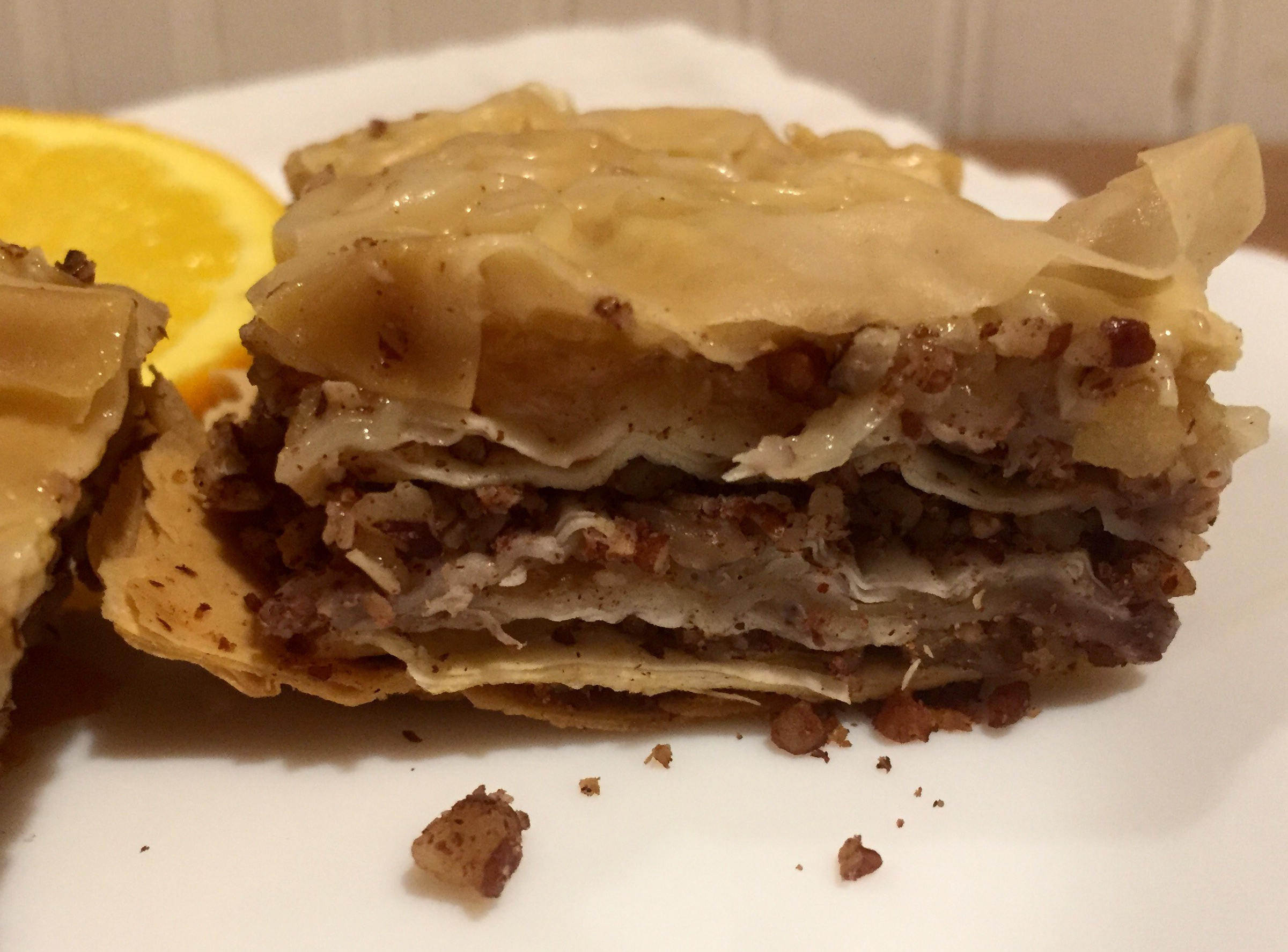
Pecan Apple Baklava with Orange Maple Syrup

D8D949D5-2F6E-4012-93D8-2A17FF20B807
Pecan Apple Baklava with Orange Maple Syrup, via Eat the Vegan Rainbow

A bite of baklava is a shock to the system, but once you have recovered from that first bite you won’t be able to stop eating, usually until your teeth start feeling like they may just fall out from all the sugar. Baklava is a dessert from Middle East that has made its way to Greece and beyond. It is made with thin sheets of dough, the phyllo dough, and it is usually layered, although some recipes do ask that you roll up the sheets into a strudel.

The most commonly used filling for baklava are ground walnuts. And the signature feature of baklava is the super sweet syrup that is poured over the hot baklava immediately after it comes out the oven. The baklava is then allowed to soak up all the syrup, which usually takes a day or so. At the end of that process you end up with a super sweet and very rich piece of dessert on your plate that is very often an acquired taste.

I personally have a bit of love/hate relationship with baklava. It’s been on my mother’s holiday dessert list for as long as I can remember, and I was not a huge fan until she started using apples to break up the heaviness of walnuts and the syrup, and lighten things up.

In this recipe I wanted to combine that insight into what makes a perfect baklava with what makes a great pecan pie, the apple in the eye of every Southern cook, the amazing creaminess combined with the crunch of pecans.

Neither baklava nor pecan pie is actually good for you. They are both full of high amounts of sugar and fat, so my challenge for this Pecan Apple Baklava was to flip the dessert into something much healthier without sacrificing any flavor. I used lots of apples, some pecans, and to sweeten things up a good amount of maple syrup. But, instead of drowning your baklava in pure maple syrup I recommend combining maple syrup with some orange juice, cooking it down a bit, and pouring it over your baked baklava while both the syrup and the baklava are still hot.

There’s not much in putting baklava together. Traditionally, you would use melted butter on each sheet of phyllo dough but you can achieve the same thing with spreading just a bit of water or water mixed with a drop of lemon juice, or a a bit of oil. It’s up to you to decide how much oil you want to use. Here, I use only some cooking spray on my dish, to make sure the baklava slices come out smoothly at the end. For the rest I use plain water. So you will layer a sheet of phyllo dough, brush very lightly with water, layer another one, put your ground pecans on, layer a sheet of phyllo dough, brush lightly with water, lay another sheet, pour pecans, another layer of phyllo dough, then apples, and so on and so forth until you run out of things to layer. One trick for getting the perfect baklava is to slice before you bake. And don’t forget that a bit of oil mist will help brown the top!

Final touch? Make baklava one day ahead. It will be rich, delicious and ready to serve, and you can feel good about serving your friends and family a dessert that is actually full of good for them stuff!!!

Pecan Apple Baklava with Orange Maple Syrup

What you’ll need:

8 oz (225 g) pecans, ground into a rough meal

4 apples, grated and drained of excess liquid

1 lbs (450 g) phyllo dough

1 teaspoon cinnamon

1/2 teaspoon allspice

1/4 teaspoon ground nutmeg

2/3 cup maple syrup

1 1/2 cup orange juice

Cooking spray or oil

Fresh orange slices, for decoration and presentation

What you’ll do:

  1. Preheat the oven to 375 F (190 C).
  2. Using a food processor grind the pecans into a rough meal. You want the pecans to be almost a meal but having few bigger pieces would add some interesting texture, so keep that in mind. Place pecans into a bowl, mix in cinnamon, allspice and ground nutmeg, and set aside.
  3. Using the same food processor with a grater blade, grate the apples. You don’t need to peel them unless you really want to. But you to have to squeeze the excess moisture out using your hands, and set aside. (Keep the squeezed out juice – it’s delicious as a freshly pressed cider which you can enjoy as you are making you baklava!)
  4. Spray the bottom of 9 x 13 in (22 x 33 cm) baking pan with cooking spray and start layering the baklava. Place one sheet of phyllo dough at the bottom, and brush couple of water drops across. Layer the next sheet, sprinkle pecans, layer another two sheets one at a time spreading a drop or two of water in between, sprinkle pecans, then repeat with two more phyllo sheets, spread a batch of apples, 1/2 cup or so, then continue layering following the same pattern until you use up all the ingredients.
  5. Cut the baklava into pieces, spray the top with a bit of oil, and put in the oven for about 20 minutes. You want the baklava to be nicely golden brown.
  6. While the baklava is baking, prepare the syrup by combining maple syrup and orange juice into a saucepan and reducing the volume down to about 1 1/2 cup or so.
  7. Once the syrup and baklava are ready and still hot, pour the syrup over the pastry one 1/2 cup at the time, starting with pouring along the cut sites so that the syrup can penetrate to the bottom of the baklava, and then what ever you have leftover you can pour right over the top. Place the cut orange pieces over the top, cover with foil and let the baklava sit for at least 6 hours, preferably overnight, before serving.
  8. Serve with a cup of strong coffee – and get ready to dance the night away!

Copyright © Eat the Vegan Rainbow, 2017

Pumpkin Truffles – Two Ways

img_3517-e1510705062190.jpg
Pumpkin Truffles, Traditional and Dark Chocolate, via Eat the Vegan Rainbow

Thanksgiving desserts are all about pies, most often pumpkin, apple, sweet potato, or pecan. Those are the big four, with pumpkin pie being the gold standard. I am not a baker – I mean I do bake, and I have made pies, including the pumpkin variety, in the past, but these pies are a bit too much for me to handle if I am making a big holiday feast.

So, this year I am trying out a no-bake route to a dessert offering that captures the spirit of winter holidays but does not require any oven real estate or lengthy prep work. With this in mind I developed these Spicy Pumpkin Truffles and I did them two ways – Dark Chocolate Covered and the Traditional, which means rolled in cocoa powder.

No baking, a handful of simple ingredients, and your holidays feast will be complete! The only trick, which by the way I am yet to master, is getting an even coat of chocolate. This batch turned out just a bit too irregular but that did not make them any less irresistible – the treats disappeared in a blink of an eye.

The truffles themselves are very easy to mix together and they are inspired by the pumpkin pie recipes. I used some canned pumpkin and mixed it with almond meal, almost flour, and coconut flour. I added some maple syrup to sweeten things up because the pumpkin I was using was not sweet at all. But before you add the sweetener of your choice do try your mix and adjust to taste. Keep in mind that your chocolate is sweet as well, unless you are using bitter kind, so you may need to play around a bit to achieve the right level of sweetness for your taste.

What pulls these truffles over the top are actually the spices. I used ground cinnamon, ground nutmeg and ground cloves. Those three spices blended well with the pumpkin, maple syrup and the almond/coconut flour mix and gave these yummy treats a real winter holidays flair. Bite in, and you’ll forget all about baking and enjoy the no-bake holiday desserts!!!

Pumpkin Truffles

What you’ll need:

1 15 oz. (425 g) can pumpkin

1 1/2 cup almond meal

1 1/2 cup almond flour

1/2 cup coconut flour

2 tablespoons maple syrup

1 teaspoon ground cinnamon

1/2 teaspoon ground nutmeg

1/4 teaspoon ground cloves

12 oz (g) vegan dark chocolate (chunks, chips, or blocks)

3 tablespoons cocoa powder

What you’ll do:

  1. In a large mixing ball combine all your ingredients except cocoa powder and the chocolate – those will come later.
  2. Mix everything well and using your hands for the dough into balls that are approximately 2 in (5 cm) in diameter. Place the preformed truffle balls on a platter and set aside.
  3. Melt the chocolate using either a microwave oven or a double boiler.
  4. Dip half of your truffles into the melted chocolate and place on the platter or a plate that’s lined up with wax paper.
  5. Put your chocolate covered pumpkin truffles in a refrigerator so that the chocolate coating hardens.
  6. Pour the cocoa powder in a flat dish and roll the rest of the pumpkin truffles in cocoa powder.
  7. Arrange the two kinds of Pumpkin Truffles any way you like. You may want to place couple of pieces of cloves in the bottom of your serving dish, or line your serving dish with some finely pulled orange peel. None of this will change the fantastic flavor of the truffles but it will make your dessert tray more festive! Enjoy!!!

Copyright © Eat the Vegan Rainbow, 2017

Creamy Cauliflower Winter Soup

img_3504
Creamy Cauliflower Winter Soup, via Eat the Vegan Rainbow

This soup is pure gold, and by gold I mean absolutely a light delight, and by light delight I mean that it uses none of the usual suspects you can find in a creamy soup. So, on the side of ingredients that this soup does not use you will find cream, butter, and flour, and on the side of ingredients that this soup does use you will find cauliflower, green peas, yellow corn, vegetable bouillon cube, fresh thyme and almond yogurt. Yes, you read that right – six ingredients and you will be done!

The soup comes together in less than an hour and serves four to six people, and if you include on your holiday menu where lots of other goodies are being served as well, this recipe can easily be served to eight people! So, one head of cauliflower with couple of extras can really go a very long way.

All you need to do is wash and chop one large head of cauliflower, put the pieces into a large pot, pour in 3 cups of water, add the bouillon cube, cover, bring to boil and cook the cauliflower for fifteen minutes or so, until cooked through. Let the soup cool a bit – it does not need to be completely cold but you do need to be able to handle cauliflower and the broth safely. Purée the broth and the cooked cauliflower until completely smooth, with either an immersion blender or using a standing blender. I highly recommend getting an immersion (stick) blender, if you don’t already have one. This is a kitchen gadget I use all the time for soups, burgers, even cookies, so I am getting a lot of mileage out of mine.

Place the soup back on the stove top, add green peas and corn, and bring to gentle simmer. You can use either fresh or frozen peas and corn, or even canned. If using the canned vegetables do check the salt content and buy “no salt added” variety. The soup should simmer for about twenty minutes. Turn it off, and then stir in fresh thyme and plain, unsweetened almond yogurt. Serve warm, with a squeeze of lemon if you like (I do!!!), and a handful of oyster crackers or freshly toasted bread.

Creamy Cauliflower Winter Soup

What you’ll need:

1 large head of cauliflower

3 cups water

1 vegetable bouillon cube

1 1/2 cup green peas, frozen

1 1/2 cup yellow corn, frozen

1/2 cup almond yogurt, plain and unsweetened

10 springs of fresh thyme

What you’ll do:

  1. Cut the cauliflower florets out, wash them and chop roughly into bits. Place in a large pot, add water and the bouillon cube, cover with a lid, and bring to boil.
  2. Boil the cauliflower for 15 minutes or until fully cooked – cauliflower should be soft and falling apart.
  3. Purée the cauliflower together with the broth it cooked in with a stick (immersion) blender until smooth.
  4. Add frozen (fresh, or canned) peas and corn. If you are using canned vegetables make sure you use “no salt added” and make sure you drain the veggies well before adding them in.
  5. Bring the soup to gentle simmer, and leave it for 20 minutes or so. If you are using canned vegetables you can simmer for less, and 10 to 15 minutes should be plenty.
  6. Turn the heat off, then add thyme and yogurt, mix well and serve. This soup can be a meal on its own, with some freshly toasted bread, or a nice start for your next three course, festive winter holiday dinner!!!

Copyright © Eat the Vegan Rainbow, 2017

Miso Soup with Rice Noodles and Scallions

img_2631-1
Miso Soup with Scallions and Rice Noodles, via Eat the Vegan Rainbow

The colder weather is definitely here, and everywhere you look around here you can find picture perfect foliage spanning all shades from deep green, to intensely and furiously red, and everything in between. Autumn… or is it fall? Whatever it is, the warm, fuzzy sweaters are in, and the shorts are out – I like fuzzy sweaters and can’t stand shorts so this is the right season for me! With the new season comes a new menu, the one that is full of roasted root vegetables, pumpkins and winter squash, apples and pies, cinnamon and nutmeg. There will be more of those types of recipes later, but today it will be all about the soup, my take on miso soup that is amazingly easy to make, and definitely rich enough to qualify as a warm and comforting cold weather favorite.

The key ingredient in a miso soup is miso. What is miso, I hear you ask? It’s a fermented soybean paste with salt and koji – a filamentous fungus not unlike the yeast we use in baking. Miso comes in few different versions – I’ve seen white and red miso into stores I go to, but there are others out there so keep your eyes open and read the labels carefully because what you need for this miso soup is the white miso. However, miso soups that you may enjoy in your local Japanese restaurants may be made with different kinds of miso and their flavor will definitely vary.

The recipe here is super fast and super easy. All you need is a pot, some scallions, white miso, and a bunch of thin rice noodles. Scallions will brown in a minute or two, and the thin rice noodles, sometimes called rice vermicelli, will cook in five minutes so, taken all together, from an empty pot to  the full bowl, this soup will be ready in under half an hour.

When serving, I also added some Sriracha sauce to my bowl, but that is a condiment that you can definitely skip. Some other types of condiments that would work with this soup are a squeeze of lime juice or a dash of lime zest, freshly ground black pepper, a slice or two of pickled ginger, or some toasted panko. Your choice, your delicious bowl of filling and satisfying soup!!!

Not fan of miso? There are more soup recipes for you to try here.

Miso Soup with Rice Noodles and Scallions

What you’ll need:

6 scallions

1/2 cup white miso

7 oz (200 g) thin rice noodles (rice vermicelli)

4 cups water

Cooking spray

What you’ll do:

  1. Wash the scallions, trim the tops, and some of the green bits that need trimming but definitely use both the white and the green parts. Chop finely.
  2. Spray the bottom of a large pot with cooking spray and place over medium heat. Add the scallions and brown for 1-2 minutes. Keep an eye on the scallions since they can burn quickly.
  3. Add the miso and mix well. Let the miso brown for 1-2 minutes. Stir frequently.
  4. Pour in the water and use a whisk to make sure the soup is smooth and there are no miso clumps.
  5. Bring soup to boil, and once it’s boiling add the rice noodles. Depending on the size of your pot and the water level, the noodles may or may not be completely submerged when you put them in. Don’t force them in, as they’ll break. Wait for the bottoms to soften then gently ease the rest of them in. The noodles need about five minutes and they will be ready.
  6. Let the soup cool just a bit before serving and then enjoy as is or with any number of toppings, like Sriracha, vegan bacon bits, fresh cilantro, squeeze of lime, toasted panko… Options and flavor variations are endless!

Copyright © Eat the Vegan Rainbow, 2017

Zucchini Lasagna with Walnut and Brown Lentil Ragù

Zucchini Lasagna with Walnut and Brown Lentil Ragù, via Eat the Vegan Rainbow

Let’s cut to the chase and be honest here – although we can pretend otherwise, we are all as obsessed with lasagnas as Garfield is! The layers of soft noodles, amazing sauce, fresh herbs, and most commonly lots and lots of ground meat and soft cheese. All this means that lasagnas are not the healthiest thing on the menu. Having said that, there is no reason to ban lasagnas from your plate; you just need to learn how to keep it healthy and plant-based, and I think I can help you to troubleshoot both of those problems.

Keeping lasagnas meat-free seems to be the problem many have tackled, usually by overloading lasagna with cheese, cheese and eggs, or cheese and a selection of vegetables, like mushrooms, and increasing the amount of tomato sauce and making it chunkier. But, really the most prominent ingredient in majority of meatless lasagna recipes is the cheese. When I was developing this lasagna recipe I did not want to give up on idea of “meat”, so what I came up with is a hearty, meaty, and flavorful walnut and brown lentil “meat” ragù base. My thinking was inspired by my previous, wildly successful Meatless Shepherd’s Pie, which I served for Easter this year as a substitute for a more traditional, lamb-based dish. In that recipe, lentils, mixed with ground mushrooms and cooked with rosemary and thyme, made for an amazing feast.

Here, I wanted to recreate the traditional meat ragù and went for a combination of chopped walnuts and dark lentils. The trick is too cook the lentils separately and add them to the rest of the ragù when they are fully cooked. Also, chop your walnuts into pieces that are about the size of what ground meat pieces may look like. I chopped the walnuts by hand, just by going over walnut pieces with a knife few times, back and forth. You can buy whole walnuts, or walnut halves in store and start from there, but for this a bag of walnut pieces will make your life easier and make the dish cheaper. Walnuts work really well in this lasagna, because they add some of their natural crunchy texture, protein, and a bit of fattiness to the otherwise very lean recipe. Worried about this extra fat? Walnuts are known for having a lot of unsaturated fat, which is the good kind, so don’t skip it! The meatiness of the ragù is further enhanced by a good amount of tomato paste and crushed tomatoes and letting the ragù simmer for a while.

img_2532
Walnut and Brown Lentil Ragù, via Eat the Vegan Rainbow

The preparation of any lasagna happens in several stages and this one is no different. In order to make the process more efficient I recommend that you start roasting the zucchini at the same time you start making the ragù, and then start boiling the lasagna noodles when zucchini is just about done. In that way you don’t even need to turn the oven off, you can just lower the temperature from roasting to baking and be ready for lasagna to go in immediately. Please note that I don’t use zucchini as a complete lasagna noodle replacement. I suppose you could, but then you’ll end up in a more of a Zucchini Mousaka territory than lasagna paradise. If you are concerned about gluten, there are now many gluten-free lasagna noodle options for you to choose from and most of them work perfectly.

The final touch on this lasagna is the Béchamel sauce (besciamella), which is a white sauce traditionally made with milk, butter and flour. In this case, the quick white sauce I put together requires only a blender, some soft, silken tofu, a squeeze of a lemon, and a bit of nutritional yeast. It is very much the blend-and-pour type of sauce, so you can do it a in a blink of an eye. The sauce adds a nice, slightly cheesy flavor to this very rich lasagna, and makes for a nice, almost golden glaze.

Zucchini Lasagna with Walnut and Brown Lentil Ragù

What you’ll need (for 9 x 13 in (23 x 33 cm) baking dish):

8-10 lasagna noodles, gluten-free if preferred

1 lbs (450 g) brown lentils

3 zucchinis, cut lengthwise into long strips

2 large carrots, diced

3 stalks celery, diced

1 cup raw walnut pieces, chopped

1/2 yellow onion, diced

1 can (28 oz, 800 g) crushed tomatoes

2 tablespoon tomato paste

1 tablespoon crushed garlic

1 teaspoon dried oregano

1 teaspoon dried basil

3 tablespoons fresh Italian (flat leaf) parsley

1 lbs (450 g) silken tofu

2 tablespoons lemon juice, freshly squeezed

1 tablespoon nutritional yeast

Cooking oil spray

What you’ll do:

  1. Preheat oven to 425 F (220 C).
  2. Prepare the lentils according to the instructions on the bag. Basically, bring 4 cups of water to boil and add the lentils that have been washed and picked over to remove any impurities that may have made their way to the lentils. Bring the lentils back to boil than lower the heat to a gentle simmer, and cook for 20 minutes or so, until lentils are completely cooked. Drain the lentils from excess water and set aside to cool.
  3. While the oven is preheating, and lentils are cooking, prep your veggies. Peel, wash, and dice the onions and carrots, and wash and dice the celery. Wash the zucchini well, remove the ends, then cut into long, thin strips. You can use a mandolin slicer for this, but cutting by hand also works. The zucchini slices should be as close to the thickness of the lasagna noodles as possible, but you don’t need to go crazy here – just keep in mind that a bit thinner is better.
  4. Line a baking sheet with parchment paper, place the zucchini slices on and spray with cooking spray. You may need to use two baking sheets, since you may discover that you can’t manage to have all your zucchini slices arranged in a single layer. Don’t pile the zucchini on top of each other and do roast in batches if needed. Place the zucchini “lasagna noodles” into the oven to roast. The roasting will take anywhere between 15 and 25 minutes and will depend on the thickness of your zucchini. Keep an eye on the oven and if you are roasting two pans of the zucchini at the same time do rotate the pans mid way through the roasting. You will know that the zucchini is done when the edges are slightly brown and the middle is golden. Once you take the zucchini out, decrease the oven temperature to 350 F (175 C).
  5. While the zucchini is roasting, start your the ragù. Spray the bottom of a Dutch oven, or another type of heavy pan, with cooking spray and heat up over the medium to medium high heat. Add carrots, onions and celery and let them brown for 10 minutes. Add chopped walnuts and let them pan roast for about 2 to 3 minutes. Add garlic, oregano, and basil, and let the flavors develop for a minute. Next comes tomato paste – add it to the pan, mix well and let brown just slightly. This takes about 2 minutes or so. Add the cooked lentils and the crushed tomatoes, and mix well. Let the ragù simmer for 10 to 15 minutes. Turn the heat off, add the fresh parsley and mix well to combine.
  6. Once the ragù is simmering, it’s time to start cooking your lasagna noodles. Most varieties ask for a large pot of boiling water and about 10 minutes of boiling time. The noodles don’t need to be cooked all the way through as they will continue to cook in the oven but they do need to soften quite a bit, so 8 to 10 minutes should be enough to achieve that. Drain the noodles and use immediately.
  7. Combine tofu, lemon juice and nutritional yeast in a blender and blend until smooth. Set the besciamella to the side.
  8. Spray the bottom and sides of your 9 x 13 in (23 x 33 cm) pan with some cooking spray. Cover the bottom liberally with the ragù (use about a half of the amount you made), layer the first set of noodles (for me that came to about 5 noodles per layer), then layer the zucchini in a single layer, pour the rest of the ragù, and top with the remaining noodles. Pour the besciamella over and cover with foil.
  9. Place the covered lasagna into the 350 F (175 C) oven and let bake for 30 minutes covered and then about 10 minutes uncovered. Let the lasagna sit for about 10 minutes before serving. I like to add some freshly ground black pepper or a mix of black pepper and red pepper flakes to my lasagna just before enjoying, but you can also sprinkle some fresh parsley, or fresh basil. Have fun!

Copyright © Eat the Vegan Rainbow, 2017

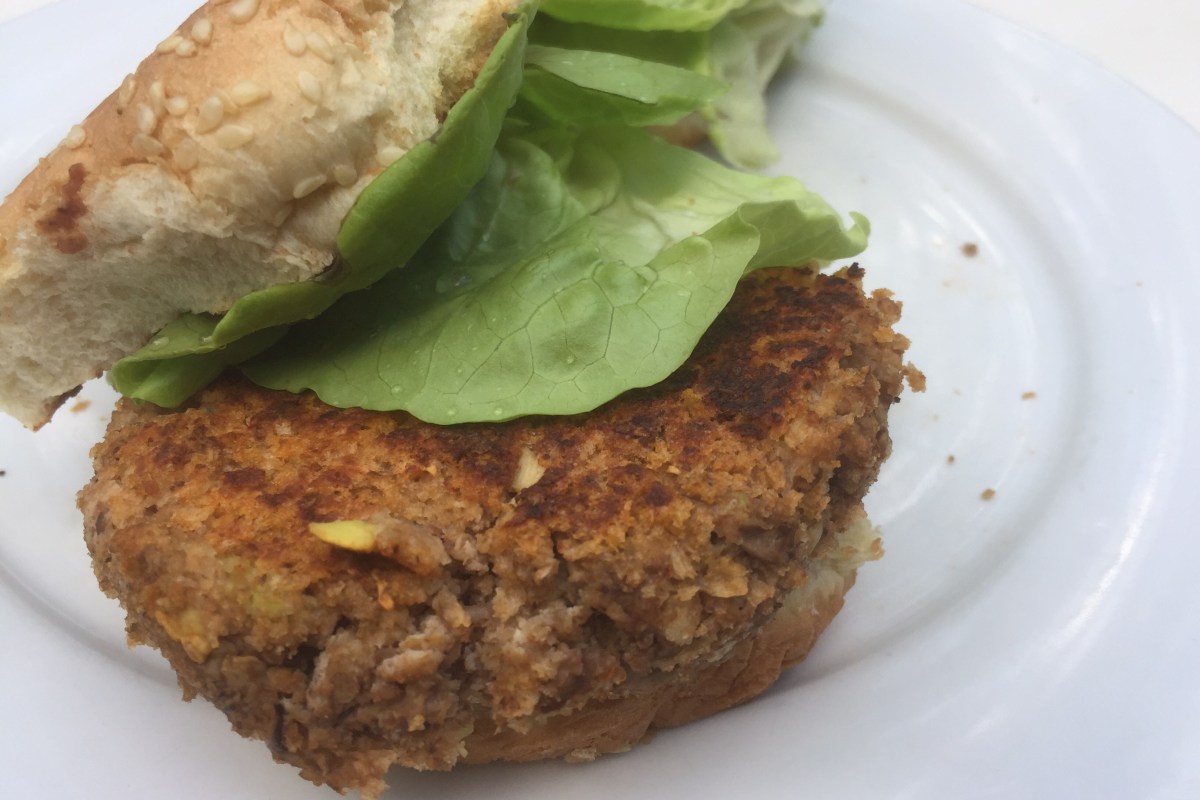
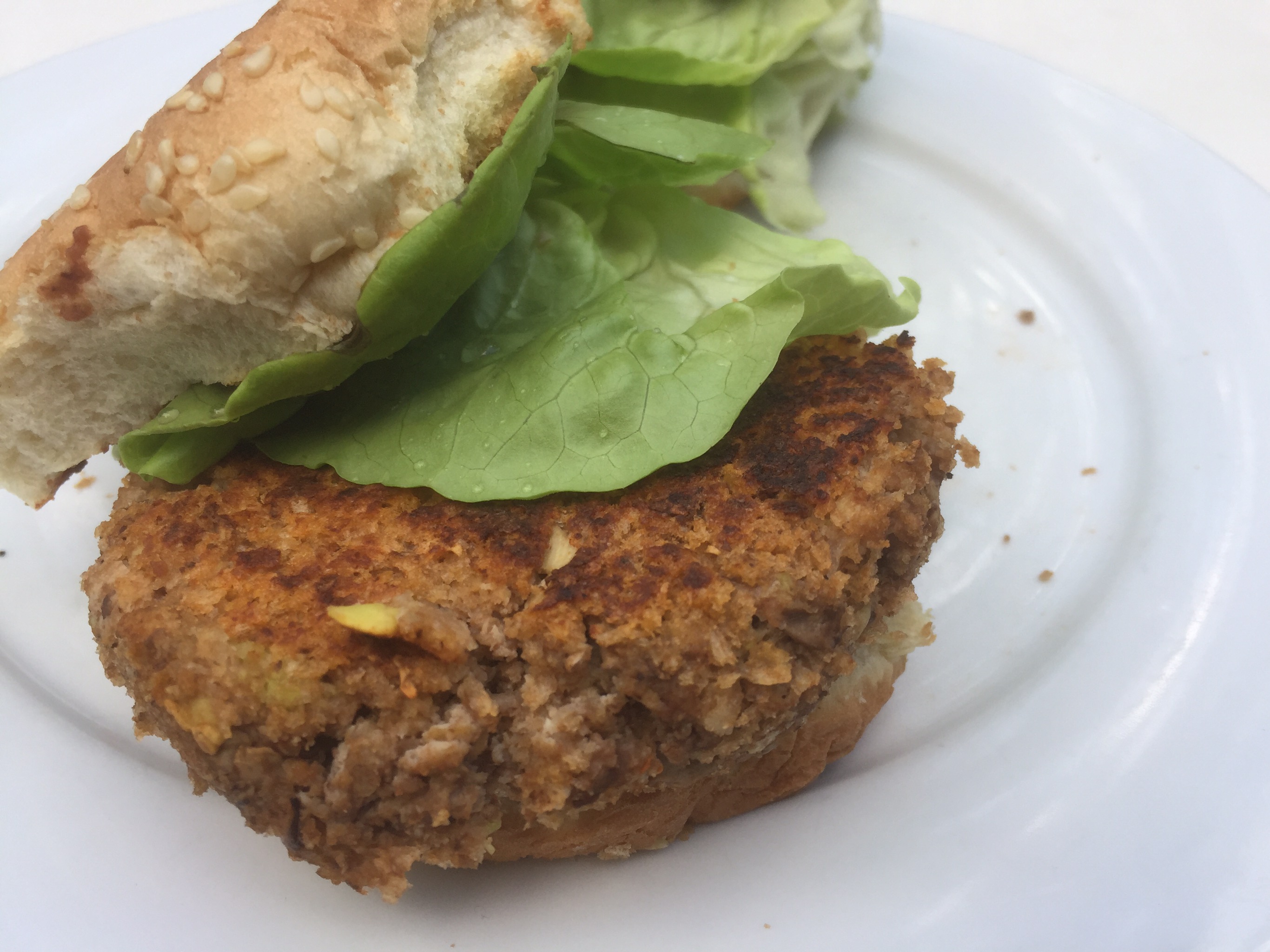
Avocado Burgers

You probably know that veggie burgers are going through somewhat of a revolution, with companies like Beyond Meat and Impossible Foods, leading the way within US in creating plant-based products that taste and look like the real meat.  I have not had an Impossible Burger yet, but I can attest to Beyond Burger being everything its creators wanted it to be – a plant-based burger that looks, cooks and tastes like fresh ground beef burger. It is absolutely spot on, thanks to some interesting protein biochemistry and biophysics that transfrorms pea protein into ground beef, as well as the use of plenty of fat for that greasy burger feeling, and a good amount of salt. And fat and salt are likely two components of this burger that, in addition to getting the texture of the protein component just right, make this type of burger so realistic and so delicious and so addictive.

Indulging in one of these burgers as an occasional treat is all fine and good, but making it on a daily basis is almost us unhealthy as eating the beef patty. That’s why I’ve been focusing on creating plant burgers (call them veggie burgers if you like) that can work on a grill or in a grill pan, look very burgery, and taste great without huge amounts of salt and fat. My blog now has the entire section dedicated to Burgers, Hot Dogs & More. Some of the burgers I made taste very much like a beef patty, some less so… At the end, what I discovered is that plant burger needs to pass two tests in order to qualify for being on my plate: it has to hold its shape well and sustain grilling on the grill or in a grill pan, and it has to taste amazing. Any burger that checks those two boxes off deserves to be shared!

The patty I am sharing today has three twists. Twist number one is that I decided to try using avocados as a fat source to add some juiciness to the burgers. Avocados, also known as Alligator Pear – isn’t that awesome? – are not something I ever considered cooking with but we recently had a huge avocado sales in my local grocery store and I got more than I should and there is a limit to how much avocado toasts one can eat in a week, so I was looking for something else to do with them. The idea to try making a burger with avocados was inspired by their high fat content and their creamy consistency (when they are ripe and perfect). I did quite a few internet searchers to see what other have done, but I could not find a single recipe that used avocados inside the actual burger patty. So, off I went to see if Avocado Burgers can be made into reality.

My twist number two is one of my favorite tricks to add umami flavor to just about anything – finely ground mushrooms. They work wonders in a dish like Meatless Shepherd’s Pie, or more generally any time you want to recreate that special “je ne sais quoi” of ground beef.

Final twist to this story is using extra firm tofu that has been frozen for few days than thawed all the way over the course of one to two days in the refrigerator. Freezing and defrosting tofu changes its texture daramatically. The tofu becomes tougher and stronger, and it absorbs the marinades and flavors better. There are no tricks to freezing tofu in my kitchen as I just put the container tofu comes in from the store into the freezer, but if you need a more refined method The Spruce has detailed step by step instructions. Before you use tofu, drain it well and then dig in – use your hands to press and squeeze and get the excess water out. I suppose you could use the tofu press for this or a method where you place tofu slices between paper towels and place a large weight on top for twenty minutes, but because tofu that’s been frozen then defrosted has this tougher and stronger texture, using your hands actually works quite well. Plus, you can easily go from squeezing to crumbling, which is the next step. At the end you will end up with a pile of small tofu crumbles.

To this pile of crumbles you will add mashed avocado, ground mushrooms, tomato paste, and couple of staples when it comes to boosting umami and grilled food flavors: soy sauce or liquid aminos, Worcestershire sauce and liquid smoke. The patties will be soft so it is a good idea to stick them into the fridge or a freezer to firm up before cooking. I felt like pairing only some crispy lattice with this burger but pickles, mustard, ketchup, tomatoes, and all the other common burger fixings will go well with it too!

Avocado Burger

What you’ll need:

1 16 oz. (450 g) block of extra firm tofu, frozen then thawed

8 oz. (225 g) crimini (baby bella) mushrooms

1 large avocado, ripe

2 tablespoon tomato paste

1 tablespoon Worcestershire sauce, vegan

1 tablespoon soy sauce or liquid aminos

1 teaspoon garlic powder

1 teaspoon liquid smoke

Cooking spray (for the pan)

What you’ll do:

  1. Freeze the tofu few days in advance and when completely frozen take it out of the freezer and leave it in refrigerator for a day or two, until completely defrosted. Drain the tofu and using your hands squeeze the water out of tofu. The tofu should feel like a relatively tough sponge soaked with water at the beginning, and at the end it should feel moist but not dripping wet. Crumble the tofu into a large mixing bowl.
  2. Chop the mushrooms using a food processor until they are finely ground. Few chunkier bits here and there will not hurt but try to get the mushrooms to be about the same consistency as your tofu crumbles. Add to the tofu.
  3. Cut and peel the avocado, and scoop out the green flesh into a small bowl and mash with the fork until finely mashed. Ideally the avocado should be as smooth as you can get it, and if you are using a perfectly ripe avocado this should not be a problem. Side note: If you discover that your avocado is tough that means that it is not ripe enough. If your avocado is turning black it means that it is past its prime. Unfortunately, when it comes to avocados only the perfectly ripe, perfectly green and perfectly soft will work, for this or any other recipe. If your avocados are tough to touch it means they need to ripen and you can help them out by putting them in a paper bag, closing it tightly and leaving them on the kitchen counter overnight. That usually helps – and if they are really, really green you can a ripe banana to the bag to help avocados along. 
  4. Add the avocado purée to the tofu mix, as well as the rest of ingredients.
  5. Mix well to combine using your hands. You want to work the mix a bit, which means squeezing and mixing at the same time. Once everything is combined together, use your hands to form patties. Place the patties onto a tray lined with wax paper, and put them into the refrigerator for 30-60 minutes or into a freezer for 15 minutes or so.
  6. Heat your grill pan or a cast iron skillet over the medium high heat. Spray with cooking spray and add 2-3 patties at a time. You need to leave enough room around tha patties to be able to flip them so keep that in mind. Cook on one side for 5 minutes then flip over and cook for another 4-5 minutes, until both sides are nice and brown.
  7. Serve on your favorite hamburger bun with your favorite toppings. And in case you have couple of avocados still left over, go wild – slice them up, toss them on top, and have yourself a Double Avocado Burger!

Copyright © Eat the Vegan Rainbow, 2017