Basic gluten-free vegan crêpes

Oui, oui… we all love crêpes! Savory or sweet these flat wraps are easy to make and delightful. Of course, those in the business of crêpes making may lead you to believe that crêpes are beyond your capabilities. And even if you are brave to venture into the crêpes land, you may hesitate to accept the vegan crêpes challenge. Yet, there’s nothing to worry about as crêpes can be not only vegan but gluten-free as well.

Choosing the right crêpes pan

The pan you use makes a huge amount of difference when making crêpes. You need a good, preferably non-stick, shallow frying pan with large surface area. The pan should also not be too heavy because there is a fair bit of pan handling (lifting, tilting, swirling) that will need to take place. I use IKEA but you can use any pan the fits this description – roughly.

Preparing the pan

I recommend getting the pan nice and hot before adding a batch of batter. Also, remember to oil the pan before each crêpes. I place my oil in a small bowl which I keep on the stove for easy access and use a silicone brush to brush the oil over the pan’s bottom just before pouring in a batch of batter. And keep doing this each time!

The first crêpe is always the worst!

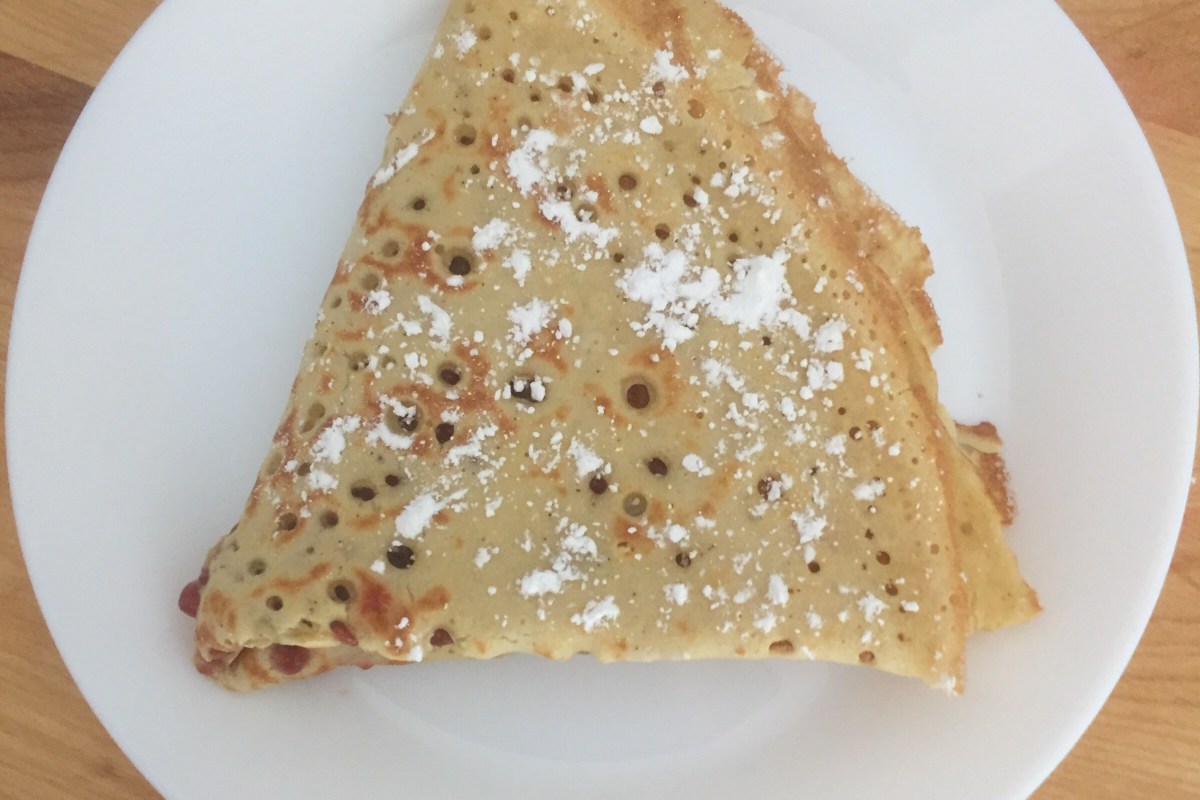
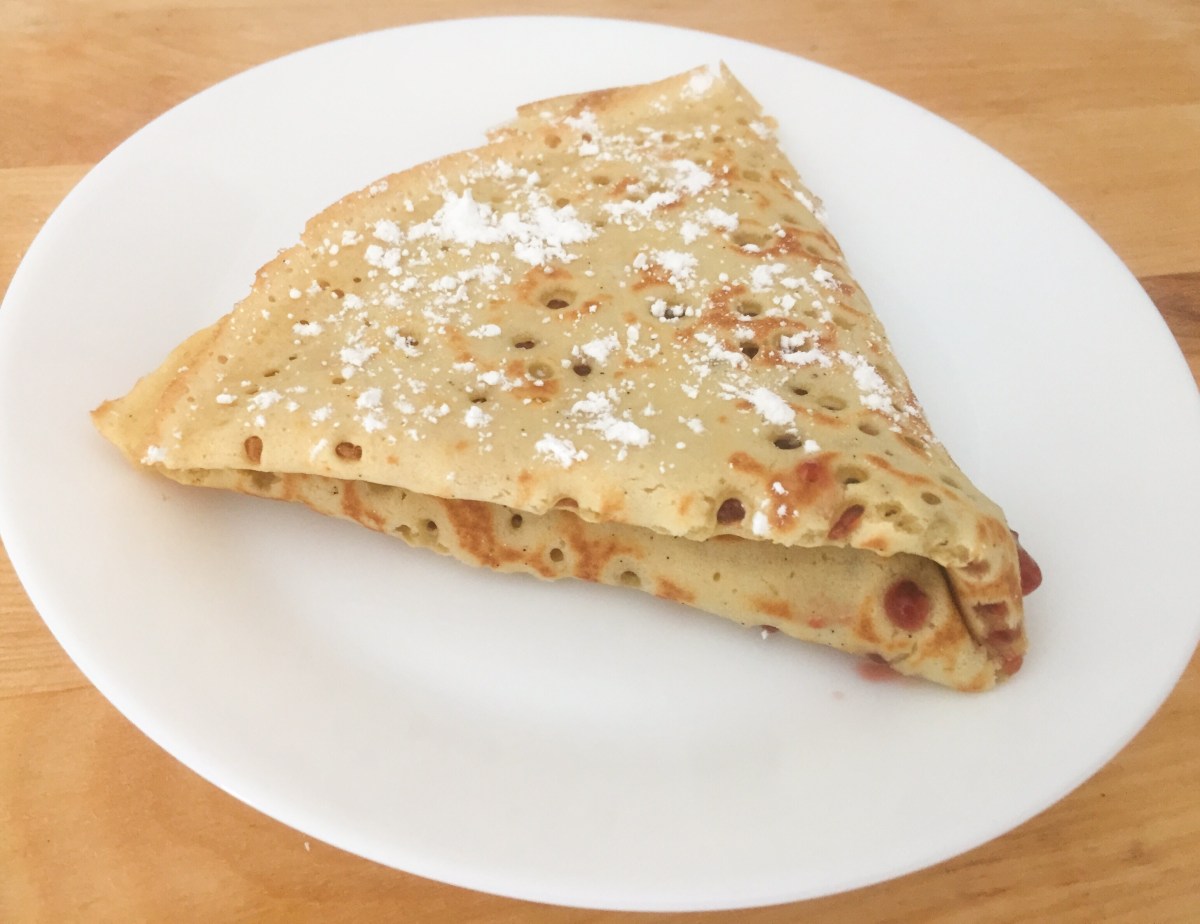
One dirty little secret of crêpe making is that the first crêpe is always the worst!!! So, although this first crêpe will be nerve wracking and make you feel like a total crêpe disaster, please do persevere and things will get better. This phenomenon seems to be all down to improperly oiled and insufficiently heated pan – and following the instructions here or in this very helpful post will ensure that your second, third, fourth, and so on crêpe all come out perfect. What helps is keeping the heat up, oiling the surface and using a really long and thin spatula to gently peel the crêpe off and flip over. What also help is being stingy with a batter. You are going for a very, very thin pancake here and the pictures below show you what my crêpes looked like.

Finishing crêpe touches

There are many different ways to enjoy the crêpes. You can use light spreads, like jams, chocolate syrup or nut butters, or simply sprinkle with some sugar and cinnamon, or go for the classic combination of butter and maple syrup. Chopped up fruit and/or nuts, as well as walnut and almond meal also work. If you are want to totally impress your guests you may want to make a crêpe cake, and if you made a batch of savory crêpes you can definitely use them in the same way as tortillas or other thin, unleavened breads. If you are wondering what savory crêpes are all about, I previously shared an easy to make scallion crêpe recipe with a sesame dipping sauce.

All in all, this recipe is perfect for a Sunday brunch, or a nice family breakfast around the Holidays. It is something that you could make ahead and bring to a pot luck, but the best way to enjoy crêpes is straight out of the pan, while they are still hot and soft. Incredible – oh là là!!!

Basic Gluten-free Vegan Crêpes

What you’ll need:

2 cups chickpea flour

1 cup corn starch

2 tablespoon agave syrup (omit if you plan on savory toppings)

1 teaspoon baking powder

1 teaspoon baking soda

1/4 teaspoon salt

1 tablespoon vanilla paste

1 teaspoon maple flavor

2 cups almond milk

1 cup water

2-3 tablespoons vegetable oil


What you’ll do:

  1. Combine all the ingredients as listed in a large mixing bowl, and whisk them all together. Let the batter rest for 15-20 minutes.
  2. Place a large pan with a flat surface over high heat. Let the pan heat up then using a silicon brush spread some oil uniformly over the entire surface. Pour just enough batter to cover the surface with a thin layer – for my 9 in (23 cm) pan I use about 3/4 cup. Pour the batter gradually towards the middle and keep pouring as you twirl the pan around.
  3. Place the crêpe over high heat for 2 minutes or so, then lower the heat just a tad and let the crêpe finish cooking on the first side. The way you can tell the crêpe is ready to be flipped is by looking at the surface – once the surface starts looking dry you are ready to flip.
  4. If you have a very good pan and have done everything right your crêpe will not be tightly attached to the bottom and you may even be able to flip it through the air. But if your crêpe is not loose then use your spatula to gently loosen the crêpe and flip it over. The flipping needs some practice, so be patient.
  5. The crêpe needs to cook on the other side for just 1-2 extra minutes. Slide the crêpe out, then increase the heat, leave the pan on for a minute to get it back to being really hot, spread some oil and repeat. Your friends and family may want to start eating the crêpes are they come out of the pan, and I say let them! Crêpes are the best when fresh, so it makes total sense to jump right in!!!

Copyright © Eat the Vegan Rainbow, 2018

Snickerdoodled Gluten-free Pancakes

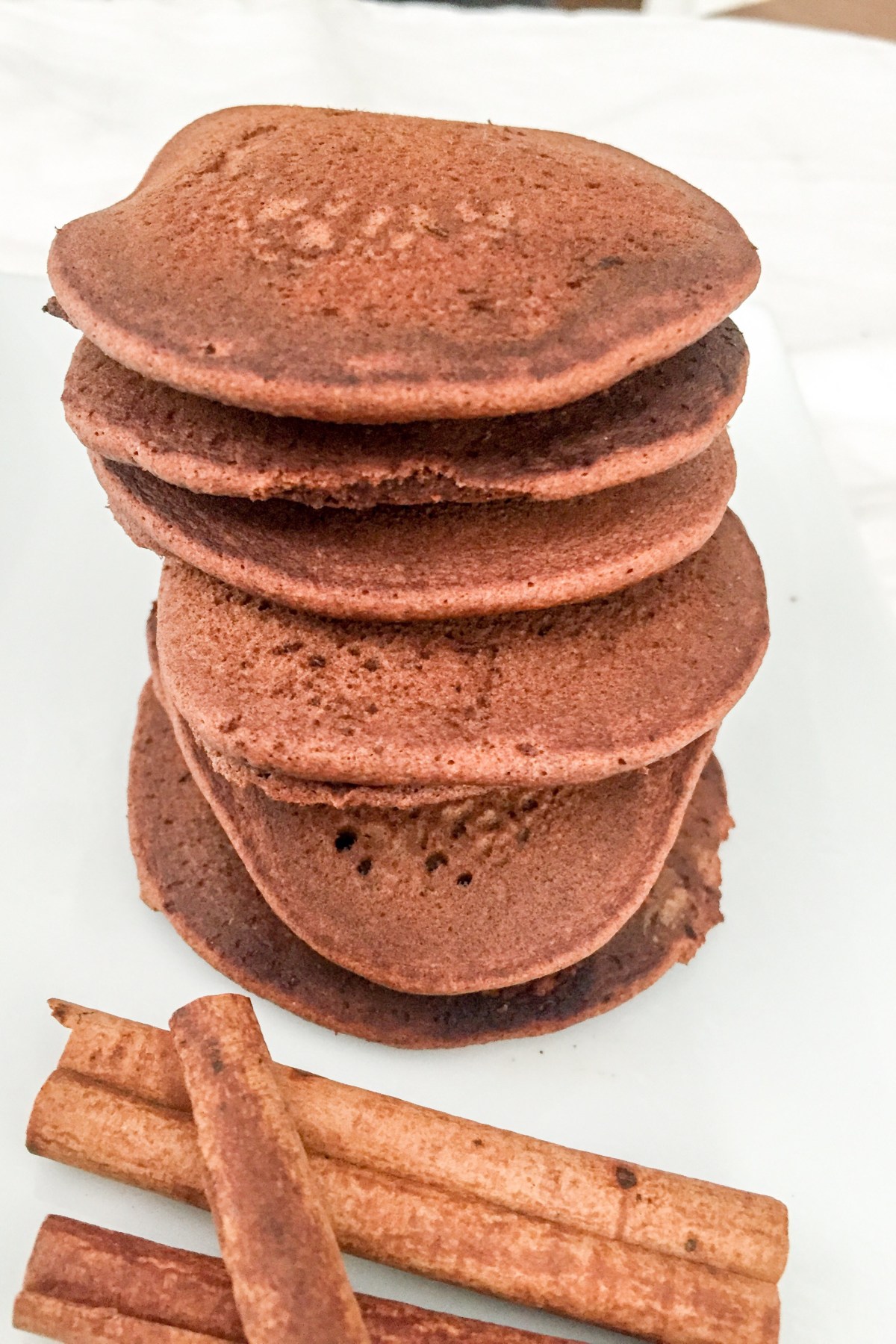
Snickerdooled Gluten-free Vegan Pancakes, via Eat the Vegan Rainbow

Autumn and winter are both better with some cinnamon. This spice, which is actually a tree bark, fills our homes and kitchens with calm and coziness comes colder weather and can often be found in all the delicious food that surrounds our harvest and winter holidays. For example, cinnamon was the key spice that I used for my Spice Infused Apple Butter, and has made a significant appearance in Pumpkin Truffles, Buttercup Squash Pie, and Pecan Apple Baklava!

But, I don’t want to leave you with an impression that cinnamon is only good for sweets and treats. Actually, this rich spice can add a lot to Sweet Potato Burgers and Meatless Keema Matar, both lovely main dishes with complex flavor structure.

Having said that, these “snickerdoodled” pancakes are probably the recipe with the most cinnamon powder I ever used! If 1/4 cup of cinnamon seems like a lot you could start with less, but for the full snickerdoodle flavor on your breakfast plate I recommend going full blast ahead into the cinnamon bliss.

Because these pancakes are so rich in flavor you really don’t need to fuss too much about condiments and toppings. These are great with a splash of maple or agave syrup, or a dollop of a plant-based vanilla yogurt, or a simple Vanilla Sauce. I hope you give these a try – your kitchen will smell fantastic and your tummy will be happy!

If you prefer regular flour, this recipe can be made following same steps below using 1 cup white wheat flour, 1 cup whole wheat flour, omitting corn starch, and going from there. In this case, please go easy with adding water, and start with 1 1/2 cups – that might be enough.

Snickerdoodled Gluten-free Pancakes

What you’ll need:

1 cup fine corn flour

1 cup chickpea flour

1/2 cup corn starch

2 teaspoons baking soda

1/4 cup cinnamon powder

1/4 cup sugar (vegan)

1/4 cup vegetable oil

2-3 tablespoons lemon juice (juice of 1/2 lemon)

1 1/2 to 2 cups water

What you’ll do:

  1. Combine all dry ingredients in a large mixing bowl. Mix well, then add oil, lemon juice and 1 1/2 cup water. Whisk the pancake batter together, making it smooth and lump-free. The batter should be dense yet flowing, and you can add up to an additional 1/2 cup of water if needed. Please do add this last bit of liquid gradually to avoid adding too much. The mixing can be done in a blender, in which case you will need to add liquid ingredients first (1 1/2 cup water + oil + lemon juice) and then dry ingredients. Mix everything well before deciding whether any additional water is needed.
  2. Let the batter rest for 5-10 minutes.
  3. Heat a non-stick pan (or a non-stick griddle) until very hot. I usually crank the heat on my burner to the maximum for 1-2 minutes than lower down to medium-high before pouring in the batter. Please note that if you are using a cooking surface that is far from non-stick you will need to brush on some oil to prevent the pancakes from sticking.
  4. Ladle 1/4 cup of batter for each pancake. Let them cook on one side until bubbles stop to form (2-4 minutes), then flip the pancake over and cook on the second side for an additional 2 minutes.
  5. Serve hot with maple syrup or a simple Vanilla Sauce.

Copyright © Eat the Vegan Rainbow, 2018

SaveSave

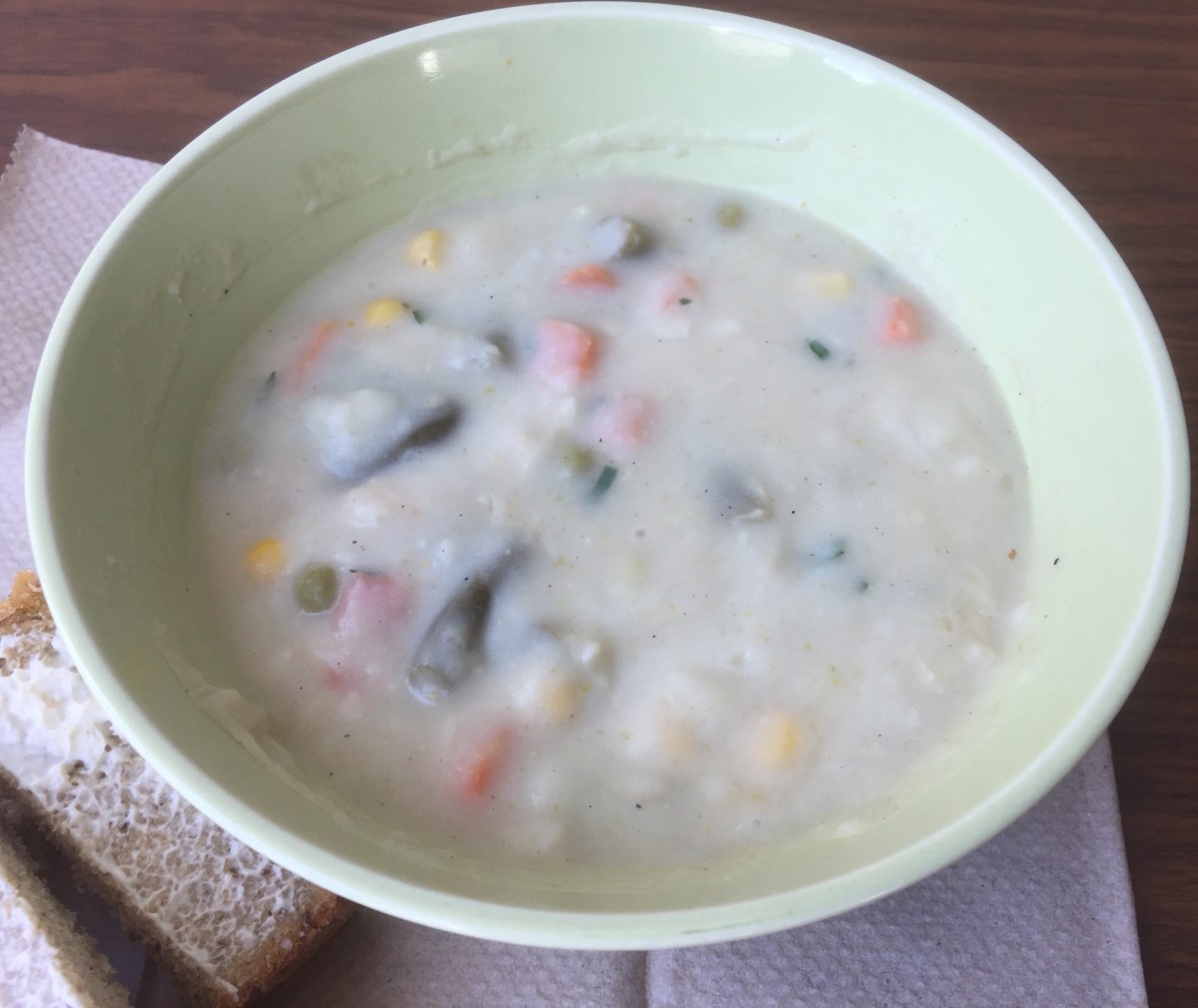
Creamy Vegetable Soup with Roasted Garlic

img_4507
Creamy Vegetable Soup with Roasted Garlic, via Eat the Vegan Rainbow

Vegetable soups are supposed to be healthy and good for you. But on a recent plane trip I realized that some of the cooking shows out there go out of their way to make absolutely everything in their reach as unhealthy as possible, or even worse – talk up these recipes as good for you, usually referring to them as “soul food”.

Of course, all of us have a soft spot for rich food, the one our mom or grandma used to make… Most people have warm memories associated with big family meals and joy that comes from being surrounded by the loved ones. And, yes, it is true that most of the food consumed in those occasions is not something that any nutritionist would approve off!

To be honest, I don’t disprove an occasional overindulgence, but what rubbed me the wrong way was that during the three hours of different cooking shows there was not a single recipe that would qualify as healthful, and even couple of soup and salad recipes included exuberant amounts of butter, cream, bacon…

As I was watching the continuous array of that heart-attack-in-the-making “soul food” recipes I could not stop thinking that there must be a better way. Actually, I started jotting down recipe ideas and ingredient lists while still on the plane, and this creamy vegetable soup is the first one that I have now fully developed.

I’ve made quite a few creamy soups in the past, like the Cream of Carrot Soup, Creamy Cauliflower Winter Soup, and the New England Clam-less Chowder, which are all rich in flavor and light in calories, or at least far lighter than the more conventional soups of their kind. The recipe below is super simple and cheap, so there’s no excuse not to try it.

The only slightly more time-consuming bit is the roasted garlic.  I am not even sure if you can get roasted garlic in the store, if you can you may try using the store bought stuff as a short cut. But roasting your own batch and then using it as needed is simple so you might just as well do it yourself, and here is a good recipe for you to follow (it’s basically putting a head of garlic in an hot oven for 30 minutes or so and you- there, I told you it was easy!)

To re-cap: angered by cooking shows that succeeded in making even soups and salads into a health hazard, I decided to roll my sleeves up and show the world that couple of simple ingredients, like a bag of frozen mixed vegetables, some starch and a carton of vegetable stock, when combined with flavor enhancing agents, like the roasted garlic, lemon juice and lemon zest, will make a wonderful, flavorful and rich-tasting soup without any butter, cream, bacon or cheese. Now that’s some real soul food!

img_4506

Creamy Vegetable Soup with Roasted Garlic

What you’ll need:

1 bag (1 lbs, 454 g) bag mixed vegetables, frozen

2 tablespoons corn (or potato) starch

4 cups (960 mL) vegetable stock

2 cups water

4 cloves roasted garlic

1 lemon, juice and zest

1 tablespoon oil (optional)

What you’ll do:

  1. Place a large post over the medium to medium-high heat, add the oil (if using), and all the vegetables. Let defrost and sauté with frequent stirring for 3-5 minutes.
  2. When the veggies have softened, add the starch. Make sure that vegetables are fully coated with a thin layer of starch. Sauté for another minute, just to let everything fully combine.
  3. Add the vegetable stock in a slow and steady stream, while mixing continuously. This vigorous mixing is essential to prevent lumps, so keep at it! You can use a large whisk for this if you like – the whisk works well for me.
  4. Next, add the water still mixing/whisking as you go, then let the soup come to a steady boil. Once you reach that point, lower the heat all the way down, add the chopped up roasted garlic, and allow the soup to simmer for 15-20 minutes.
  5. Turn the heat off, and mix in the juice of one lemon, and all the lemon zest. Serve warm and enjoy! (As you can see from a photo above I had mine for lunch with some buttered homemade bread. If you are into making your own bread via a bread machine, my recipe is here.)

Copyright © Eat the Vegan Rainbow, 2018
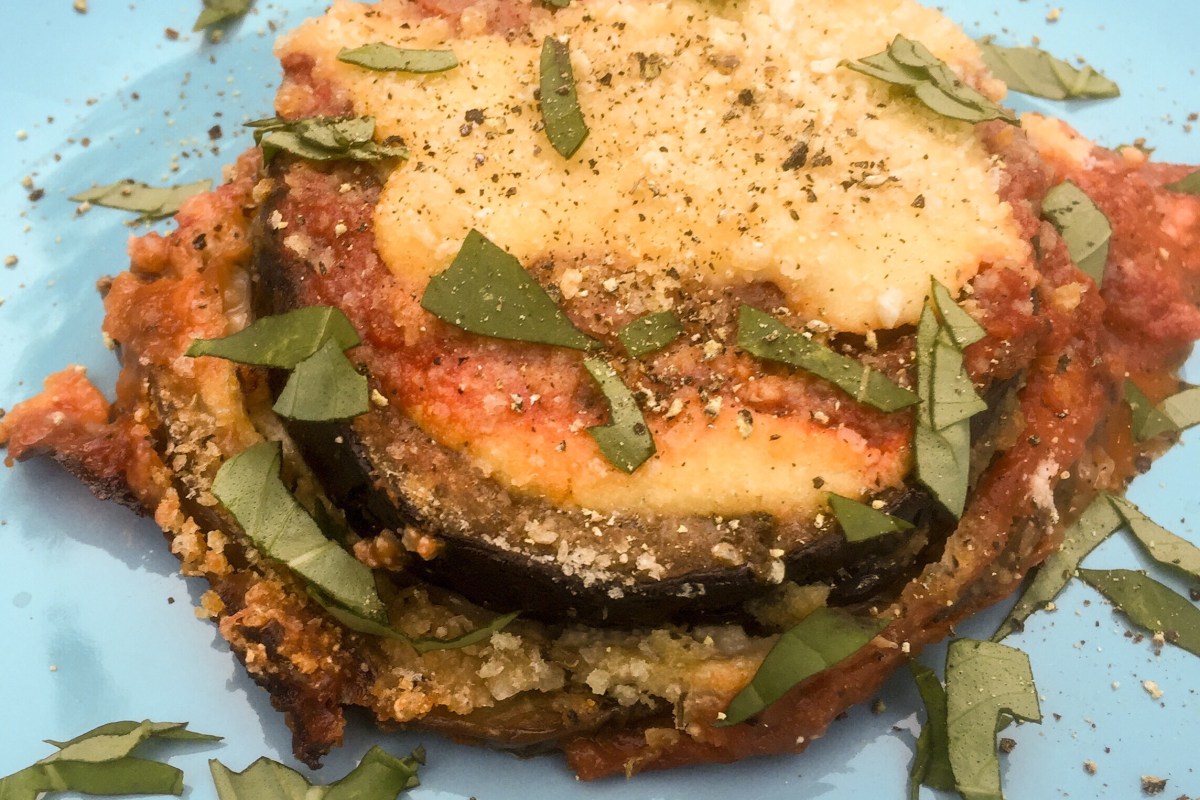
Vegan and Gluten-free Baked Eggplant Parmesan

Vegan & Gluten-free Baked Eggplant Parmesan, via Eat the Vegan Rainbow

Eggplant Parmesan – the staple of Italian restaurants in our area, and a frequent favorite of many. Unfortunately, it is so easy to overdo this dish and make it almost inedible. For example, frying the breaded eggplant very often results in a mushy piece of oily eggplant that is far from appetizing. So, to compensate for absence of flavor of a soggy eggplant people usually dump in a whole lot of cheese, usually a mix of ricotta and mozzarella. This makes for a goopy mess of a meal that can be easily avoided by following couple of simple rules. Rule 1: bake your eggplant; Rule 2: make your own tomato sauce; and Rule 3: make the dish 100% plant based.

Prepping the eggplant

Eggplant has a bad reputation for being bitter unless prepared a certain way. However, I don’t remember the last time I had one that was bitter when grilled, or made into a stew. Having said that, for the eggplant parmesan I do recommend that you use the trick that’s supposed to draw the bitterness out. You slice the eggplant, sprinkle with salt and then let drain for 15-30 minutes. The way I did it is to place the eggplant on several layers of paper towels, sprinkle salt, cover with more paper towels, put a baking sheet over the top and weigh with some cans. The amount of liquid that eggplant releases is not enormous but the paper towel should be quite damp.

Breading the eggplant, gluten-free and vegan way

The next step towards your Eggplant Parmesan is breading and baking the eggplant. I don’t recommend frying the eggplant – baking at 425 F (220 C) will give you much better results, and nice crispy eggplant.

To get to a gluten-free version of this classic all you need to do is use gluten-free bread crumbs which are now available in most grocery stores. If you don’t have access to gluten-free breadcrumbs you can use stale and/or roasted gluten-free bread to make your own bread crumbs. Or, if that is not available either, you could use corn flakes and make them into the crumbs! And don’t forget to add some dried oregano and basil to your breading – that just makes everything better!!!

For the breading, you will also need an “egg” mix, in this case some vegan mayo mixed with some plant milk. This mixture gives a nice thick consistency, but if you’d rather skip mayo, you could use just plant milk. The main point of the “egg” mix is to make the surface sticky so that the breading adhere to it well.

Eggplant parmesan breading assembly line

So, your breading assembly line will look something like this – pile of eggplant slices, deep fish (soup plate) with the “egg”, a pie dish with the bread crumbs, and the baking sheet lined with parchment paper sprayed with some cooking spray. An eggplant slice would go from the “egg” mix, to the crumbs, to the pan.

After about 15-25 minutes in the oven the eggplant should be nicely golden and crunchy.

Making the perfect marinara tomato sauce

While the eggplant is baking, you can make your very own amazing tomato (marinara) sauce. The sauce starts with some olive oil and garlic, and includes only five ingredients. You will need olive oil, garlic, crushed and whole peeled tomatoes, and dried oregano and basil.

Vegan eggplant parmesan needs some good cheese

The cheese starts with cashews soaked overnight. It includes nutritional yeast, plant milk, lemon juice and that’s it! As with the tomato (marinara) sauce, this cheese is universally applicable to a range of recipes and dishes. The final consistency is that of a ricotta not mozzarella, but in this case that works great.

Putting the eggplant parmesan together

This magnificent eggplant parmesan starts with a layer of marinara sauce on the bottom, then a layer of breaded eggplant, followed by some tomato sauce then cheese, another layer of eggplant, sauce and cheese, and so on. You can keep layering until you run out of ingredients. Once all the layers are in, put your eggplant parmesan in the oven and let the top and the edges brown. Let the baked dish cool for 15 minutes or so, sprinkle some fresh basil and some freshly ground pepper, then serve with a simple salad. Yummy!

Vegan and Gluten-free Baked Eggplant Parmesan

What you’ll need:

FOR BAKED BREADED EGGPLANT

3 large eggplants, cut across into 1/2 in (1-1.5 cm) rounds

1 teaspoon salt

1/2 cup mayo

1/4 cup milk

1 cup bread crumbs (gluten-free or regular depending on your preference)

1 teaspoon dried oregano

2 teaspoons dried basil

Cooking spray


FOR SIMPLE TOMATO (MARINARA) SAUCE

1 can crushed tomatoes

1 can whole peeled tomatoes, crushed by hand

3 cloves garlic, thinly sliced

2 tablespoon olive oil


FOR SIMPLE RICOTTA CHEESE

1 cup cashews, soaked in water for at least 3 hours (overnight in the fridge is fine)

7 oz. silken tofu

1/2 cup almond milk

1/2 lemon, juice

1 tablespoon nutritional yeast

1/4 teaspoon salt

Fresh basil, finely chopped (optional)

Freshly ground black pepper (optional)


What you’ll do:

  1. Cut the eggplant into rounds, arrange on several layers of paper towel, sprinkle with salt, overlay with several more layers of paper towel, then weight down and leave for 15 minutes. This will draw excess moisture out – your towels should be quite damp, so pat the eggplant dry and set it aside.
  2. Preheat the oven to 425 F (220 C).
  3. Line a large baking sheet with parchment paper and spray with the cooking spray.
  4. In a large soup plate combine mayo and plant milk together. Whisk well. Next, in a separate plate combine bread crumbs and dried oregano and basil. Take a piece of eggplant, dip in the mayo/milk, then move to the breadcrumbs, and lay flat on the parchment paper. Repeat until all the eggplant is used up. You may need two baking sheets for this, so have another one on stand by just in case.
  5. Spray the top with a bit more cooking spray, then bake the eggplant for 15 minutes. Flip it once and bake for 10 more minutes. Take the baked breaded eggplant out and let it cool before handling further.
  6. While the eggplant is baking, prepare the sauce and the cheese. To make the marinara sauce, place a large, heavy pot (I use a Dutch oven) over the medium high heat, add the oil and sliced garlic. After 1-2 minutes, add the can of crushed tomatoes and the can of whole peeled tomatoes that you have smushed with your hands. Let the sauce come to a simmer, lower the heat down, and leave the sauce to simmer with a lid one until needed for the next step.
  7. While the sauce is simmering, combine all the ingredients for the ricotta and blend until smooth using a blender. Set aside.
  8. For the final step you will need a deep baking dish, like the 13 x 9 in (33 x 23 cm) dish. Pour in some tomato sauce, and spread around until the bottom is fully covered. Layer in the eggplant. Top with sauce, then cheese, then add another layer of eggplant, then sauce, and finally cheese. Keep layering until you run out of ingredients. Depending on the size of your baking dish, you may have 2 or 3 layers. If you end up with leftover sauce or cheese, you can store them in the fridge and use for 5 days or so.
  9. Bake the eggplant parmesan for 20-25 minutes, until the dish is bubbling and the top is browned. Let the baked eggplant parmesan rest for 15 minutes before serving and enjoy!

Copyright © Eat the Vegan Rainbow, 2018

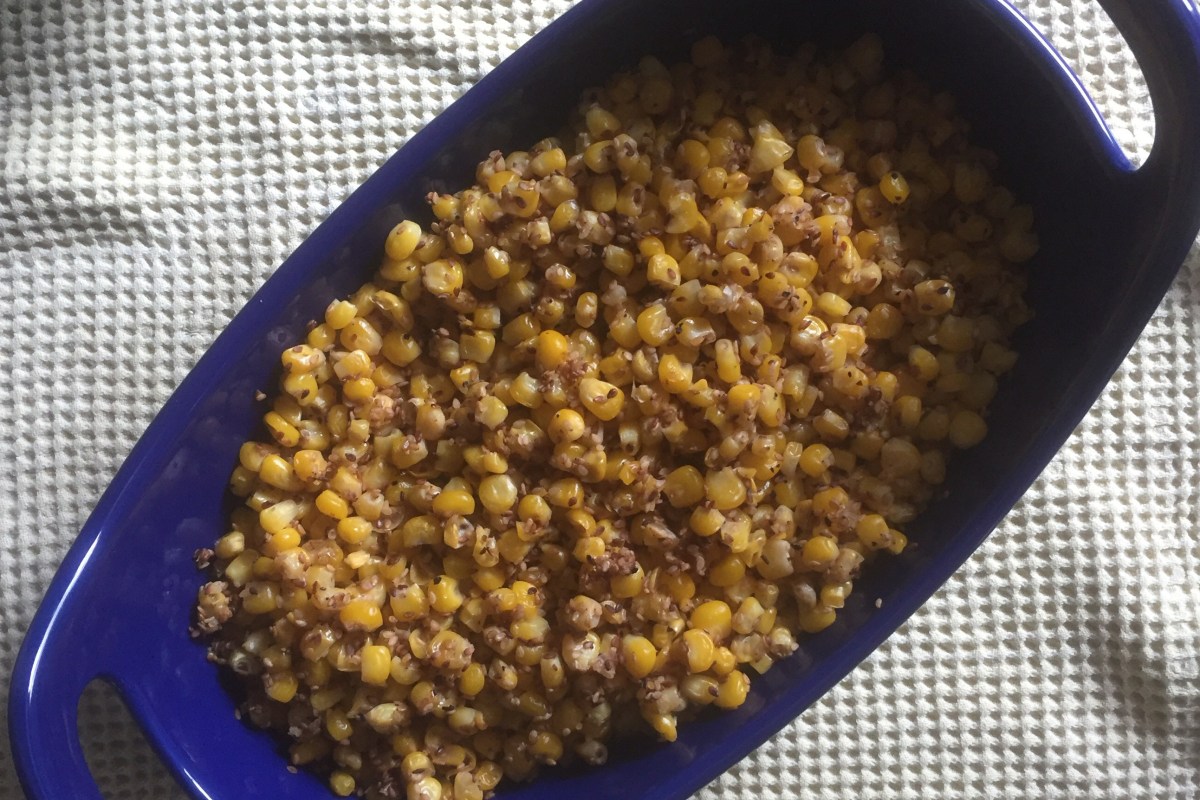
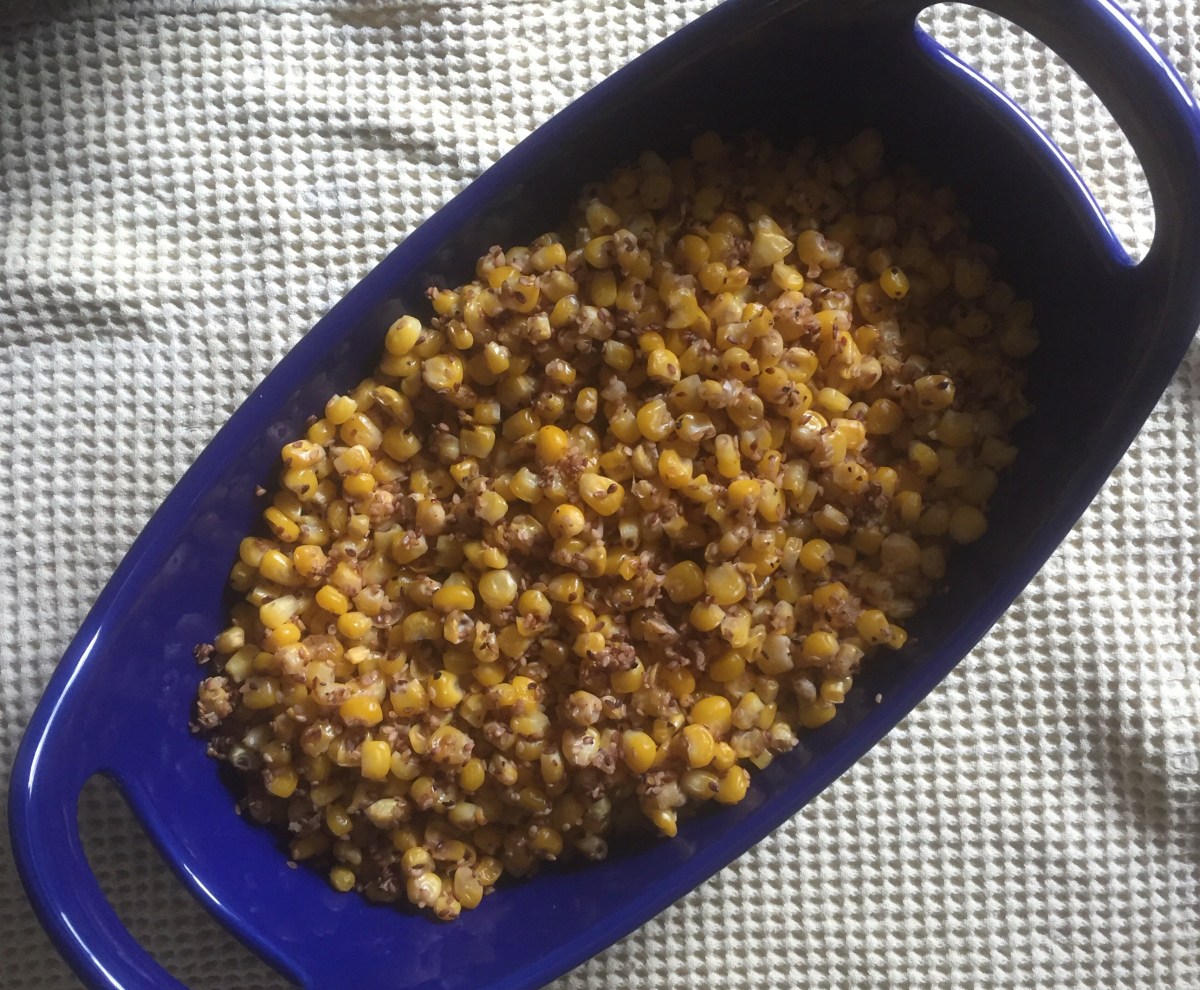
Sweet Corn and Sesame Seed Salad

img_4780
Sweet Corn and Sesame Seed Salad, via Eat the Vegan Rainbow

Sometimes salads are complex, feel elaborate and deep, mature and intense. I’ve made couple of those in my life, like this incredible roasted beets and leeks salad with baby kale and the most amazing lemon vinaigrette. I also made salads that are just for fun, with a bit of this and a bit of that, by combining fruits, vegetables and nuts.

But during summer, I like my salads to be simple, yet out of the ordinary. Last summer I went nuts for a pasta salad that used only a handful of ingredients but which I could not stop making over and over again. I think we are at that point in summer when it’s time for another easy, yet amazing salad, with no greens allowed (I love the greens but there is sometimes scope to be just a bit different!).

This corn salad is it – and it’s absolutely a fabulous accompaniment to any grilled food feast. All you need are four simple ingredients and 10-15 minutes. If you have that – boom, boom, boom and you are done.

The corn I use most often is frozen sweet corn, but you could grill your corn and cut the kernels out and use that instead. I bet the grilled/charred corn flavor would be fantastic.


Sweet Corn and Sesame Seed Salad

What you’ll need:

1 lbs (454 g) frozen sweet corn

1/2 cup sesame seeds

2 tablespoon olive oil

2 teaspoons steak spice (I recommend McCormick Grill Mates Montreal Steak Seasoning)


What you’ll do:

  1. Place a large frying pan over medium high to high heat. Add olive oil and frozen corn. Let the corn brown as it defrosts. Mix frequently but do let the corn get some surface caramelization.
  2. While the corn is cooking, toast your sesame seeds. You can do this in a toaster oven or using a stove top. Keep a close eye on your sesame seeds as they toast because they do from nicely toasted to completely burned in a matter of seconds!
  3. Add the toasted sesame seeds to your corn, as well as the steak spice and mix well. The salad is best served room temperature, but you can serve it warm as well. Enjoy!

Copyright © Eat the Vegan Rainbow, 2018

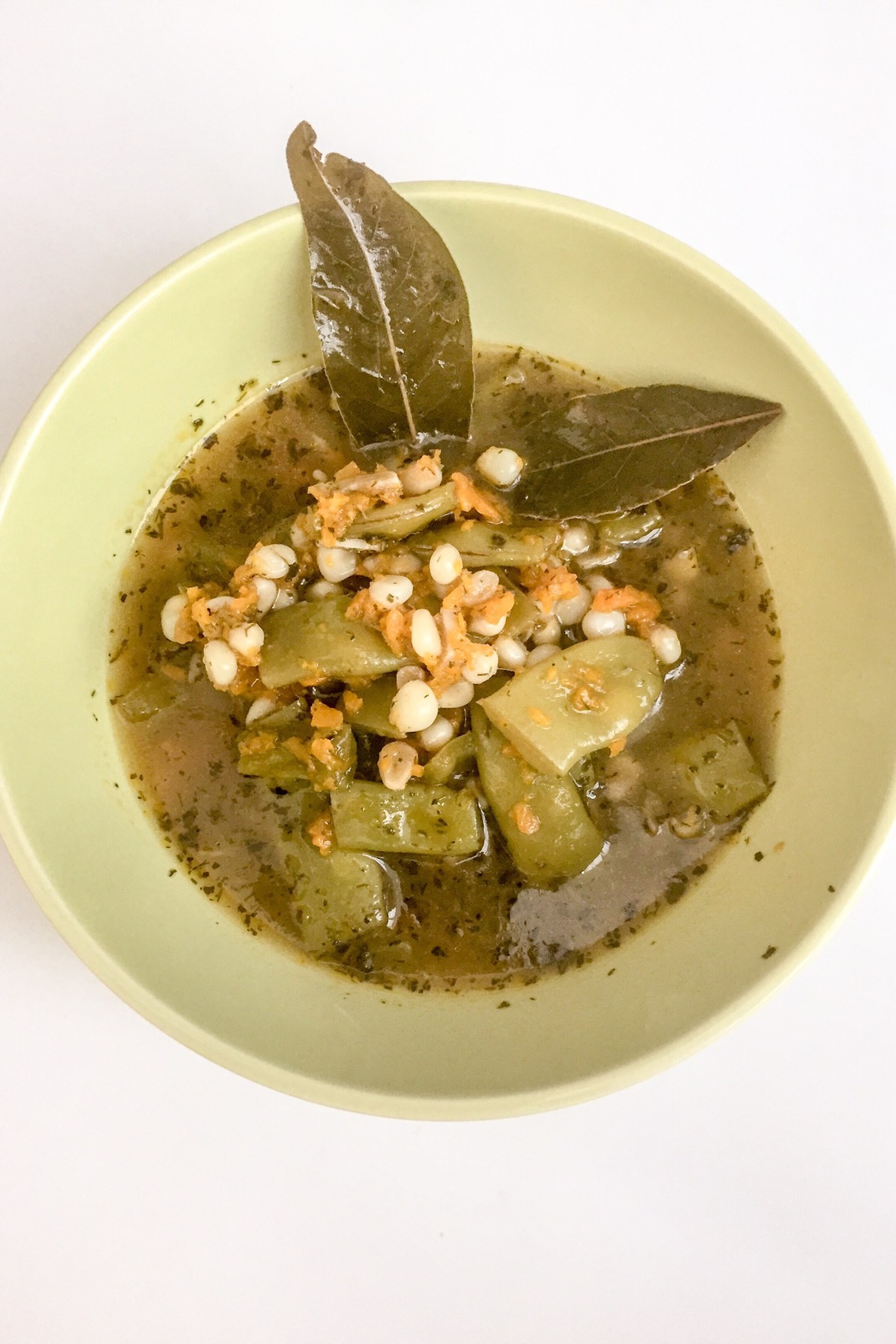
Super Summer Soup Supper – CSA Week 8

Super Summer Soup with Italian Flat Beans, via Eat the Vegan Rainbow

The adventures of the CSA share continue! This is our week 8 share and the eggplant, zucchini, and cucumbers are in full swing. If you need some zucchini inspiration, check out my stuffed zucchini boat recipe from last week. There are also some new items this week, and that’s my focus here: corn, green peppers, and flat (romano beans)! And this is what makes taking part in a CSA (Community Supported Agriculture) program so great – finding surprise ingredients that your local supermarket may not carry, and figuring our what to do with them.

The credit for this soup goes entirely to my 7 year old who suggested we use flat beans for a soup, add corn to it, plus one tablespoon each of dried dill, dried basil and onion powder. Oh, and garlic and vegetable broth! Then I stepped in with some carrots, bay leaves, and green pepper (also courtesy of the CSA share this week). The rest is history and the recipe below!

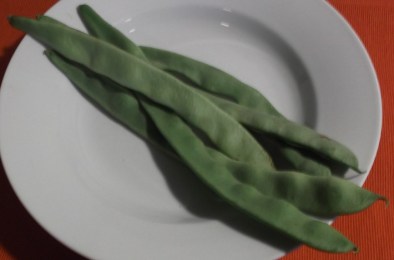
What are flat beans?

Flat_beans_raw
Flat Beans, Raw – By Andrewa, from Wikimedia Commons

Before we dive into cooking, let me just share what flat beans are. I don’t think I ran into them before, and I am guessing many of you are in the same boat! These beans are also known as romano beans, and also Italian flat green beans. They are similar to green beans, but much broader – about one inch (2.5 cm) or so, and they are quite long too. They have a good bite to them, although my seven year old helper did not like their taste when raw. These beans are meaty and that’s another reason why putting them into a stew or a hearty soup makes a lot of sense as they need a bit of time to cook, and I don’t think steaming them would work. So, if you like to try a green bean variety with a bit more meat and bite to it, these are a great option.

Super Summer Soup with Italian Flat Beans

What you’ll need:

1 lbs (about 500 g) flat beans (romano beans), trimmed and cut into 1 in (2.5 cm) pieces

2 cups grilled corn, just kernels (frozen or canned whole kernel corn would work too!)

2 large carrots, chopped very finely using a food processor

1 green pepper, diced to small pieces

4 cups (about 1 L) vegetable broth

4 cloves garlic, thinly sliced or crushed

1 tablespoon onion powder

1 tablespoon dried dill

1 tablespoon dried basil

4 dried bay leaves

2 tablespoons olive oil

Squeeze of lemon for serving (optional)

What you’ll do:

  1. Place a large pot over the medium-high heat. Add oil then garlic and let the garlic brown just slightly for 1-2 minutes.
  2. Next, add diced green peppers and sauté for 2-3 minutes, with occasional stirring.
  3. Add finely chopped carrots, mix well and cook for another 2-3 minutes.
  4. When the peppers have softened and the carrot pulp starts to brown, add the beans, corn and all the spices and sauté for another 5 minutes, then pour in the vegetable stock, bring to boil, lower the heat to simmer, put the lid on and leave it for 15 minutes.
  5. Serve this soup as a light supper, lunch, or pair with a salad and some bread for a meal!

Copyright © Eat the Vegan Rainbow, 2018

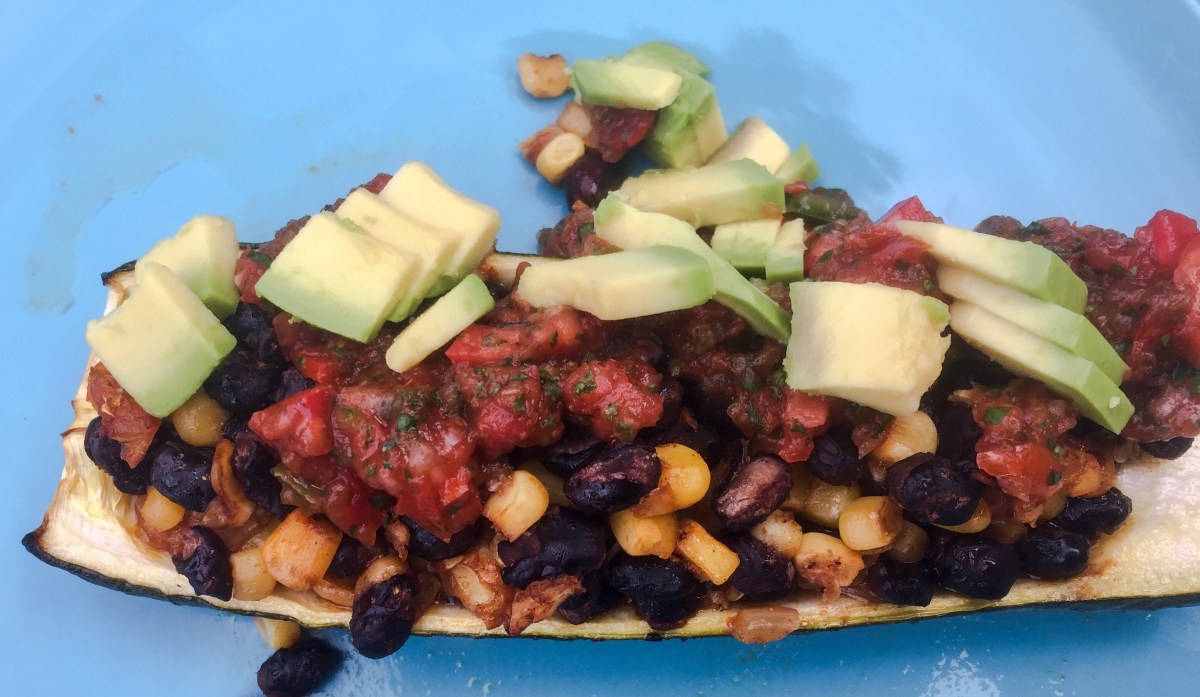
Tex-Mex Stuffed Zucchini with Homemade Salsa and Diced Avocado, CSA Week 7

F91E21D6-3357-425B-A336-B18FA5335FAD
Tex-Mex Stuffed Zucchini with Homemade Salsa and Diced Avocado, via Eat the Vegan Rainbow

When life gives you zucchini, there are actually many things you can do with it, grilling and sautéing being my go-tos most of the time. But, doing same thing over over again, no matter how tasty and satisfying they are, does get old. When it comes to zucchini, I have been trying new things, like zucchini lasagna, and zucchini fruitcake – I did also give zucchini cheese a try but that one did not work for me, so I am putting my zucchini cheese making days behind me.

Couple of zucchini’s that came in my CSA (Community Supported Agriculture) share this week from our local Upswing Farm, here in Ashland, Massachusetts where we live, were just the perfect size for stuffing, and that’s what I decided to do.

Getting zucchini ready for stuffing

To me, perfect stuffing zucchini is about 8-9 in (20-25 cm) and what makes this the perfect size is the fact that it matches is the size of my 9 x 13 in (23 x 33 cm) baking dish! Plus, the zucchini in this size range is in the Goldilocks zone – not too big and not too small, yet just right for carrying a good amount of stuffing.

The best way to get the zucchini ready for stuffing is to wash them, cut the ends off (this step is actually optional, you could skip it and leave the ends on – this would give your dish a nice, rustic presentation at the end), then slice the zucchini lengthwise and scoop out the seeds. If the zucchini is old and seeds look well-formed and unappetizing, please feel free to discard them. But, if the inside looks fresh and soft, scoop it out into a bowl and put aside to use as a part of the stuffing.

Par-roasting zucchini

You may have heard about par-boiling, when you boil something only half way through before doing something else with it. Par-roasting is essentially the same thing, just using roasting as a strategy to get the nice, roasted and caramelized flavors going without too much oven time. This can come in handy during hot summer months, for example.

I use par-roasting when prepping most of my stuffed vegetables, be it mushrooms, peppers, eggplant, or zucchini. The method is simple: you turn your oven on high (425 F (220 C) or higher), line a baking sheet with some parchment paper, toss the veggies with some oil, or spray with some cooking spray, or skip the oil altogether if avoiding fat (you can also sprinkle salt on if using, I don’t because the stuffing is usually plenty salty for me), and let the veggies brown for 15 minutes or so, flipping them over once if needed to get them equally browned on both sides.

Why par-roasting?

Well, most stuffing I make is already cooked by the time all is said and done. So, the stuffing itself usually does not need any more cooking time – all it needs to do is go into the oven for 10 minutes or so to get nicely browned on top. Par-roasting is my way of brining whichever vegetable is supposed to hold the stuffing up to speed so that the vehicle is ready for the final oven ride, when the stuffing gets browned and the vehicle finishes baking while absorbing some of the flavors that seep from the stuffing. In this way everything gets harmonized and delicious.

My secret to a perfect (and easy) Tex-Mex flavor

The best way to get the tex-mix flavors going is to start with a good chili powder, then add cumin powder and smoked paprika. These three things combined make for nice smokiness with just a hint of heat, so even with the amount of chili powder I use here the heat will not be overpowering. Having said that, do adjust the chili powder to fit your preferences. Of course, having corn and black beans in this dish is also essential. Here, I used canned corn and canned beans, but you can definitely use frozen corn and cook your beans from scratch. If you are using frozen corn, 1-1/2 cups of frozen corn should be enough, and if you are cooking the beans, 1 cup dry beans will probably be plenty.

Easy homemade salsa

What also helps tex-mix flavors is topping the stuffed zucchini with some freshly made salsa. If you don’t have the time, store-bought is perfectly fine to use here, either freshly made or from a jar – you can pick your own favorite flavor and enjoy! But, if you do want a quick homemade salsa, then follow the instructions below. The main tip here is to cut the tomatoes lengthwise and scoop out the seeds. Don’t throw them out – you can mix them into the tex-mex stuffing! Here, almost everything goes into a food processor for easy chopping. I recommend leaving one cleaned out tomato aside, and dicing it finely by hand to give the final salsa a bit more texture. This salsa takes only a few minutes to make, and you will love the flavor of freshly chopped cilantro and freshly squeezed lime, so it is worth doing it from scratch.

Diced avocado for a final touch

Last but not least is the diced avocado. You actually don’t need the avocado if you can’t stomach it (I know there are some people out there that have trouble with avocado), but it does add a nice, smooth, rich and creamy flavor to the final dish. It’s like a five layer dip right there in your zucchini “boat”!

To pick the best avocado, get those that are still quite hard and then leave them next to some bananas on your kitchen counter for a day or so. The avocado will soften and then you can store it in the fridge until ready to use. In this way you will avoid getting avocados that are too bruised by all the squeezing and poking, and can buy extra avocados on sale and use them 5-7 days later.

After that PSA, back to the Tex-Mex Stuffed Zucchini – to finish the stuffed zucchini, squeeze some fresh lime juice over your avocado and sprinkle some fresh cilantro. If you are using homemade salsa you can skip the cilantro, but if you are using the store-bought  then no cilantro-skipping is allowed!

TexMex_Zucch

Tex-Mex Stuffed Zucchini with Homemade Salsa and Diced Avocado

What you’ll need:

3 zucchini, washed but not peeled

1 15.25 oz (430 g) can yellow corn (whole kernel)

1 29 oz (820 g) can black beans

1 medium yellow onion, finely diced

4 cloves garlic, thinly sliced or crushed if you prefer

2 tablespoons vegetable oil

2 teaspoons chili powder

1 teaspoon cumin powder

1 teaspoon smoked paprika

Freshly ground black pepper and additional salt to taste!* (see Note)

1 avocado, finely diced, for garnish, optional

Fresh cilantro and freshly squeezed lime juice for topping (optional)


SIMPLE HOMEMADE SALSA

4 plum tomatoes, seeded, divided

1/4 – 1/2 jalapeño pepper, deseeded (or more, to taste)

1/4 onion or red onion

3 tablespoons tomato paste

1/2 cup fresh cilantro

1/2 lime, juice

1/4 teaspoon sat (more or less, to taste)

Cooking spray, salt, pepper


What you’ll do:

Tex-Mex_Pin

  1. Preheat the oven to 425 F (220 C).
  2. To make the salsa, cut the tomatoes lengthwise, the use a paring knife to take out the seeds and the middle of the tomato. Reserve the middles for the stuffing. Place all the ingredients, except one tomato into a food processor and buy until finely chopped. Dice the leftover tomato finely and mix in with the rest of pasta. Once mixed, set the pasta to the side.
  3. Wash the zucchini, remove the ends, and cut lengthwise into two pieces (I prefer to remove the ends but you don’t need to do that). Use a teaspoon to scrape out the inside of the zucchini – if full of seeds you can discard, otherwise add to the tomato scrap pieces and put aside.
  4. Line a large baking sheet with parchment paper. Spray with some cooking spray, then place zucchini on, spray the tops and place the zucchinis into the oven. Zucchini will be nicely browned in about 10 minutes. Take the zucchini out and set aside.
  5. Lower the oven temperature to 375 F (190 C).
  6. While the zucchini is par-roasting, get going on the stuffing. Add the oil to a large pan (frying or sauté) and place over the medium-high heat. Add the chopped onions and sliced garlic and let them caramelize for 2 minutes or so. Next add the spices (chili powder, cumin powder, smoked paprika) and let them “bloom” for 1-2 minutes.
  7. Next add the scooped out zucchini and tomato scraps, and mix well. Sauté for couple of minutes, then add corn and black beans. For corn and black beans, I recommend straining them using a large colander, and rinsing them for half a minute under some cold water before using. If you are using frozen corn, or fresh corn, and the beans you cooked yourself this washing and straining step is, of course, not necessary! Mix everything well and sauté for another 8-10 minutes.
  8. Spray a 9 x 13 in (23 x 33 cm) baking dish (or a large casserole pan) with cooking spray, then cover the bottom with a layer of stuffing. Place the par-roasted zucchini boats in and fill them with stuffing. Pile the stuffing high, and press gently in as you fill to make sure you get to all the little nooks and crannies. (You may end up with extra stuffing – if that’s the case you can serve the stuffing itself as a side for another dinner, for example this would be a grate thing to put into a taco shell and enjoy, or serve cold on your next tex-mix salad!).
  9. Put the stuffed zucchini into the oven and bake for about 15 minutes. All you are looking for is some nice caramelization on the top and the sides. Pull the stuffed zucchini out, and let it cool for couple of minutes before serving.
  10. When serving, top each zucchini boat with salsa and diced avocado, freshly chopped cilantro, and a squeeze of lime and you are done!

Copyright © Eat the Vegan Rainbow, 2018


SaveSave

SaveSave

SaveSave

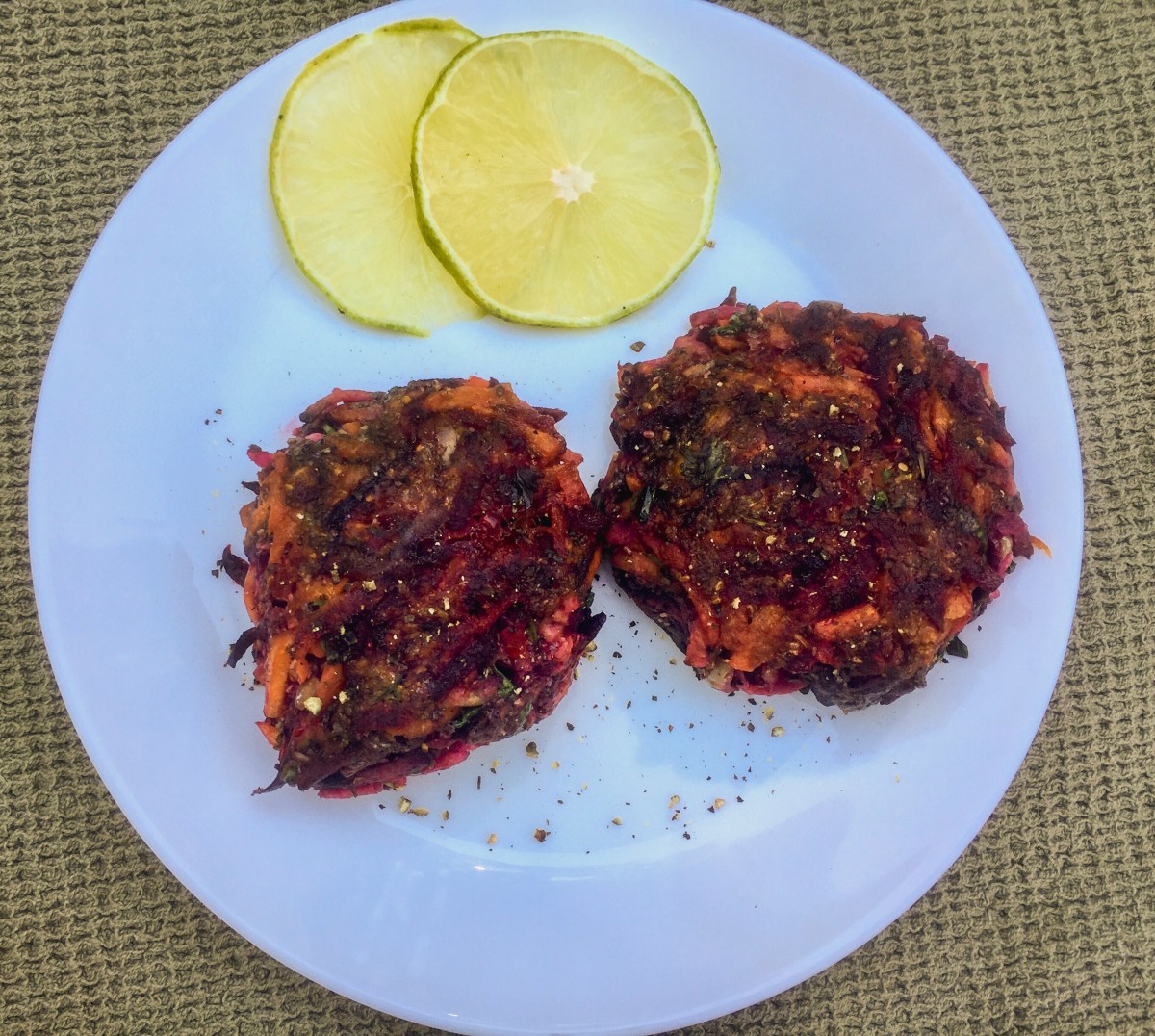
Beet, Carrot and Apple Fritters – CSA Week 4

315c00f7-53f9-450a-b294-9b9cbd514d7a
Beets, Carrots and Apple Latkes, via Eat the Vegan Rainbow

It’s early July, and here in New England (which is, for those of you who hail from across the globe, a name for the Northeastern-most part of the United States that includes six states: Rhode Island, Connecticut, Massachusetts, New Hampshire, Maine, and Vermont) the farm activities are in full swing. The greater Boston area is brimming with farms of different size and produce selection. For example, we went cherry picking on July 4th, and ended up with an amazing selection of cherries. We ate a lot, shared some with neighbors, and washed, pitted  and froze the rest. In this way, the frozen cherries are ready for smoothies, sauces or pies later in the year.

What’s in this week’s CSA basket?

At our local farm where we get our CSA (Community Supported Agriculture) share  the Upswing Farm, the vegetables this week included beets, like it did last week (and I shared  about how to pan roast beets and sauté the beet greens few days ago), carrots, zucchini, squash, cucumbers, yellow and green, cilantro, fennel, and so on and so forth. It was a really great week!

Beets are versatile!

If you are skeptical about beets, don’t be – they are versatile! Yes, you may think that I am saying that because I an Eastern European and there is a bit of a beet culture on the Balkans, but beets really can work in many different ways. In addition to the two recipes I shared last week, beets can be made into a hummus (yummy), used as a salad, sandwich or a veggie burger topping, and also made into tasty burgers (see here, and here for some great beet burger recipes to try). And they are an essential, as in not-to-be-skipped-under-any-circumstance, ingredient for fabulous BBQ ribs, either those made with wheat gluten or gluten-free.

So, how about beet fritters?

And this brings us to these fritters. Without a doubt, vegetable, and in some cases fruit, fritters are ubiquitous. Every cuisine has a recipe or two that fall into this category and take advantage of ingredients in season, often times potatoes, zucchini, squash, carrots, a grater, a bit of flour and usually some eggs, to make a quick meal. So, how about beet fritters? And how about vegan and gluten-free? Well, the recipe here answers these question in affirmative.

Chia seeds and flaxseed meal as binding agents

Grated beets, carrots and the apple make the body of these fritters. The easiest way to grate them is using a large grating attachment on your food processors, although, of course, grating by hand will work too! You don’t need to cooked the beets first, but do peel and wash them, as well as the carrots – apple is the only ingredient that does not require peeling. Just before you start grating you should start soaking your flaxseed meal by combining flaxseed meal with hot water in 1 to 3 ratio. Because the grated fruits and veggies have high moisture content, they do need extra binding agents and that’s why I recommend using quite a bit of flaxseed meal as well as chia seeds. Together, flaxseed meal and chia seeds work together to created fritters that hold their shape well without any eggs or flour.

Don’t forget the spices

I recommend using lime juice and zest, as well as freshly grated ginger and finely chopped fresh cilantro to enhance the flavors. The result are light fritters with interesting texture and


Beet, Carrot and Apple Fritters

What you’ll need:

1/4 cup golden flaxseed meal (you can use other types of flaxseed meal as well)

3/4 cup hot water

2 cups shredded carrots (4-6 carrots depending on size)

2 cups shredded beets (3-4 beets or so)

1 shredded Granny Smith apple

1 teaspoon baking soda

1 teaspoon onion powder

1 teaspoon garlic powder

1/2 lime, zest an juice

1/2 inch ginger root, grated

1/2 cup chia seeds

1/4 cup chopped fresh cilantro

Oil or cooking spray for the pan

Extra lime slices, coarsely ground black pepper and/or apple sauce for serving

What you’ll do:

  1. Place the flaxseed meal and hot water into a bowl and mix well. Let the “flax egg” rest for at least 10 minutes. The final result will be a very gooey mix that will work together with chia seeds to bind the fritters together.
  2. While the “flax egg” is resting, grate beets, carrots and an apple by hand or using a food processor equipped with a grating attachment, then transfer into a large mixing bowl. Add all the rest of ingredients, including the “flax egg”, mix well and let stand for 20-30 minutes. This resting time is needed for chia seeds to soak the extra liquid released by the grated beets, carrots and apple, and transform into a gel-like substance.
  3. Place a large pan over high heat and let it get nice and hot. Add oil or some cooking spray – if you do have a great non-stick pan you can omit the oil – and place small firm patties in. To form a patty, take about 1/4 cup worth of your mix, and using your hands form a 1/2 inch thick patty. Brown over high heat for 2 minutes then lower the heat down to medium and continue browning for 3 more minutes.
  4. Flip the patties over and brown on the other side for 3-4 minutes.
  5. Serve warm as a side dish, or even as an alternative to breakfast pancakes. These fritters go well with yogurt, as well as maple sauce, and I bet they would be delicious cold as well!
BeetCarrotApple_Fritters
Beet, Carrot and Apple Fritters, via Eat the Vegan Rainbow on Pinterest

Copyright © Eat the Vegan Rainbow, 2018

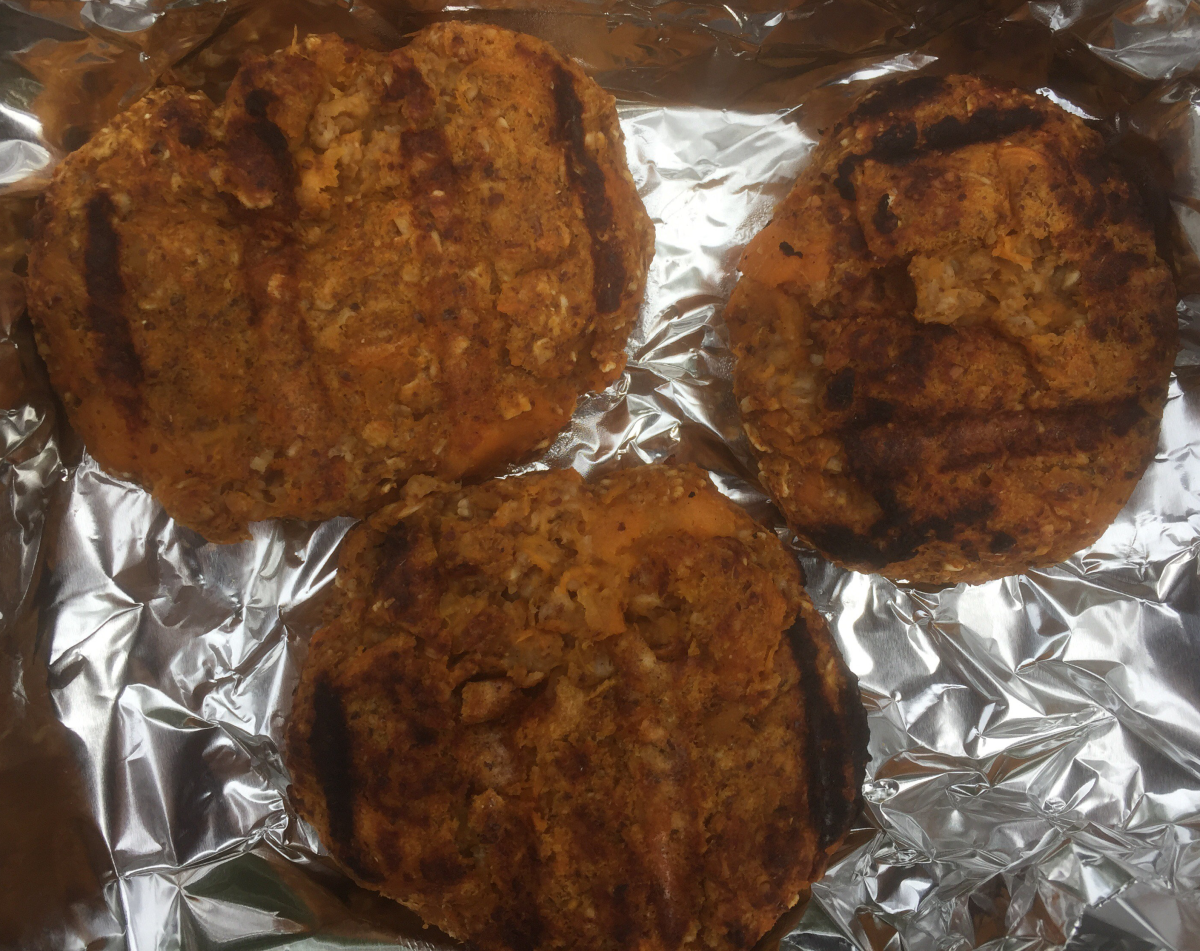
Sweet Potato Burgers

img_2978
Sweet Potatoe Burgers, via Eat the Vegan Rainbow

Let me make one thing clear – if you are looking for a veggie burger recipe that looks and tastes like meat, you really should look elsewhere since this ain’t it! But, if you are looking for a different type of burger, that is unusual yet appealing, and that is amazingly nutritious then you have come to the right place.

This is my Sweet Potato Burger which is made of roasted sweet potatoes, oats, flax meal “egg”, and a dash of very spicy adobo sauce. The patties are held together by the joined action of oats and the flax meal egg, and do just fine on the outdoor grill. The flavor is nicely sweet, perfect for combining with some mustard, pickles and lettuce. In my view, tomatoes, mayo and cheese do not work well on this burger, but caramelized onions, sautéed mushrooms, or sliced avocado would add to it. Feel free to experiment and see how it goes!

Sweet Potato Burgers

What you’ll need:

2 cups roasted sweet potatoes, mashed

1 cup rolled oats

3 tablespoons flax meal

6 tablespoons water

1 tablespoon adobo sauce

1 teaspoon maple flavor

1 teaspoon coriander powder

1/4 teaspoon cinnamon

1/8 teaspoon nutmeg


What you’ll do:

  1. Roast sweet potatoes as you would normally. I usually roast them at 425 F (220 C) without peeling for 45 minutes or so, then let them cool completely before handling. My usual batch is about 8 large potatoes and I store them roasted in the refrigerator and use them through the week.
  2. Start soaking flax meal in hot water 15-20 minutes prior to use. You can find detailed instructions on making the flax egg here.
  3. Peel two potatoes and mash them with a fork or a potatoe masher. This should yield 2 cups of sweet potatoes. Measure it out and adjust by adding and removing the mashed sweet potato. The final amount does not need to be absolutely precise but do keep it close to the recipe.
  4. Place the mashed sweet potatoe into a large mixing bowl, and add all the rest of the ingredients. Mix well, and use the immersion (stick) blender to get the consistency nice and smooth, and the oats broken up. If you don’t have the stick blender you can always use your food processor. Let the mix stand for 20 minutes or so to allow the oats to begin soaking up the excess moisture and swell.
  5. Form the burger patties, and place them on a wax paper lined platter. Place the patties in a refrigerator for up to an hour to firm up.
  6. Prepare and preheat your outdoor or indoor grill, or your grill pan in a usual way. I recommend oiling the grill grates well and grilling the burgers at medium heat. You can also use a grill pan or a regular pan – the burger will come out as delicious albeit without the lovely, charred grill marks. Sweet Potato Burgers need about 4-5 minutes per side, and they are ready to enjoy!

Copyright © Eat the Vegan Rainbow, 2018

Gluten-free and Vegan Scones with Chia and Coconut

IMG_5069
Gluten-free and Vegan Scone with Chia and Coconut, via Eat the Vegan Rainbow

I recently had a pleasure of teaching an evening plant-based cooking class at our local technical and vocational school. I enjoyed the experience immensely and in addition to having a really very pleasant evening  I have also learned about some of the things that people who are relatively new to plant-based cooking wonder and care about.

For example, I had several conversations about vegan breakfast items and whether it is possible to make vegan pancakes (yes!) and vegan crêpes (also yes!). And based on many conversations online, people are just having hard time figuring out what their plant-based breakfast options are.

What’s for vegan breakfast?

Breakfast is not as limited as people usually think. After all oatmeal, cereal with nut milk, fruits, vegetables, toast (including with avocado), smoothies, muffins, cauliflower tofu burritos, vegan “scrambled eggs”, and many, many more options are currently available. Some require a bit more hands on preparation but the offerings are as diverse as for people that eat meat, eggs and cheese. For me, a roasted sweet potato is a great breakfast that keeps me going well into the afternoon!

How about vegan baked breakfast treats?

Of course the number of options increases vastly on those days when you find yourself with extra time to do some baking. Vegan baking is actually not all that difficult. There are quite a few vegan options when it comes to replacing eggs, and nut milks usually work just as well as dairy. Plus: there are now a couple of vegan butters on the market so if the recipe asks for butter there are now alternatives to be used (including the dreaded margarine, but I don’t recommend you go there!)

Are gluten-free vegan treats possible?

Having said all that, if you are trying to be vegan and gluten-free you may be out of luck. In gluten-free baking, gluten, a protein that makes some people unhappy yet provides baked goods with their lovely structure, is usually replaced by extra eggs to keep the levels of protein high. Unfortunately, finding a plant-based replacement for eggs in this context is not easy because most options, like flax meal, bananas, apple sauce, and various starches are not protein rich; they are mostly carb heavy.

Chia seeds as an egg replacer for gluten-free vegan baking

Enter chia seeds! These little seeds are one of my current favorites. Chia seeds can be made into a pudding and they are an excellent binding agent for making seed crackers – and in this category nothing compares to Oh She Glows Endurance Crackers, so give them a try! Amazingly, they also work in these super easy and quick scones. A critical step in this recipe is soaking chia seeds for 15-30 minutes in some warm water. This will transform them into a gel like substance that will keep your scone batter together. And that’s more than half a battle won! The rest is all about mixing things together, adding the right leavening agents to helps things rise high, and some flavors in.

Vegan buttermilk trick

A common way to help a leavening agent like baking powder and baking soda is to add some buttermilk. Acidity is what makes buttermilk so special, and what provides an extra push for the baking powder and baking soda. The easiest way to make a vegan buttermilk is to add some lemon juice or lime juice to your plant-based milk, mix it together and let it stand for 5 minutes or so. And, if you don’t have any sour citrus on hand, you can also use some apple cider vinegar as well. If you are using milk with lots of protein, like soy or pea protein milk, you may see quite a bit of curdling – that’s normal.

These delicious scone will please your entire household – so you may want to make a double batch. So, next time when someone asks you what’s for breakfast you can tell them: freshly baked scones. Enjoy!


Gluten-free and Vegan Scones with Chia and Coconut

What you’ll need:

3 tablespoon chia seeds
6 tablespoon warm water

1/3 cup almond milk, unsweetened (vanilla flavor or plain)
1 teaspoon lime juice

1 cup brown rice flour
1/3 cup corn starch
1/3 cup almond flour
1/3 cup shredded coconut unsweetened
1/6 cup tapioca starch
1 teaspoon psyllium powder
1 teaspoon baking soda
1 teaspoon baking powder
1/4 teaspoon salt
1/3 cup agave syrup
1/3 cup coconut oil, melted
Unsweetened coconut flakes and raw sugar, for sprinkling on top

ChiaSeedsCoconutScones_2018


What you’ll do:

  1. Preheat the oven to 375 F (190 C).
  2. Mix chia seeds and warm water together and set it aside for 15-30 minutes until a sticky gel-like substance forms.
  3. Measure out the almond milk and add the lime juice to it. Let that stand for 5 minutes before using.
  4. In a large mixing bowl measure out and mix all your dry ingredients.
  5. Mix your wet ingredients (almond buttermilk, agave syrup, soaked chia seeds, and melted coconut oil), then add to your dry ingredients. Combine everything together. The batter will be sticky but not falling apart.
  6. Line a large baking sheet with some parchment paper. Place your batter in the middle of the sheet, and form a round, domed structure. Using a thin and sharp knife, cut your dough into six even pieces. Use your knife to separate the cur pieces out just a bit, but you don’t need to pull them apart. The scones will bake well and break of easily when they are done.
  7. Top the scones with some extra coconut flakes and sugar, then place in the oven for 20-25 minutes. Let the scones cool for 15 minutes or so before serving, then enjoy with some butter and/or jam, like his 10 minute, no sugar added blueberry jam I shared some time ago.

Copyright © Eat the Vegan Rainbow, 2018
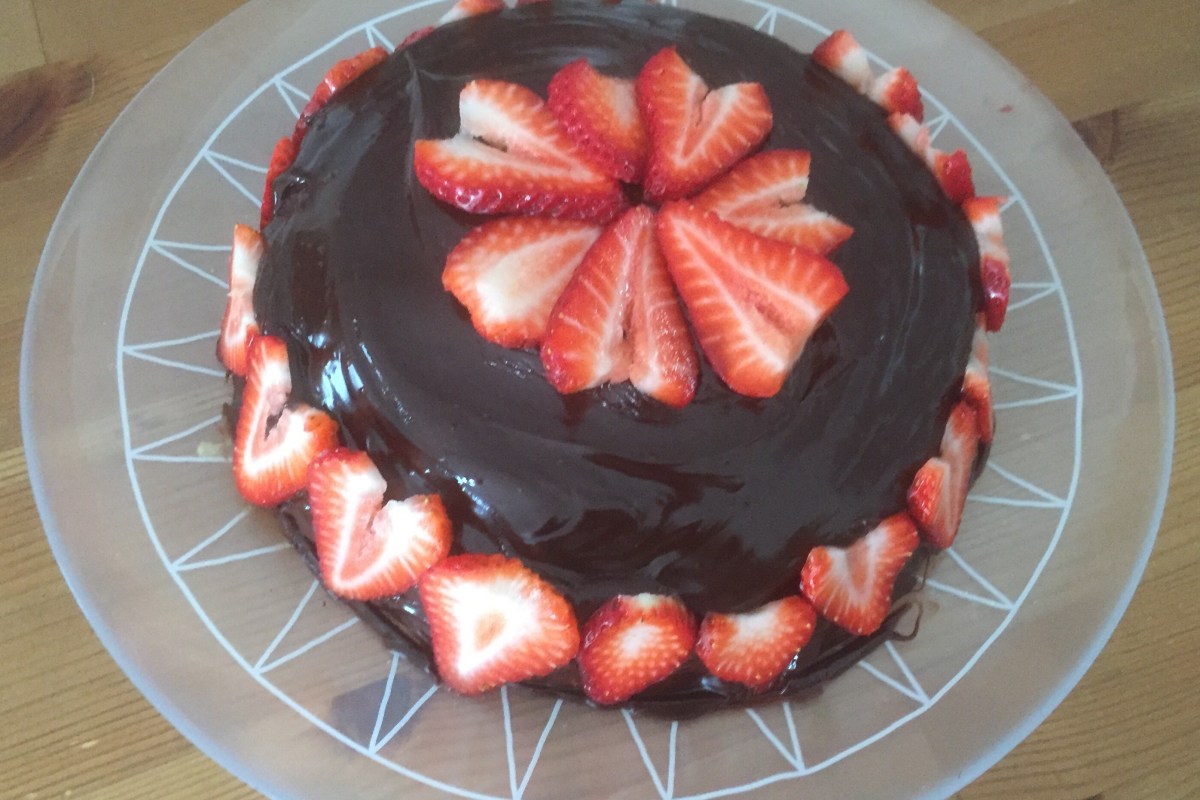
Gluten-free Chocolate Crêpe Cake

img_4830
Gluten-free chocolate crêpe cake, via Eat the Vegan Rainbow

Crêpes are great – and if you ever hear anyone say otherwise you can safely assume that they don’t know what they are talking about or perhaps did not have an opportunity to try some. Perhaps they don’t know that plant-based, 100% vegan crêpes are easy to make, or perhaps they don’t or can’t consume gluten and are unaware that gluten-free crêpes are within their reach. Or, and this is the final myth that I will dispel, they think that only highly skilled and trained chefs can embark on crêpe making, which is far from reality.

If you own a flat frying pan, and have a whisk that you are willing to use (or a blender!), you can make crêpes. These light, thin, flat pancakes are versatile and can be made into a savory dish, like these Scallion Crêpes, or topped with a range of sweet toppings for a quick and easy breakfast or dessert.

But, there is more to crêpes than that and I recently discovered that you can use them to make multilayered cakes! It usually takes 10-12 crêpes, nice, relatively firm filing, and topping of choice and you’ll have an impressive looking no-bake cake on your hands.

I wanted to make my crêpe cake gluten-free as well, so I followed a crêpe recipe that uses chickpea flour since that was the the type of flour I had on hand (I found the recipe in The Chickpea Flour Cookbook by Camilla Saulsbury and I recommend you check this cookbook out because it does offer lots of gluten-free recipes with helpful comments on how to make each recipe vegan!). The recipe below is a slight modification from the original as I added more almond milk and some vanilla extract, and you should feel free to customize the flavors further or replace some of the flour with cocoa powder if you want your cake to be all chocolate all the way. Additionally, if you prefer to omit oil you can do that as well – here is another excellent and very simple recipe.

The cake is easy to assemble and looks fantastic! If you are not sure you like chickpea flour you can use any gluten-free pancake mix and make a batter that is less dense than your standard pancakes. One way to test whether your batter is the way it’s supposed to be is to pour 1/2 cup in the middle of the pan and then swirl it around until the entire bottom is well covered. If your batter can do this you are all set, if not perhaps you need to add just a bit more water. Go slowly and test frequently, because you don’t want to end up with unusable slurry either.

If you would like to add some sweetness to the crêpes, feel free to add a bit of maple syrup, agave nectar, or other sweetener you like. The chocolate filling and the ganache are quite sweet so you may not need this extra sugar.

Making the chocolate filling is also simple – if you ever made pudding you will know what to do. The filling requires some simmering almond milk, starch and agar, as well we some dark cocoa and maple syrup, and needs to cook over low heat until dense. What  kicks the filling up a notch is orange zest which adds citrus tones to the entire cake.

You will need to let your crêpes cool then put the cake together by layering a crêpe then covering it with a tablespoon or two of the chocolate filling, then placing another crêpe on top, the the filling and so on and so forth until all the filling is used up.

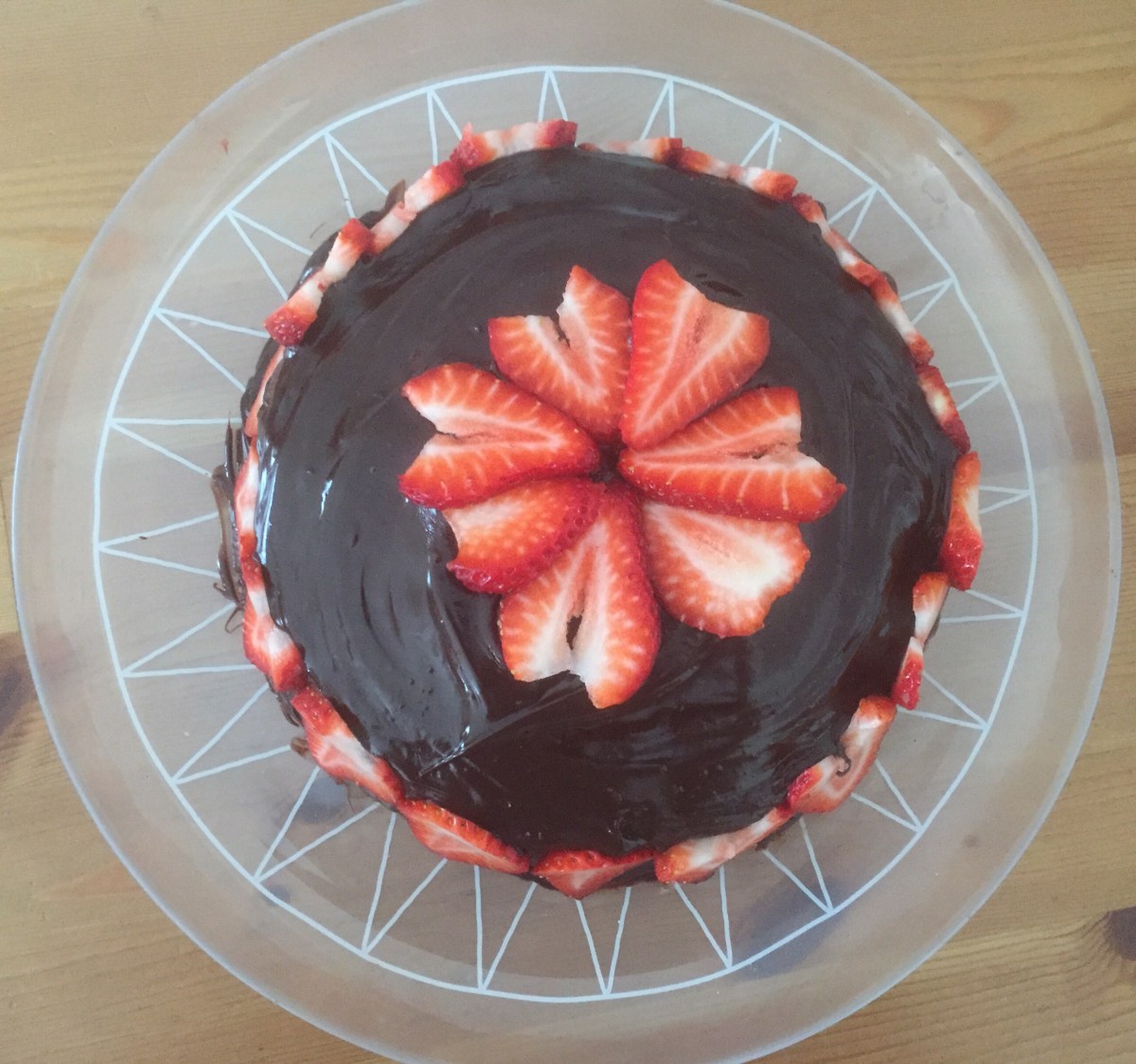
The last touch is chocolate ganache which you can make in the microwave, and pour all over the cake to completely cover the layers. You can decorate the cake with freshly cut strawberries, blueberries, toasted almonds, or some whip cream. Use your imagination to make it unique and incredible!


Gluten-free Chocolate Crêpe Cake

What you’ll need:

FOR THE CREPES:

2 cups chickpea flour

6 tablespoons egg replacer (I used Bob’s Red Mill Gluten-free Egg Replacer)

12 tablespoons water (to prep the egg replacer)

6 tablespoons olive oil

2 1/2 cups almond milk

1 teaspoon vanilla extract

Vegetable oil for the pan

FOR THE FILLING:

1 cup almond milk, unsweetened, preferably vanilla flavor

2 tablespoons tapioca starch

1/2 teaspoon agar agar powder

4 tablespoons maple syrup

2 tablespoons dark cocoa

1 teaspoon vanilla extract (add more if using plain almond milk)

Zest of one orange

FOR DARK CHOCOLATE GANACHE:

2 cups dark semi-sweet chocolate chips (vegan, like Enjoy Life)

4 tablespoons vegan cream or half’n’half (I used ripple; you can also use any plant-based milk as well, but decrease the amount to 2-3 tablespoons)

4-5 large strawberries, sliced – for decoration (optional)


What you’ll do:

  1. Prepare egg replacer according to instructions. If using flax meal based egg replacer or similar the preparations may require soaking the flax meal in hot water for 5-10 minutes usually by mixing the dry ingredients with water in 1:2 ration (in this case 6 tablespoons egg replacer and 12 tablespoons water).
  2. Mix all the crêpe ingredients (except oil for the pan) using a blender, a mixer or a whisk. The batter should be smooth and clump free.
  3. Place a large frying pan over high heat. Use a brush to brush the oil across the hot surface of the frying pan, then pour in 1/3-1/2 cup of batter and twirl the pan around until all the bottom if covered with a uniform layer of the batter.
  4. Leave the pan over medium-high heat until the surface is completely dry, then flip the crêpe over and continue cooking for 2-3 minutes on the other side. Continue until all the batter is used up, and leave the crêpes to cool.
  5. For the filling start from cold ingredients and bring the almond milk to a gentle boil. Mix tapioca starch and agar powder into the hot milk and continue cooking over low hear until the mix firms up. Leave the mix to cool, which make take some time. You could make both the crêpes and the filling a day ahead and assemble the cake couple of hours before serving.
  6. To assemble this cake, please use a large plate or a cake stand and start by placing a crêpe on the bottom, then the filling (1-2 tablespoons), then another crêpe and more cake filling until no filling is left!
  7. To prepare a ganache, place the chocolate chips and milk, cream or half’n’ half into a microwave safe bowl and microwave on high for 30 seconds. Mix and microwave again, check and repeat until chocolate is about 60% melted. Take the bowl out and start mixing to help finish the melting process.
  8. Pour the melted chocolate ganache over the top and spread as evenly as possible over the top and around the sides. Decorate with fresh strawberries, set aside for 2-3 hours then dive in!

Copyright © Eat the Vegan Rainbow, 2018

Free and Beautiful – Flourless Double Chocolate Brownies with Chickpeas and Oats

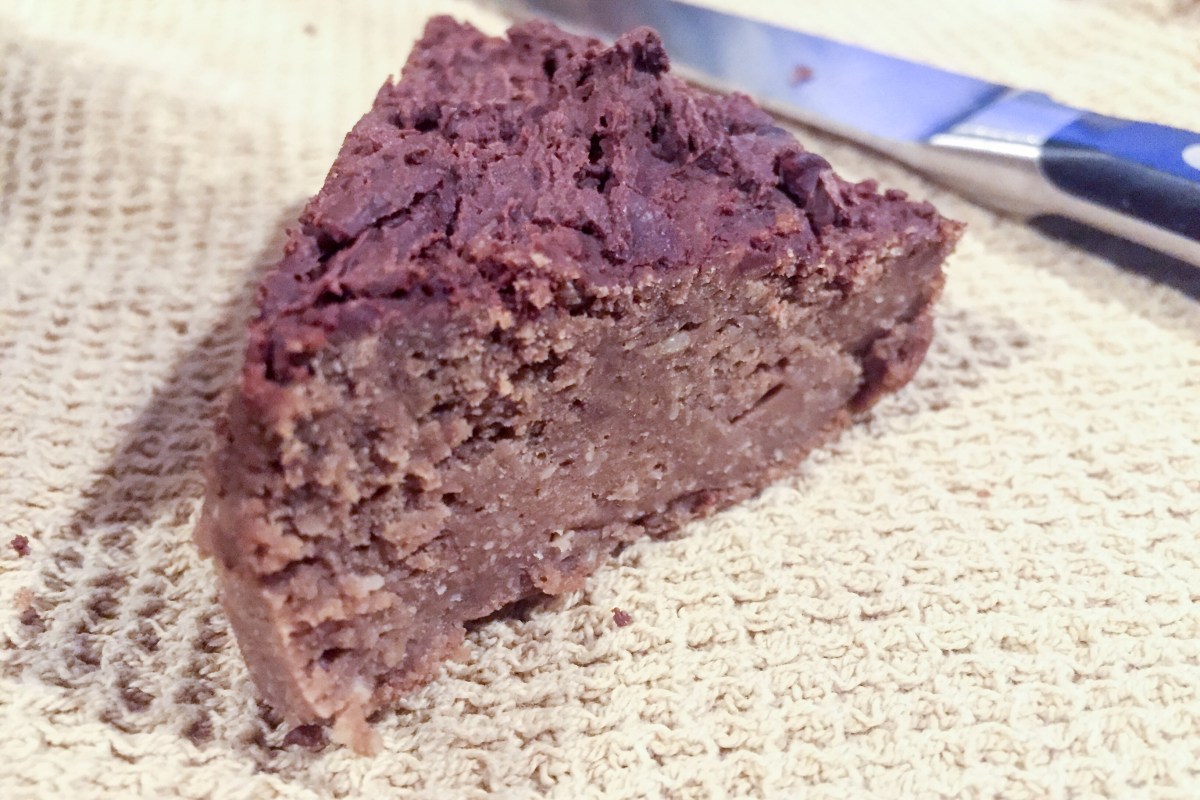
Just how free and beautiful are these brownies? On the “free” side they are vegan, so dairy-free and egg-free, they are also gluten-free and nut-free, plus they are no-added sugar! So, what on Earth do they have? They have plenty of chocolate, cocoa powder, and cocoa nibs, which gives them their chocolate richness.

They are also full of ingredients that you will not find in your regular brownies, like a banana I use here for sweetness and a egg replacement, and oats and chickpeas, which I use as the key flour-like components. Chickpeas and the chickpea water – the miraculous aquafaba – are essential here. They add the protein needed to help give the brownies a bit of structure and texture. They combine well with oats so that the result is not chocolate oatmeal but a real double chocolate brownie with a bite and a chew.

For this and other baking projects, like my meatloaf and my marshmallow topping, I suggest you try making your own chickpeas. They do need some work – you soak them overnight in lots of water, then you rinse them and boil them in double the amount of water to get soft chickpeas and very useful aquafaba. I cook them in an electric pressure cooker on the “beans” setting. To help aquafaba along, I recommend letting the liquid that chickpeas were cooked in sit in the refrigerator for a day or so before using.

Other than cooking the chickpeas that’s a bit elaborate, everything else is smooth sailing. You will need a large food processor, pile everything in, and pulse to mix and combine. The baking is a standard deal, using a 350 F (175 C) oven and taking somewhere between 20 and 25 minutes. Let your brownies rest for at least 15 minutes before serving, then cut and plate. They’d be great with some vanilla nicecream, if you’d like to make them fancy. They are also great as is or with some orange zest on top.

Flourless Double Chocolate Brownies with Chickpeas and Oats

What you’ll need:

2 cups oats, gluten-free

2 cups chickpeas, cooked

1 banana

3/4 cup aquafaba

1/2 cup cocoa powder

1/3 cup chocolate chips or chunks, vegan

2 tablespoons cocoa nibs

2 teaspoons vanilla

1 teaspoon baking powder

What you’ll do:

  1. Preheat the oven to 350 F (175 C).
  2. Place cooked chickpeas, oats, roughly chopped banana, and all the rest of the ingredients except chocolate chips and cocoa nibs into a food processor, and process until you form a dough.
  3. Add the cocoa nibs and chocolate chips and mix everything together.
  4. Pour the mix into a square, 8 x 8 in (20 x 20 cm) baking dish and put your brownies to bake for 20 minutes.
  5. Take the brownies out and let them rest for at least 15 minutes before cutting and serving. Enjoy with some vegan ice cream or as is!

Copyright © Eat the Vegan Rainbow, 2018