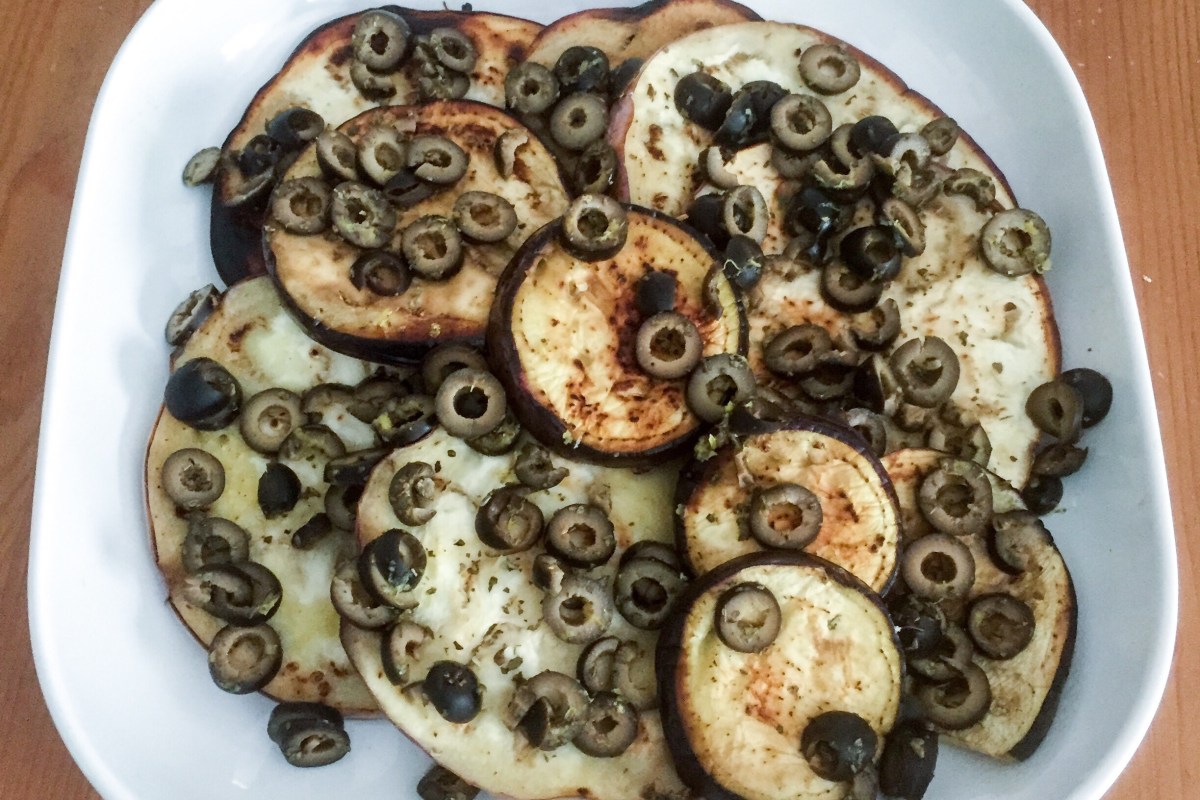
Citrus Infused Pan-Seared Eggplant with Black Olives


Citrus Infused Pan-Seared Eggplant with Black Olives, via Eat the Vegan Rainbow

Simple may not always be better, but it is absolutely true that when it comes to vegetable side dishes keeping things simple and letting the vegetables speak for themselves goes a very long way. For example, grilling is one of the best ways to add a lot of flavor without any extra ingredients of complicated prep procedures. And eggplant is probably one of the most grill-friendly vegetables out there!

But, before the eggplant hits the grill (or a pan) it is important to soften it and let some of the bitterness drain out. Very often that means salting the sliced eggplant and letting it sit in between paper towels to absorb the moister that the salted eggplant will release. Doing this removes some of the bitterness that eggplant can sometimes have as well as make the eggplant less like a sponge.

This recipe does have one important trick that really elevates the flavors – rubbing the grilled eggplant slices with a clove or garlic to add that great garlic flavor! This is a trick that you often see used for making garlic bread to infuse garlic aroma into toasted bread – it avoids having to deal with raw garlic pieces, and it is very effective.

Finally, what makes this simple side dish come together is the lemon juice and lemon zest. This small amount of acidity and the freshness that lemon zest contributes really bring the simplicity to a new level. You can serve this elegant vegetable dish warm, as a side, or cold as a salad. Either way, give this a try and see whether you are with me when I say that simple is the way to go!!!

db2b75ef-8095-4ae2-9901-ea9db20ba34e

Citrus Infused Pan-Seared Eggplant with Black Olives

What you’ll need:

2 large Italian eggplants, sliced into rounds

1 clove of garlic, peeled

1 lemon, juice and zest

1 cup black olives, sliced

2-3 teaspoons coarse salt

Cooking spray (or olive oil)

What you’ll do:

  1. Wash the eggplant, and slice into round slices (about 1/4 in (5 mm) in thickness). Place on the two layers of paper or kitchen towel, sprinkle with salt, then cover with another layer of towels, and let stand for 20-30 minutes. The salt will draw out some of the extra moisture out of the eggplant, and with it some of natural bitterness that eggplant sometimes has. Remove the paper towels, and pat dry the eggplant slices.
  2. Put a large grill pan over the high heat to make the pan really hot. Reduce the heat to medium, then spray with some cooking spray or brush with some olive oil. Place eggplant slices on and grill on both sides in batches until all the eggplant is grilled. You can also use an outdoor grill or a regular pan. The point is to blacken and cook the eggplant through, which will take 3-5 minutes per side.
  3. Use the garlic clove and rub the eggplant slices, so that they are infused with garlic aroma. Place the garlic rubbed eggplant into a large mixing bowl, add lemon juice, lemon zest, and sliced black olives. Mix well and you are done! If you like to add a bit more flavors to this simple side dish, you can drizzle some olive oil, sprinkle fresh parsley, or add a dash of crushed red pepper flakes if you are open to turning on the heat!

Copyright © Eat the Vegan Rainbow, 2019

Rich Risotto with Roasted Winter Squash

Rich Risotto with Roasted Winter Squash, via Eat the Vegan Rainbow

Winter squash – they come in what seems to be an endless number of varieties. If you ever find yourself wondering whether you have a summer or a winter squash, all you have to do is take a look at the seeds. All summer squash are picked before their seeds are fully formed and mature, while the winter squash is left on a vine to ripen until seeds are fully formed. So when you cut winer squash, you will find a bunch of seeds that you can often enjoy in their own right, usually roasted.

The types of squash that I can easily find in New England (USA) are acorn, butternut, buttercup, hubbard, and spaghetti squash, which makes lovely Pad Thai among other things. And, of course, pumpkin, which reigns supreme among others in terms of availability and easy of use given that I go straight for the can. Canned pumpkin purée (note: not the pie filling!), is a nice addition to many recipes, including meatloaf, as well as truffles. Actually, all winter squash are quite versatile and can be made into both savory dishes and main courses, as well as dessert.

winter-squash-3729094_1920
Winter Squash, image via Pixabay

One of my favorite way to prepare winter squash is roasting. Roasted squash is delicious, and does not require much work to get the roasting going. After it cools, you can enjoy roasted squash as is, or cube it, or purée it for use in number of different recipes, including the risotto below.

The inspiration for this risotto came from my search for ultimate comfort food. It struck me that combining soft and creamy rice, like the one you get in a well-cooked risotto, with slightly sweet and earthy winter squash is likely to deliver. And: I was right! What helps this risotto come together is nutritional yeast, which I use quite liberally, and bay leaf and thyme, two herbs that infuse the risotto with flavor. Here, I used vegetable stock, but you could use water, or mushroom stock if you like. The texture will not change, but the flavors will. Also: the recipe below does not include salt, so use as much or as little as you like.

The most important thing you need when cooking the risotto is patience, and adding the cooking liquid gradually and in small increments to allow the rice to absorb all the liquid bit by bit. At the end, I always find that risotto uses more liquid then what I expect, so here I recommend having a quart (about 1 L) of stock ready, but add it in small increments. Another thing that a good risotto needs is lots of stirring, so get ready!


Rich Risotto with Roasted Winter Squash

What you’ll need:

1 onion, finely diced

4 stalks celery, diced

2 cups winter squash (or pumpkin) purée (see below)

1 cup medium or short grain rice (for example Arborio)

1/3 cup nutritional yeast

up to 4 cups (1 L) vegetable stock, divided

4 bay leaves

6-8 springs of thyme, laves only

1 tablespoon olive oil


What you’ll do:

  1. I recommend using homemade roasted winter squash for this and any other recipes. Which means that your first step would be to clean and roast the squash until soft and fully roasted. This usually takes about 45-60 minutes at 425F (220 C) oven. You only need 2 cups of puréed squash for this risotto, so you will have some leftover for other things, like soups, pies or even hummus. If you are short on time but still want to enjoy this risotto, go for canned pumpkin. One 15 oz (425g) can of plain pumpkin (NOT pumpkin pie filling!) will do the trick here.
  2. Place a large high-sided skillet over medium to medium-high heat. Add oil, diced onion and celery and let sauté for 5-8 minutes until done. Add puréed squash, mix well and sauté for another 3-4 minutes.
  3. Add the rice (without rinsing it, so that you retain all the sticky starch that will make the final risotto extra creamy), mix well and let the rice brown just a little bit on its own, for about 3 minutes.
  4. Add 2 cups of vegetable stock, bay leaves and thyme leaves and mix well. Bring the risotto to boil then lower the heat down to simmer. Check every 3-5 minutes, mix again and add more stock in 1/2 cup intervals as needed.
  5. After about 15 minutes, mix in all the nutritional yeast, and continue to simmer. Continue to check every 3-5 minutes and add more stock gradually. Any risotto needs lots of attention, and adding the liquid in small increments. So, be patient! The rice should be fully cooked in about 25-30 minutes (fully cooked here means that the rice will not be completely mushy and give sort of al dente resistance when you bite into it.
  6. Serve your risotto warm and enjoy with a nice glass of wine, some olives, or perhaps some nice Giardiniera (Italian pickled vegetables), which I love. That little bit of nice acidity complements the creaminess of this risotto really well.

Copyright © Eat the Vegan Rainbow, 2018

Apple and Carrot Soup

Apple and Carrot Soup, via Eat the Vegan Rainbow

Soups seem to be one of those things that have gone out the window together with long sit down dinners. I grew up in a family that had soup as a starter of a large meal, in our case lunch, almost every day. My mom still makes soups couple of times a week, and they are varied and delicious!

I vary my soups depending on the season, and gravitate towards lighter soups during summer, and rich and more decadent soups during winter. For example, about two years ago we had a major snow storm, and while my husband was out shoveling, I made a pot of New England Clam-less Chowder that hit the spot!

More recently, some of the soups that we enjoyed were rich in vegetables and can work really well to replace all those recipes that use tons of butter and cream, like Cream of Carrot Soup, and a perfect Creamy Cauliflower Winter Soup. The secret weapon to a rich, creamy and totally vegan soup is an immersion (or stick) blender. This kitchen gadget goes directly into a pot and blends the contents with ease! Of course, you can also use your regular blender but that requires a transfer of a very hot liquid, which may lead to injury – so for things like making creamy soups and sauces a stick blender is the way to go.

For this soup, which combines carrots and apples, it is important to pick firm and tart apples like Granny Smith. Apples add a bit of tartness to the soup as well as a bit of a thickening agent as they are full of pectin, which is a complex carbohydrate that makes jams gel!

One last thing I want to mention before we dive into the recipe is the sodium. My recipe does not include salt because my husband is on a very low sodium/no sodium diet. But this soup, as indeed others as well, taste best with a bit of salt added to it. So, unless you do need to omit sodium from your diet I recommend you add salt to taste, to the pot as the soup simmers. One teaspoon ought to do it for most of us!

This is a great Thanksgiving or winter holiday soup and I hope you get to enjoy it with your family and friends!!!


Apple and Carrot Soup

What you’ll need:

1 onion, diced

4 stalks celery, diced

5 large carrots, cut into small chunks

3 apples, tart, cut into small chunks (peeled or not, up to you)

1 teaspoon dried dill weed

4 bay leaves, whole

1 teaspoon celery seed

2 teaspoons rubbed sage

4 cups water

1 tablespoon olive oil

1-2 tablespoons pan toasted pumpkin seeds per serving

salt, pepper to taste

What you’ll do:

  1. Place a large pot over medium-high heat, then add oil, celery and onion and let the vegetables sauté for 4-5 minutes.
  2. Add the carrots and apples, and sauté for another 5-8 minutes, until carrots and apples start to soften and brown.
  3. Add the spices and mix well, then pour in the water, increase the heat to high, let the soup come to a boil, then lower the heat and simmer for 20-30 minutes until apples and carrots are soft and fully cooked.
  4. Once the carrots and apples are fully cooked, turn the heat off, and let the soup cool for 5-10 minutes. Take all the bay leaves out, then using your immersion blender, blend the soup until smooth. You can do this in the standard blender as well, but do be careful – the liquid will still be very hot and you can get seriously burned!!!
  5. Serve the soup with some toasted pumpkin seeds. You can toast the seeds in a toaster oven or in the non-stick pan. Place your pan over the high heat and let the surface get really hot. Next pour in the seeds, and let them toast with constant stirring for 1-2 minutes. This will be sufficient to get them lightly toasted. Sprinkle on top of the soup and serve!

Note on the salt: please note that the recipe does not use any salt as my husband is on a reduced-sodium/no-sodium diet. However, I do add salt to my own bowl as I do think it enhances the flavor. If you are in the household that consumes salt, please consider adding 1 teaspoon in the pot while cooking. Enjoy!

Copyright © Eat the Vegan Rainbow, 2018

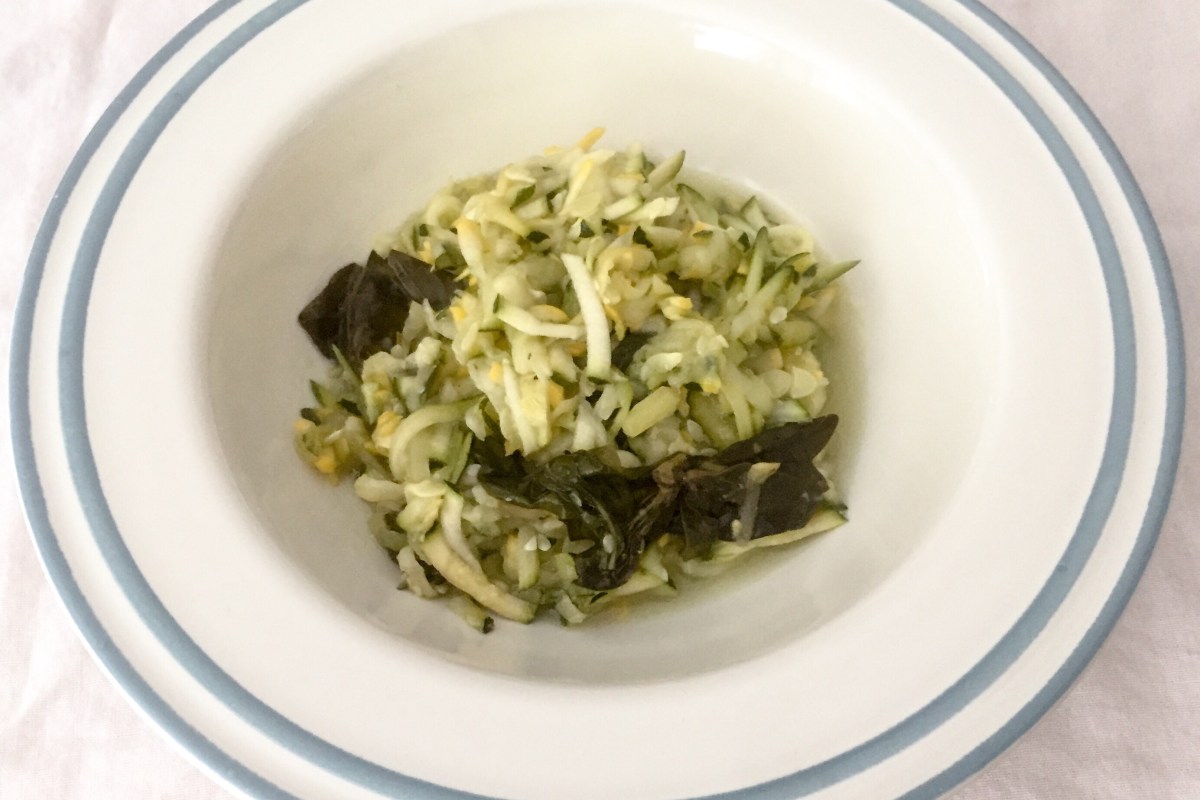
Zucchini and Summer Squash With Garlic and Basil – CSA Week 9
b00a2607-ad68-4648-b9da-bf7749d55ff5
Zucchini and Summer Squash With Garlic and Basil, via Eat the Vegan Rainbow

You know that you have been slacking when the post about CSA Week 9 recipe comes couple of weeks after the finish of the CSA program. How did all those weeks disappear? All I’m going to say is that summer vacation, start of school year, and crazy work schedule happens to the best of us! Wild, I know!!!

In Week 9, Upswing Farm share included some lovely zucchini and basil. So recipe here is a really easy and quick take on what to do when life gives you zucchini, summer squash (this one was from my garden), and lots of fresh basil.

The recipe takes less than 30 minutes to make, used only a handful of ingredients, and is light, fragrant and incredible for the long, hot, lazy days of summer, as well as these fall moments we are now enjoying.

As summer squash, zucchini and fresh basil are now available year round, you can actually serve this “summer sunshine in a bowl” even at the dead of the winter. When choosing your zucchini and squash pick those that have smooth surface with bright color and fresh look. Those will be fresher pieces that you can use without peeling after giving them a good wash.

This recipe requires grating, and the easiest way to do this is to run the zucchini and squash through a grater attachment that most food processors include. Traditional hand-held grater works too! I recommend that you squeeze some of the excess water out of the grated squash and zucchini before using. If you skip this step, the final dish will be quite water-y, although it will still taste good. So, it’s up to you to decide the amount of liquid you’d like your final result to have.

Lastly, when it comes to fresh basil you will not need to do much to prep it. You can use the entire bunch, after you wash it and trim it. The point is to have basil infuse the dish, and you can fish the large pieces of basil out before serving. Of course, basil is delicious in its own right and if you want to enjoy it just go for it!

This side dish is best served warm, with some toast or good hearty bread for dipping and mopping the bowl. Delicious!

Zucchini and Summer Squash with Garlic and Basil

What you’ll need:

2 zucchinis, washed, trimmed, and grated

2 summer squash, washed, trimmed, and grated

6 cloves garlic, peeled and thinly sliced

2 cups basil leaves, whole

1 tablespoon apple cider vinegar

2 tablespoons olive oil

What you’ll do:

  1. Wash the zucchini and summer squash, trim the ends, and grate either using a food processor or a manual grater.
  2. Peel and slice garlic thinly. You can adjust amount of garlic to taste but I don recommend going beyond your comfort zone here.
  3. In a large pan bring oil to medium heat, add garlic and sauté for 1-2 minutes.
  4. Add the zucchini and squash, mix well, and sauté for 5-8 minutes until fully cooked.
  5. Add the fresh basil and vinegar, mix well and let rest for 10 minutes or so before serving. Enjoy!

Copyright © Eat the Vegan Rainbow, 2018

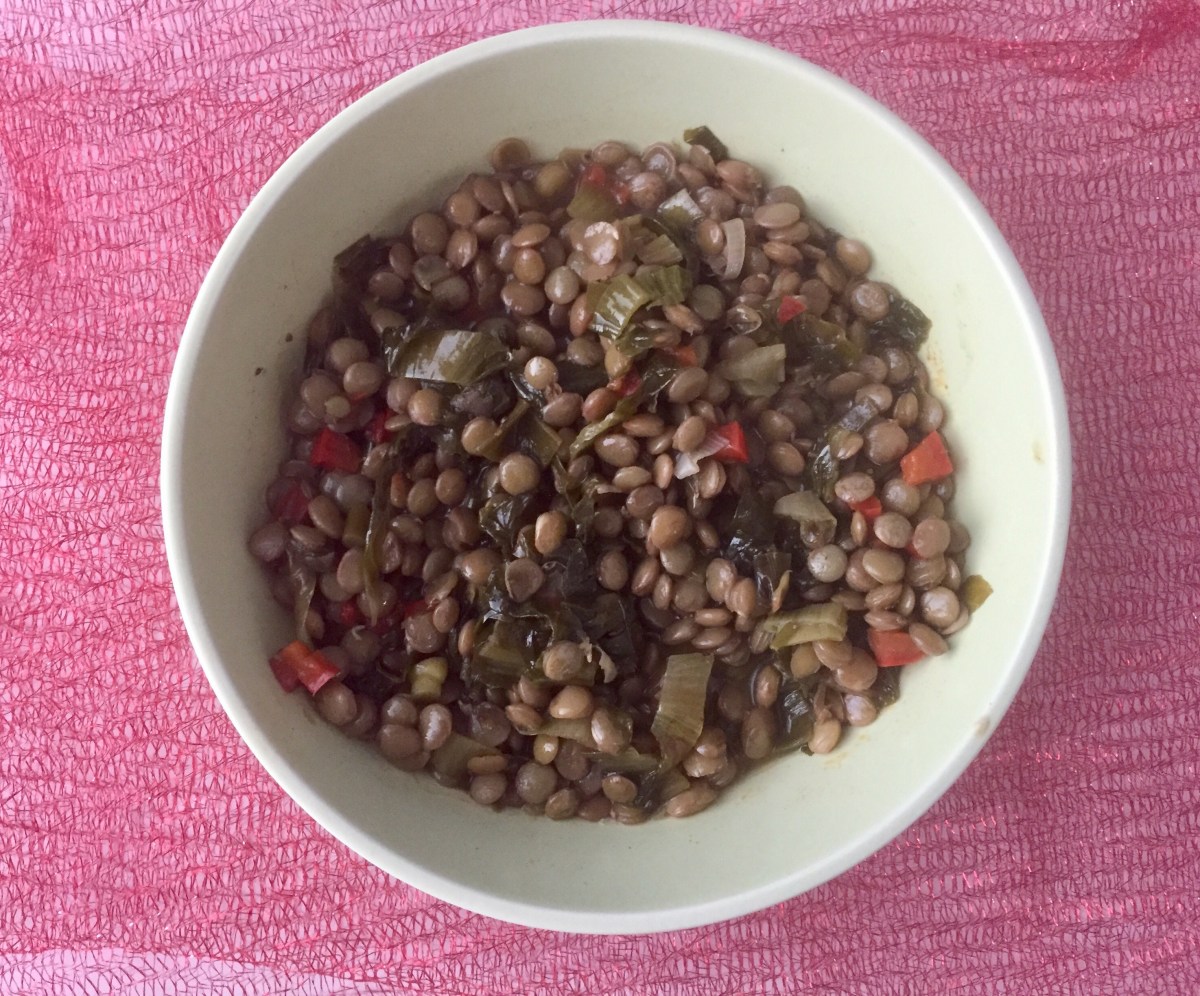
Escarole and Lentil Soup

Escarole and Lentil Soup, via Eat the Vegan Rainbow

Soups are some of the easiest types of meals you can make. They can, of course, be light and serve to open your appetite and cleanse your palate – so if you are up for a five course meal don’t skip your soup! Having said that, that type of a soup is not what this post is about.

One-pot dinner wonders

Hearty soups are those wonder recipes that take only a handful ingredients and a single pot to make a huge amount of food to feed an army. Hearty soups, and, to be honest, soups in general, freeze well as well as taste even better the next day! This all means that if you have an hour of time, a chopping board, and a large pot you can make yourself a big batch that can see you through for a while.

How to make a hearty, yet meatless soup

Many may think that meat is the only way to boost the heartiness. This is a myth and simple to dispel. All you need is a nice selection of some soup basics, like onions, celery, garlic, carrots, parsnips, peppers – these types of ingredients will make a flavor base for your soup.

Another type of flavoring agents you may want to employ are vegetable stock, bouillon cubes or bouillon base. I use the stock fairly often – you do need to experiment a bit to find one you like. However, I find both the bouillon cubes and base to be too salty and full of stuff I don’t need/want. It’s up to you to decide whether these are the best way to enhance flavors of your soups and other dishes.

Additional key ingredients for a hearty plant-based soup are the legumes (beans, lentils, chickpeas, peas), and starches (potatoes, noodles, and rice). You can use both legumes and starches together, of course, but in the recipe below I use lentils only.

Finally, you can really refresh your hearty soup by throwing in some nice green leafy vegetables. Things like kale, spinach, chard, and escarole are all an excellent addition. This kale soup is a good example from a while back!

Re-thinking escarole and bean soup

In this one pot hearty soup recipe, I decided to play around with a very traditional escarole and bean soup recipe. Instead of the beans, the recipe uses brown lentils. Moreover, it starts with a mix of scallions and diced red pepper, this completely abandoning the traditional onion and celery. The result is a thick soup, where richness of lentils is balanced out by the escarole. Overall, one head of escarole and one pound of lentils go a long way, making this a budget-friendly recipe. Lastly, since the recipe is wholesome and uses only main stream ingredients, this is something you can serve with vegans and non-vegans alike.

Escarole and Lentil Soup

What you’ll need:

1 tablespoon olive oil

2-3 scallions, trimmed and finely sliced

1 sweet red pepper, finely diced

1 escarole, washed and chopped into bite sized pieces

1 lbs (454 g) brown lentils, rinsed and sorted

4 cups vegetable broth

2-4 cups water


What you’ll do:

  1. Place a large and heavy pot over the medium high heat – I recommend using a Dutch oven, but any heavy and large pot will do. Add oil and chopped scallions and brown for 1-2 minutes.
  2. Add the diced peppers, lower the heat to medium low, and sauté for 5-8 minutes.
  3. While the scallions and peppers are sautéing, wash and chop the escarole, and rinse and sort lentils. Add the escarole first, and let it wilt down. This will take 4-5 minutes. Then add the lentils, pour the stock in, and add 2 cups of water to begin with.
  4. Turn up the heat, bring the pot to boil, then lower the heat down to a gentle simmer. Let the soup simmer for 45 minutes or so, with occasional stirring. If you think the soup is getting too dense, add some more water in – but do go slow and only add 1/4 cup to 1/2 cup of water at a time. After about 45 minutes of simmering the soup will be ready to enjoy. Taste test first to make sure it is salty enough for you (I don’t add extra salt since the vegetable stock I use is usually enough, but this is something you can easily adjust depending on your preferences), and that lentils are fully cooked – they should be soft by this point.
  5. Enjoy the soup with some bread, or with a salad. You can top it with a dollop of vegan sour cream, yogurt (my favorite brand is kite hill plain almond milk yogurt), or parmesan cheese, and sprinkle of fresh chives or fresh flat leaf parsley!

Copyright © Eat the Vegan Rainbow, 2018

Creamy Vegetable Soup with Roasted Garlic

img_4507
Creamy Vegetable Soup with Roasted Garlic, via Eat the Vegan Rainbow

Vegetable soups are supposed to be healthy and good for you. But on a recent plane trip I realized that some of the cooking shows out there go out of their way to make absolutely everything in their reach as unhealthy as possible, or even worse – talk up these recipes as good for you, usually referring to them as “soul food”.

Of course, all of us have a soft spot for rich food, the one our mom or grandma used to make… Most people have warm memories associated with big family meals and joy that comes from being surrounded by the loved ones. And, yes, it is true that most of the food consumed in those occasions is not something that any nutritionist would approve off!

To be honest, I don’t disprove an occasional overindulgence, but what rubbed me the wrong way was that during the three hours of different cooking shows there was not a single recipe that would qualify as healthful, and even couple of soup and salad recipes included exuberant amounts of butter, cream, bacon…

As I was watching the continuous array of that heart-attack-in-the-making “soul food” recipes I could not stop thinking that there must be a better way. Actually, I started jotting down recipe ideas and ingredient lists while still on the plane, and this creamy vegetable soup is the first one that I have now fully developed.

I’ve made quite a few creamy soups in the past, like the Cream of Carrot Soup, Creamy Cauliflower Winter Soup, and the New England Clam-less Chowder, which are all rich in flavor and light in calories, or at least far lighter than the more conventional soups of their kind. The recipe below is super simple and cheap, so there’s no excuse not to try it.

The only slightly more time-consuming bit is the roasted garlic.  I am not even sure if you can get roasted garlic in the store, if you can you may try using the store bought stuff as a short cut. But roasting your own batch and then using it as needed is simple so you might just as well do it yourself, and here is a good recipe for you to follow (it’s basically putting a head of garlic in an hot oven for 30 minutes or so and you- there, I told you it was easy!)

To re-cap: angered by cooking shows that succeeded in making even soups and salads into a health hazard, I decided to roll my sleeves up and show the world that couple of simple ingredients, like a bag of frozen mixed vegetables, some starch and a carton of vegetable stock, when combined with flavor enhancing agents, like the roasted garlic, lemon juice and lemon zest, will make a wonderful, flavorful and rich-tasting soup without any butter, cream, bacon or cheese. Now that’s some real soul food!

img_4506

Creamy Vegetable Soup with Roasted Garlic

What you’ll need:

1 bag (1 lbs, 454 g) bag mixed vegetables, frozen

2 tablespoons corn (or potato) starch

4 cups (960 mL) vegetable stock

2 cups water

4 cloves roasted garlic

1 lemon, juice and zest

1 tablespoon oil (optional)

What you’ll do:

  1. Place a large post over the medium to medium-high heat, add the oil (if using), and all the vegetables. Let defrost and sauté with frequent stirring for 3-5 minutes.
  2. When the veggies have softened, add the starch. Make sure that vegetables are fully coated with a thin layer of starch. Sauté for another minute, just to let everything fully combine.
  3. Add the vegetable stock in a slow and steady stream, while mixing continuously. This vigorous mixing is essential to prevent lumps, so keep at it! You can use a large whisk for this if you like – the whisk works well for me.
  4. Next, add the water still mixing/whisking as you go, then let the soup come to a steady boil. Once you reach that point, lower the heat all the way down, add the chopped up roasted garlic, and allow the soup to simmer for 15-20 minutes.
  5. Turn the heat off, and mix in the juice of one lemon, and all the lemon zest. Serve warm and enjoy! (As you can see from a photo above I had mine for lunch with some buttered homemade bread. If you are into making your own bread via a bread machine, my recipe is here.)

Copyright © Eat the Vegan Rainbow, 2018

Lemony Roasted Cauliflower

img_4453
Lemony Roasted Cauliflower, via Eat the Vegan Rainbow

Cauliflower is the king of the vegetable world, and beloved by millions who follow the plant-based or vegan diet. It’s also loved by paleo diet eaters, and of course many, many others. What makes cauliflower versatile is the fact that it is mild enough on its own, which allows it to carry many different flavors. For example, you can make a lovely Cauliflower Buffalo Wings and Cauliflower Pizza Crust, as well as a great Cauliflower Basmati Rice or pasta shells stuffed with cauliflower ricotta. You must agree that this is quite a range for a single ingredient!

This dish is a simple yet delicious side dish or a quick lunch. It tastes great warm as well as cold, so you will be able to make the most out of your leftovers. The dish does take some time to make – roasting cauliflower can take up to 45 minutes. But, trust me: roasting is the way to go. Although you could boil the cauliflower the flavor will not be the same, so just don’t go there.

The rest of the ingredient list is simple and straightforward. Pine nuts add nice toastiness and crunch to the dish, garlic give it the aroma, and lemon juice and zest make this dish light and full of sunshine. Of course, a dash of basil never hurts!!!

Lemony Roasted Cauliflower

What you’ll need:

2 heads of cauliflower, florets only

4 cloves garlic, thinly sliced

3 oz (185 g) pine nuts

1 lemon, rind and juice

1/4 cup extra virgin olive oil

2 teaspoons basil, dry (or 2 tablespoons fresh, finely chopped)

What you’ll do:

  1. Preheat the oven to 425 F (220 C).
  2. Wash the cauliflower, and cut out the florets only (you can use the leftover cauliflower to make rice, or a creamy soup, so don’t throw it away!). Pat dry the cauliflower florets and set aside.
  3. Line a large baking sheet with some parchment paper, arrange the cauliflower florets so that there is some space around each one, and place in the oven. Roast for 30-40 minutes. The florets should be soft and nicely browned.
  4. Place the roasted florets into a large mixing bowl and let them cool slightly.
  5. Bring a large frying pan up to temperature over medium-high heat. Add the pine nuts and toast on high for 2-3 minutes. Stay with your pine nuts as they toast and stir frequently as they can quickly go from nicely toasted and fragrant to burnt! Add the toasted pine nuts to the roasted cauliflower.
  6. Add the oil to the pan and decrease the heat to medium low. Add the sliced garlic and cook it for 1-2 minutes. Pour the garlic and oil over the cauliflower and pine nuts mix.
  7. Next, add lemon juice, lemon rind, and basil and mix everything well. Let the cauliflower rest for 10 minutes or so, then serve and enjoy!

Copyright © Eat the Vegan Rainbow, 2018

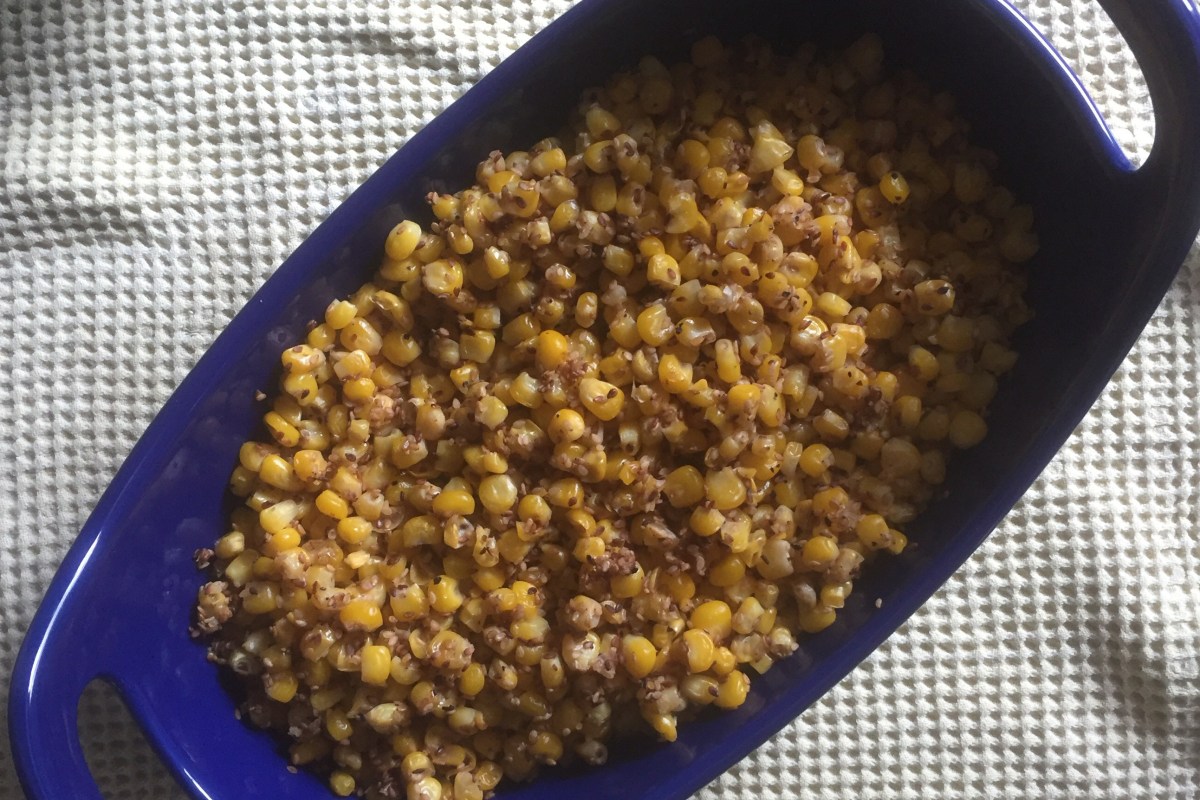
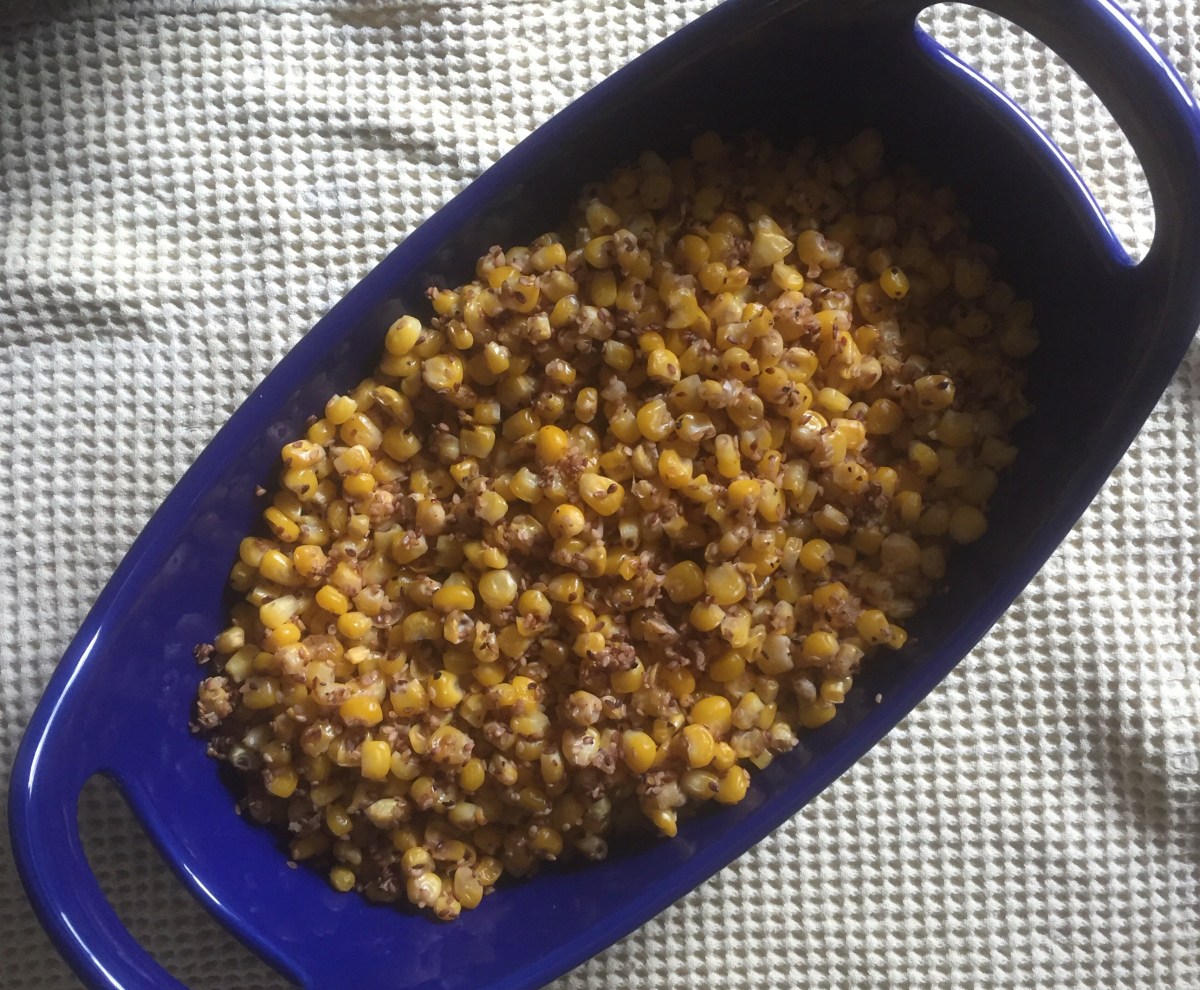
Sweet Corn and Sesame Seed Salad

img_4780
Sweet Corn and Sesame Seed Salad, via Eat the Vegan Rainbow

Sometimes salads are complex, feel elaborate and deep, mature and intense. I’ve made couple of those in my life, like this incredible roasted beets and leeks salad with baby kale and the most amazing lemon vinaigrette. I also made salads that are just for fun, with a bit of this and a bit of that, by combining fruits, vegetables and nuts.

But during summer, I like my salads to be simple, yet out of the ordinary. Last summer I went nuts for a pasta salad that used only a handful of ingredients but which I could not stop making over and over again. I think we are at that point in summer when it’s time for another easy, yet amazing salad, with no greens allowed (I love the greens but there is sometimes scope to be just a bit different!).

This corn salad is it – and it’s absolutely a fabulous accompaniment to any grilled food feast. All you need are four simple ingredients and 10-15 minutes. If you have that – boom, boom, boom and you are done.

The corn I use most often is frozen sweet corn, but you could grill your corn and cut the kernels out and use that instead. I bet the grilled/charred corn flavor would be fantastic.


Sweet Corn and Sesame Seed Salad

What you’ll need:

1 lbs (454 g) frozen sweet corn

1/2 cup sesame seeds

2 tablespoon olive oil

2 teaspoons steak spice (I recommend McCormick Grill Mates Montreal Steak Seasoning)


What you’ll do:

  1. Place a large frying pan over medium high to high heat. Add olive oil and frozen corn. Let the corn brown as it defrosts. Mix frequently but do let the corn get some surface caramelization.
  2. While the corn is cooking, toast your sesame seeds. You can do this in a toaster oven or using a stove top. Keep a close eye on your sesame seeds as they toast because they do from nicely toasted to completely burned in a matter of seconds!
  3. Add the toasted sesame seeds to your corn, as well as the steak spice and mix well. The salad is best served room temperature, but you can serve it warm as well. Enjoy!

Copyright © Eat the Vegan Rainbow, 2018

Super Summer Soup Supper – CSA Week 8

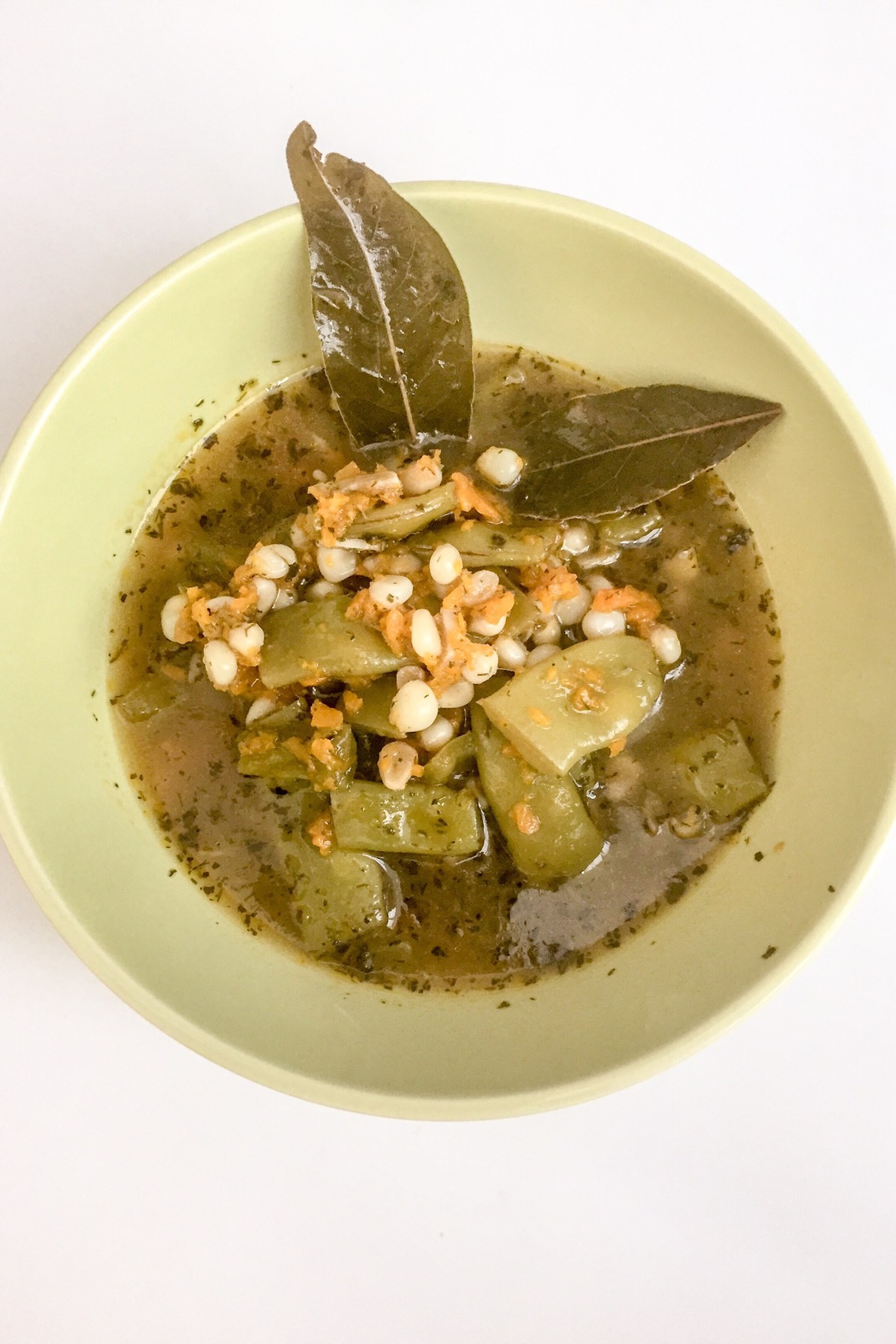
Super Summer Soup with Italian Flat Beans, via Eat the Vegan Rainbow

The adventures of the CSA share continue! This is our week 8 share and the eggplant, zucchini, and cucumbers are in full swing. If you need some zucchini inspiration, check out my stuffed zucchini boat recipe from last week. There are also some new items this week, and that’s my focus here: corn, green peppers, and flat (romano beans)! And this is what makes taking part in a CSA (Community Supported Agriculture) program so great – finding surprise ingredients that your local supermarket may not carry, and figuring our what to do with them.

The credit for this soup goes entirely to my 7 year old who suggested we use flat beans for a soup, add corn to it, plus one tablespoon each of dried dill, dried basil and onion powder. Oh, and garlic and vegetable broth! Then I stepped in with some carrots, bay leaves, and green pepper (also courtesy of the CSA share this week). The rest is history and the recipe below!

What are flat beans?

Flat_beans_raw
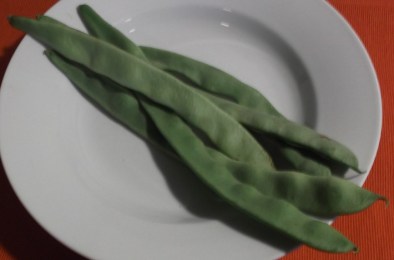
Flat Beans, Raw – By Andrewa, from Wikimedia Commons

Before we dive into cooking, let me just share what flat beans are. I don’t think I ran into them before, and I am guessing many of you are in the same boat! These beans are also known as romano beans, and also Italian flat green beans. They are similar to green beans, but much broader – about one inch (2.5 cm) or so, and they are quite long too. They have a good bite to them, although my seven year old helper did not like their taste when raw. These beans are meaty and that’s another reason why putting them into a stew or a hearty soup makes a lot of sense as they need a bit of time to cook, and I don’t think steaming them would work. So, if you like to try a green bean variety with a bit more meat and bite to it, these are a great option.

Super Summer Soup with Italian Flat Beans

What you’ll need:

1 lbs (about 500 g) flat beans (romano beans), trimmed and cut into 1 in (2.5 cm) pieces

2 cups grilled corn, just kernels (frozen or canned whole kernel corn would work too!)

2 large carrots, chopped very finely using a food processor

1 green pepper, diced to small pieces

4 cups (about 1 L) vegetable broth

4 cloves garlic, thinly sliced or crushed

1 tablespoon onion powder

1 tablespoon dried dill

1 tablespoon dried basil

4 dried bay leaves

2 tablespoons olive oil

Squeeze of lemon for serving (optional)

What you’ll do:

  1. Place a large pot over the medium-high heat. Add oil then garlic and let the garlic brown just slightly for 1-2 minutes.
  2. Next, add diced green peppers and sauté for 2-3 minutes, with occasional stirring.
  3. Add finely chopped carrots, mix well and cook for another 2-3 minutes.
  4. When the peppers have softened and the carrot pulp starts to brown, add the beans, corn and all the spices and sauté for another 5 minutes, then pour in the vegetable stock, bring to boil, lower the heat to simmer, put the lid on and leave it for 15 minutes.
  5. Serve this soup as a light supper, lunch, or pair with a salad and some bread for a meal!

Copyright © Eat the Vegan Rainbow, 2018

Basic Vegan Coleslaw – CSA Week 6

a5ac3418-399a-4424-ba30-6f65b97e9491
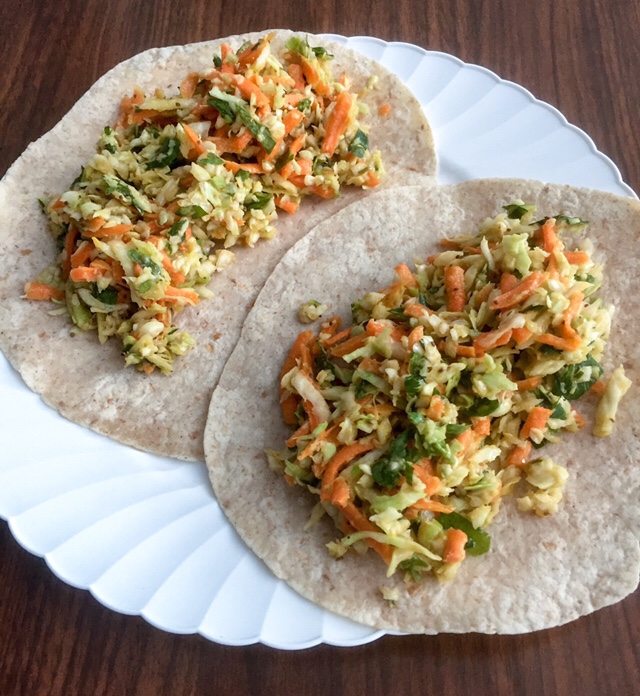
Farm Fresh Coleslaw, via Eat the Vegan Rainbow

Onwards and upwards – this summer has been energizing. We have vegetables growing in our garden, and farm fresh ingredients coming from the Upswing Farm CSA. I’ve been sharing the recipes featuring vegetables from our farm share, and have now created a new CSA – Community Supported Agriculture category to help you navigate my pages, so check it out!

What to do with cabbage?

Week 6 share featured two heads of cabbage, one of those vegetables that people have very mixed feelings about. On one hand you know it’s super healthy for you, with huge amounts of vitamins C and K, but on the other hand you also know that it’s just not something you necessarily like to see on your plate. Unless, of course, you are from Central or Eastern Europe in which case you are raised to adore cabbage!

I hail from the Balkans, so I think of cabbage as a part of my cultural heritage. I grew up eating cabbage stews traditionally made with meat, cabbage salads, sauerkraut, stuffed cabbage leaves (also often done with meat but here is a great vegan version), and overall loving it, especially the cabbage pie my grandmother used to make using shredded cabbage, phyllo dough, salt, pepper and oil. Quite honestly, one of the best things to do with cabbage is to shredded it finely, add some oil, vinegar, salt and black pepper, chill well and enjoy as a crisp salad.

What’s the deal with coleslaw?

Having grown up with abundance of cabbage, coleslaw came as a bit of a surprise to me. If you never had coleslaw, let me take a moment to describe it to you. It’s a very popular side dish for a BBQ, or surprisingly enough, a clam/lobster bake. It’s made of shredded cabbage and carrots, mixed with mayonnaise, some sugar, a bit of milk, a splash of vinegar, a sprinkle of celery seeds, and salt to taste. As with plain shredded cabbage salad I grew up with, coleslaw is at its best after 6-8 hours and served chilled.

By now you can probably guess that I am not a huge fan of many coleslaws that I tried. First of all they are too wet, second of all they are too sweet, and third of all they have too much mayo!

The taming of the coleslaw

After giving traditional coleslaw recipes a try, I decided to make coleslaws my own way. And my own way means more vinegar, usually a bit of Dijon mustard, no sugar, less or no mayonnaise, and absolutely no milk. If you are looking for a version of coleslaw with a bit of a kick to it, try this spicy version, which I shared last summer. The version below was inspired by this week’s CSA share that included cabbage, carrots and celery.

Food processor is your coleslaw making secret weapon

For this recipe I recommend using a food processor. Although cabbage is best when thinly sliced by hand, the food processor does the chopping in a blink of an eye, so it is an acceptable shortcut. So, after buzzing the celery, cabbage and carrots all you need to do us mix in some vinegar, caraway seeds, ground mustard, a pinch of salt, and some mayo (vegan of course, I like Just Mayo and Trader Joe’s Vegan Spread & Dressing). You can eat the coleslaw as soon as it’s mixed, but it will be tastier if you leave it in the fridge for couple of hours.

My favorite way to eat coleslaw? As a coleslaw sandwich! Of course, you can serve it with Beyond Burgers, or vegan BBQ ribs, or with your next vegan sausage. No matter how you serve it, I hope you give it a try – it will help you fall in love with cabbage, guaranteed!!!


Basic Vegan Coleslaw

What you’ll need:

1 medium head cabbage (1 1/2 lbs (600-700 g))

4 large carrots

5-6 stalks celery (I used young celery here, which is dark green but you can use any you have on hand)

1/2 cup vegan mayo (I recommend Just Mayo or Trader Joe’s Vegan Spread & Dressing)

2 tablespoons white vinegar

1 tablespoon caraway seeds

2 teaspoons ground mustard

1/4 teaspoon Kosher salt (or to taste)


What you’ll do:

  1. Using an S blade in your food processor, chop the celery roughly.
  2. Take the S blade out and put in your grater attachment (I recommend coarser grating side, if you have a food processor that gives you an option to choose between finer and coarser grating). Process your cabbage and your carrots.
  3. Invert the contents of your food processor into a large mixing bowl and add the rest of the ingredients. Mix well to combine.
  4. Cover with some plastic wrap or a lid if your bowl has a tight fitting one, and leave in the refrigerator for at least 2 hours. I think you’ll get best results if you make the salad in the morning and serve that afternoon but making the night before and serving the next day is fine too.
  5. Enjoy as a salad with your next vegan BBQ or burgers, as a topping for your carrot dogs, or in a sandwich – you can’t go wrong with this one!

Copyright © Eat the Vegan Rainbow, 2018

SaveSave

SaveSave

Sweet and Smoky Baked Beans with Caramelized Onions

img_5138
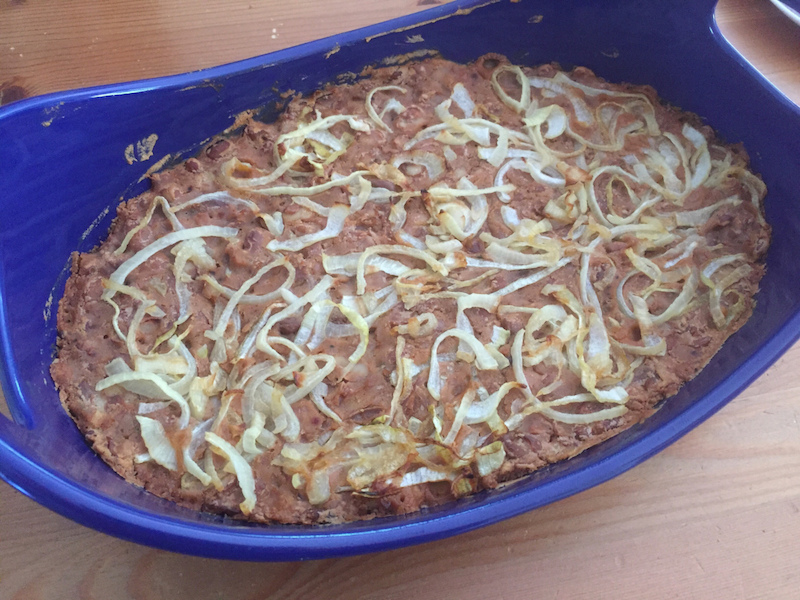
Sweet and Smokey Baked Beans with Caramelized Onions are a perfect side dish for your next BBQ, via Eat the Vegan Rainbow

Grillin’ and chillin’ – that’s what we are all going to be doing for the next couple of months. School is out, summer is here and what better thing to do than to enjoy some grilled foods and outdoor dining. So, if anyone ever asks you “Do vegans (or plant-based eaters) actually grill anything?” all you need to say is “You betcha” and invite them over for a grill and BBQ party. If you are looking for some inspiration, you may want to try these BBQ ribs, or portobello steaks, or grilled tempeh. Besides these you can grill eggplant, lots of other veggies, as well as peaches, pineapple, plums… Grilling is a lovely way to bring intense flavors out and works for a range of fruits and vegetables!

Having the right side dish on your side

Plus, vegetables (and fruit) are essential for making your cookout a really special and memorable treat for everyone. These ingredients get transformed into a lovely array of side dishes, and quite frankly I usually pile up those and completely ignore the “main” course. With things like spicy cole slaw, or corn bread (or corn bread muffins), or Mac’n’Cheese, or delicious collard greens, or potato salad, or… Well, need I say more? Side dishes are what makes these grillin’ and chillin’ cookouts fun!!!

Baked beans are an institution

Although all these side dishes are dear to my heart, none comes even close to baked beans! Baked beans are absolutely an institution, both in the USA where I live, and in the Balkans, where I come from. But we all know that they are more broadly beloved than that, and many countries and cultures across the globe have a very special and prominent place for baked beans. And although many would think that you can’t have an amazing baked beans without some smokey meat component in there, this is far from the truth.

Sweetness and smokey flavors make baked beans special

What makes baked beans really special is a combination of sweetness and smokiness. One way of getting lots of sweetness to your baked beans is to use some dark brown sugar, maple syrup or dark molasses. But, if you are not careful these can quickly overpower the dish. So, I recommend that you go easy on the actual sweetener, and use lots of sweet onion instead for a more subtle sweet flavor. Baked beans are also quite smokey, and here spices like smoked paprika and chili powder, as well as a dash of liquid smoke will go a long way. If you can’t find liquid smoke, ground cumin is an example of a common spice that has a natural smokey flavor, or you could consider adding one or two smoked peppers, whole into the beans and then fishing them out before serving.

Enjoy!!!

Sweet and Smokey Baked Beans with Caramelized Onions

What you’ll need:

1 large sweet onion, finely sliced

3 cups pinto beans, cooked or canned (if using canned rinse and drain the beans first)

2 tablespoons olive oil

2 teaspoons of McCormick® GRILL MATES® BARBECUE seasoning (see note below).

Note: to make your own seasoning that’s enough for this recipe mix 1/2 teaspoon of raw sugar or 1/2 teaspoon of dark molasses, 1/4 teaspoon garlic powder, 1/4 teaspoon smoked paprika, 1/4 teaspoon chili powder, 1/4 teaspoon salt, 1/2 teaspoon liquid smoke.

What you’ll do:

  1. Preheat the oven to 375 F (190 C).
  2. Slice the large onion in half than place the cut side down on your chopping board and slice across to create thin onion ribbons. Once the onion is sliced, use your fingers to pull the ribbons apart.
  3. Place a large pan over medium heat and bring to temperature. Add the oil and onion ribbons and caramelize the onions for 5 minutes with frequent stirring. You want the onions to be soft, and partly browned but not fully caramelized.
  4. Add the beans and the spice mix to a large mixing bowl and use your hands or a large fork to mash and mix everything together. Approximately, half of the beans should be mashed and half should stay whole. This will ensure that your baked beans are creamy, yet have an interesting texture.
  5. Spray the bottom of you baking dish with some cooking spray and spread the beans in an even layer. The best size of the dish for this amount of beans is 8 x 8 in (20 x 20 cm), or about 2 QT (approximately 2 L).
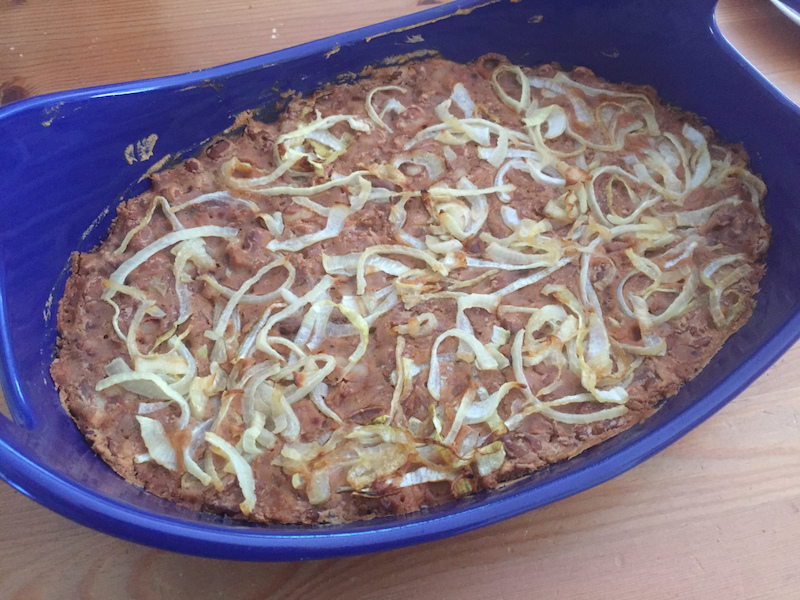
  6. Arrange the partly caramelized onions on the top. Don’t mix them in, just let the onions rest on top of the bean mix. You can get creative here and make a pattern or a design, but I went rustic!
  7. Place in the oven and bake for 20-30 minutes. When you see that the edge of your beans is browned, you are done! Serve as a wonderful side dish for you BBQ party, or use the next day to make a yummy breakfast burrito.
753b5b63-2297-4921-9f90-baef7df4d4ba
Sweet and Smokey Baked Beans with Caramelized Onions, via Eat the Vegan Rainbow – feel free to pin and share!


Copyright © Eat the Vegan Rainbow, 2018

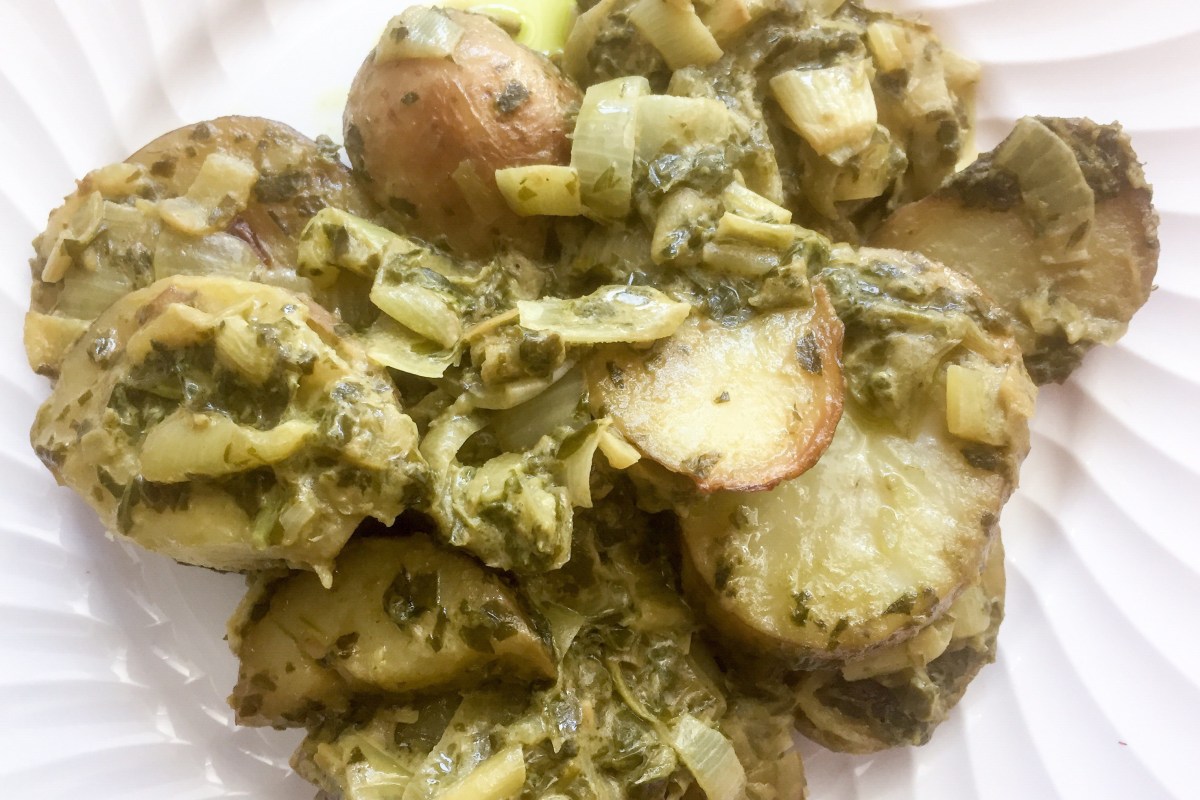
Baked New Potatoes with Cheesy Basil Sauce, CSA Week 5

Baked New Potatoes with Cheesy Basil Sauce, via Eat the Vegan Rainbow

This summer is just flying by! I can’t believe we are already on Week 5 of our CSA – Community Supported Agriculture program. This week’s shares from our local farm, Upswing Farm, included one of my very favorite vegetables – new potatoes.

What are new potatoes?

New potatoes are, well, new! They are the first, early harvest of a potato crop, and growing up these types of potatoes were always a treat and a sign that school was out for summer and the fun was kicking into high gear. Since all the produce I ate growing up came from a farmer’s market, these new potatoes were available for couple of weeks only, making them even more special!!! Another thing that makes them special is that they are sweater than fully grown spuds, and that’s because they have higher sugar content than mature spuds, where most of their sugar has been converted into starch and stored away.

How to skin new potatoes?

New potatoes have very soft skin, and they really don’t need much peeling. What I like to do is take a peeling knife and gently go over the surface of the potato to remove only the thin outer skin without cutting in. This also helps remove any specks of dirt that are left over after the washing. An alternative way of skinning new potatoes is to place washed potatoes on a kitchen towel, sprinkle with some kosher salt and then wrap and gently roll. This will serve to exfoliate the potatoes. It may not remove all the skin but it will get rid of most of it. However, I should point out that none of this is really needed and it I purely cosmetic. New potatoes have such a soft and thin skin that you may decide to just leave it and cook them as is!

What to do with new potatoes?

These little suds are very versatile and easy to deal with. Because they are nicely sweet and soft, it is best to let them shine through. Simple boiling, roasting, or pan frying in very little oil will give you really great results (see here for details). But, you can go as wild as you like and new potatoes can be made into a potato salad, or a potato mash. Although I have not tried this yet, you can also put your new potatoes on the grill. In the recipe below I decided to go a bit wild and over the top. I baked new potatoes with some spring onions – those onions that are in between scallions and onions, with their greens still on but with a nice onion bulb now fully formed, which also came in our CSA share, and then topped them with an amazing sauce.

Easy and cheesy basil sauce

The inspiration for the sauce was another ingredient that came home in this week’s CSA share – a large bunch of fresh basil. The sauce is a simple mix of fresh basil, nutritional yeast and olive oil, and is added to the baked potatoes at the very end. The freshness of basil and the cheesy flavors of nutritional yeast make these baked new potatoes really amazing! I could eat this dish all day long – it does not need anything else really other than a cold glass of lemonade and it tastes good hot as well as cold. And if you have a summer pot luck, or a back yard barbecue, this is a great alternative to an old fashioned potato salad that you may want to try.


Baked New Potatoes with Cheesy Basil Sauce

What you’ll need:

1.5 to 2 lb (750g to 1 kg) new potatoes

4 spring onions, roughly diced

1 large bunch of fresh basil (about 2-3 cups, leaves only)

1/3 cup nutritional yeast

1/4 cup + 2 tablespoons olive oil, divided

Kosher salt to taste


What you’ll do:

  1. Preheat the oven to 350 F (175 C).
  2. Wash the new potatoes and gently remove their outermost skin (or leave the skin on if you prefer). Slice them into 1/4 in (5 mm) thick slices. If your new potatoes are really tiny you may only need to half them, or even leave the intact.
  3. Slice your spring onions any way you like. I quartered my bulbs then sliced them across.
  4. Combine your potatoes, spring onions, a pinch of salt (the amount of salt is up to you!) and 2 tablespoons of olive oil. Mix well, then pour into a deep baking dish.
  5. Bake the potatoes for 45 minutes.
  6. Place the basil into a food processor that can comfortably hold this amount of basil. Pulse until the basil is finely chopped.
  7. Add nutritional yeast, and pulse 2-3 times. Then pour in oil gradually while pulsing. Pour the sauce over the hot potatoes, mix well and return to the oven for another 15 minutes.
  8. Serve hot! You can store the leftovers in a fridge for 5-7 days and enjoy cold or reheated.

Copyright © Eat the Vegan Rainbow, 2018

SaveSaveSaveSave

SaveSave