Best DIY Sushi Ever!

Best DIY Sushi
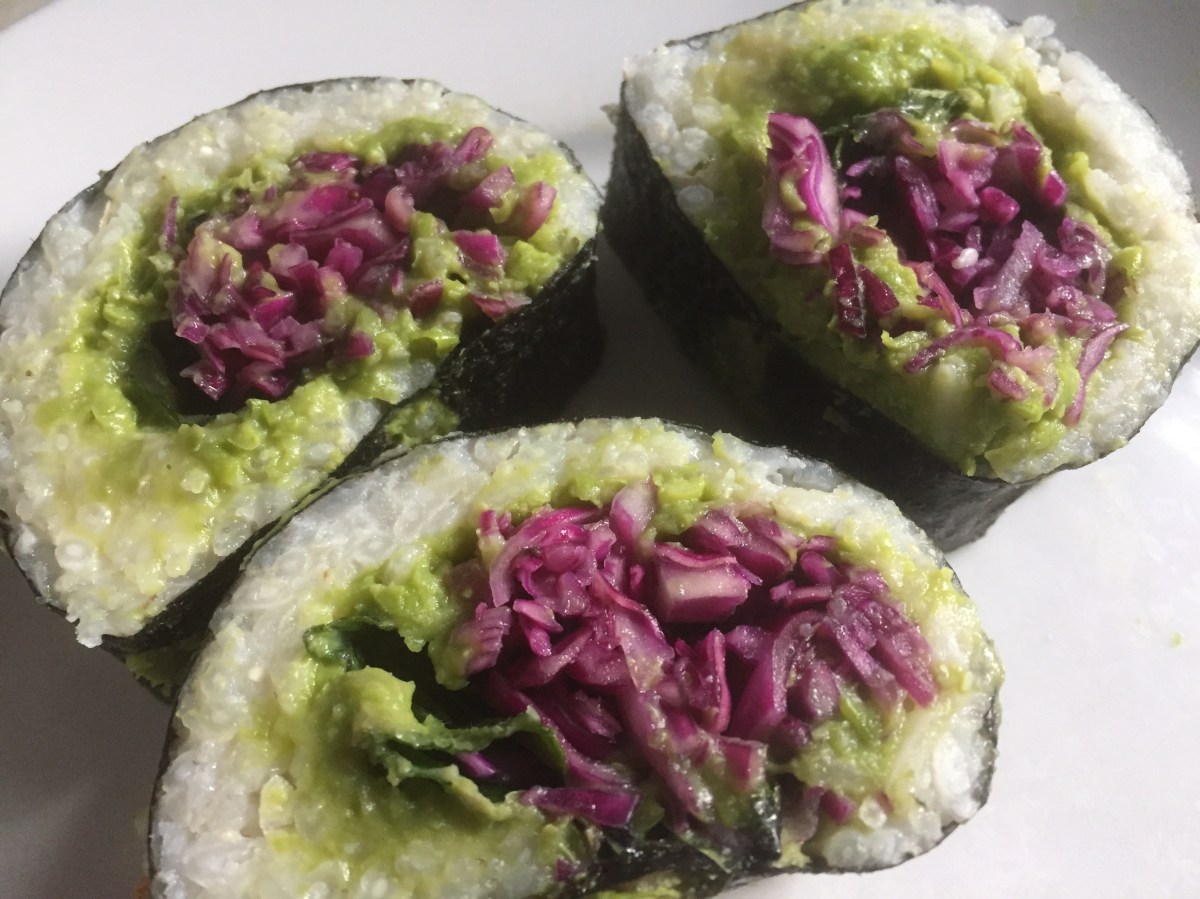
Best DIY Sushi Rolls with Minty Peas & Red Cabbage, via Eat the Vegan Rainbow

If you think that making sushi requires hours of practice, one-on-one instruction from a sushi master chef and special equipment… well, you may be right if your goal is to make sushi that contains fish or seafood, especially given health risks involved. But, if you want to explore the wonderful and delightful world of plant-based sushi, all you need is about an hour or two, and some imagination.

I made my first vegan maki sushi, the kind where filling and rice are wrapped in sea weed, few months ago, and I really enjoyed the process and the flavors. I got inspired to start thinking about what ingredients would work together well, and whether there are any dipping sauces I could use to complement the sushi.

The results of this brainstorming are before you: Green & Orange Sushi Rolls and Peas & Cabbage Sushi Rolls, with Peanut Dipping Sauce and Sour Lemongrass Dipping Sauce.

The basic requirement for a great sushi is plenty of sticky rice. You can get special sushi rice but you can also use any short and medium grain variety of rice. For sushi, I use the same rice I use for risottos. The trick is to add the rice to boiling water, reduce the heat and let the rice gently simmer with occasional mixing.

Finally, leaving the rice to cool will help you handle it as well as help the rice get nice and very sticky. I recommend dipping your hands in water before handling the rice and then keep wetting them as you spread and press the rice.

One other thing you need to pay attention to is what side of seaweed sheet you pile your rice on. It should be the one that feels slightly rough, so that your outside is nice a smooth. What I discovered is that you don’t really need the bamboo sushi rolling mat or any special equipment. The main thing to remember is to go easy on the stuffing so your rolls don’t end up to full. This will make them hard to roll and more likely to rip. I hope you go for these vegan versions of sushi, or create your own. There really is no limit and no rules!

DIY Sushi with Two Dipping Sauces

What you’ll need:

FOR THE STICKY RICE

1 cup short or medium grain rice

2 cups water

FOR GREEN & ORANGE SUSHI ROLLS

1 1/2 cup cooked rice

3 seaweed (nori) sheets

1 carrot

1 English cucumber

1 avocado

1/4 cup sesame seeds

1/4 cup black sesame seeds

FOR CABBAGE AND PEAS SUSHI ROLLS

1 1/2 cup cooked rice

3 seaweed (nori) sheets

2 cups peas, frozen

2 cups water

2 cups shredded red cabbage

1 teaspoon sesame seeds, toasted

1 teaspoon black pepper

1 teaspoon salt

1/2 teaspoon garlic powder

2 teaspoons rice vinegar

1 cup fresh mint leaves

FOR PEANUT DIPPING SAUCE

2 tablespoons peanut butter, unsalted

1 tablespoon rice vinegar

2 teaspoons sriracha(or other hot sauce)

1/4 cup water

2 teaspoons panko, toasted

FOR LEMONGRASS DIPPING SAUCE

1/4 cup rice vinegar

2 tablespoons soy sauce, reduced sodium

1/4 cup fresh cilantro, finely chopped

1 tablespoon lemongrass, finely chopped

1 teaspoon ginger, grated

What you’ll do:

  1. Bring 2 cups of water to boil and add the rice. Lower the heat to gentle simmer and cook the rice, stirring occasionally, until all the water is absorbed, and the grains are soft. Set to the side and let it cool.
  2. In another pot bring 2 cups of water to boil and add frozen peas. Cook until well done for about 15 minutes.
  3. While rice and peas are cooking, put together the dipping sauces. In a medium size bowl, combine all the peanut sauce ingredients, except panko, and mix well to combine. Toast panko in the toaster oven, or in a pan over high heat, for 1-2 minutes. Top the peanut dipping sauce with toasted panko.
  4. In another bowl, combine all the ingredients for the lemongrass dipping sauce and set aside.
  5. Prepare your roll stuffers, like cucumbers, carrots, avocados or anything else you like. The trick is to make your veggie sticks long and thin.
  6. To make the red cabbage, place finely shredded red cabbage in a bowl and add all the rest of the ingredients except mint leaves. Mix everything well using your hands. Squeezing the cabbage as you mix will help soften it and make it absorb flavors better. Let the cabbage “marinate” for 30 to 60 minute.
  7. When peas are fully cooked drain and purée them.
  8. Once the rice is cool it is safe to handle. Place a piece of the seaweed sheet on the flat kitchen surface rough surface up. Place 1/2 cup of sticky rice on the sheet. Spread the rice to cover most of the seaweed sheet using your wet hands. Next, place the topping on 3/4 of the way towards one end of the sheet, and start rolling from that edg, slowly and gently. The roll should come together nicely.Cut the roll into sushi piece. One note on peas and cabbage rolls: spread the pea purée across entire rice and the pickled cabbage and mint leaves in a single line, 2/3 of the way from the edge.
  9. Serve the sushi with the two dipping sauces, some pickled ginger and wasabi paste. Enjoy!

Copyright ©Eat the Vegan Rainbow, 2017

Easy Spanakopita Rolls


Easy Spanakopita
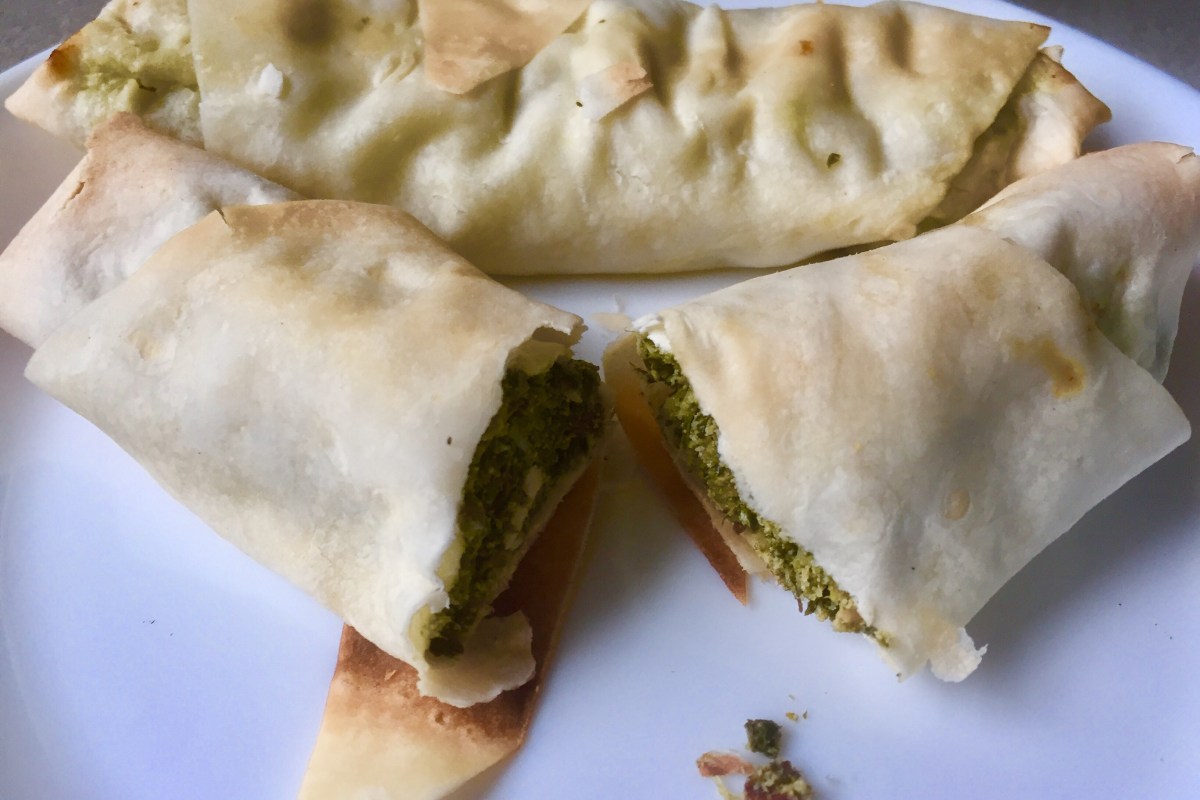
Easy Spanakopita Rolls, via Eat the Vegan Rainbow
Let me describe Greek and Middle Eastern pies. They are made using very thin sheets of dough, called phyllo dough, and than build by either interleaving layers of phyllo dough with a filling or by rolling/holding the filling in phyllo pockets or rolls. As you can imagine, these pies are diverse and varied, as many different ingredients can be made into an amazing pie filling. If you still have trouble picturing what one of these pies may look like just think of baklava, probably the most famous of phyllo based pies.

Some of my favorite phyllo pies are cheese pie, mushroom pie and spinach pie. This last one has been brought to the frozen sections of most grocery store chain in US and known as spanakopita.

Traditionally, spanakopita recipe uses spinach as a central ingredient and combines it with cheese, eggs and onions to create either a rolled or layered pie that is served both warm and cold, usually accompanied by a yogurt drink.

Now I offer you a vegan version of this pastry that uses almonds and nutritional yeast as a substitute for cheese and eggs. Here I used store bought phyllo dough sheets precut into triangles that I picked up in an Indian store. You can use any phyllo dough you like, or make your own.

The spanakopita rolls come together quickly and bake to a lovely, crispy appetizers that are easy to pass around. They are also a great breakfast item, a quick snack or a dinner add-on. As I mentioned, you can eat them hot or cold, but they are really the best served fresh from the oven as while their phyllo dough exterior is crunchy. They will get soft as they sit for few hours or overnight so if you plan to serve them the next day you’ll need to reheat them in a toaster oven.


Spanakopita Rolls

(Makes 24 rolls)

What you’ll need:

24 triangle-shaped thick phyllo dough sheets (or thinner phyllo dough sheets stacked 2-3 together and cut to triangle pieces)

4 cups frozen spinach

1 cup almonds, dry roasted

1/4 cup almond milk

1 tablespoon nutritional yeast

1 tablespoon lemon juice

1 teaspoon garlic powder

1 teaspoon onion powder

1/2 teaspoon ground nutmeg

Olive oil, or olive oil cooking spray

What you’ll do:

  1. Preheat the 400 F (200 C).
  2. Soak the almonds in cold water for 1-2 hours at room temperature or in the fridge overnight. Drain to remove excess water, add nutritional yeast and lemon juice, and start grinding to a fine paste, adding the almond milk slowly. You may not need the whole 1/4 cup or you may need a bit more – you be the judge because what you are looking for is a nice smooth  consistency of a paste, not a sauce.
  3. Place frozen spinach in a large mixing bowl and purée using a hand held immersion (stick) blender. You can also purée the spinach in a food processor.
  4. Combine spinach with the almond paste and mix well. Add the spices and mix again.
  5. Lay out the piece of phyllo on a flat surface, spray with cooking spray, or drizzle a drop or two off olive oil, and spoon 2-3 tablespoons of spinach pie filling onto the long end of the pastry then roll towards the tip. Tuck the ends in and place on a baking sheet. I like to line my baking sheet with parchment paper for easy clean up, but that’s not really needed.
  6. Once all your rolls are ready, spray the tops with cooking spray or drizzle oil, and put in the oven for 25-30 minutes. You want the tops golden brown.
  7. Let the spanakopita rolls cool for 10-15 minutes and serve.


Copyright © Eat the Vegan Rainbow, 2017

5 Must-try Recipes for Beginner Vegans

Rainbow of Fruits and Veggies
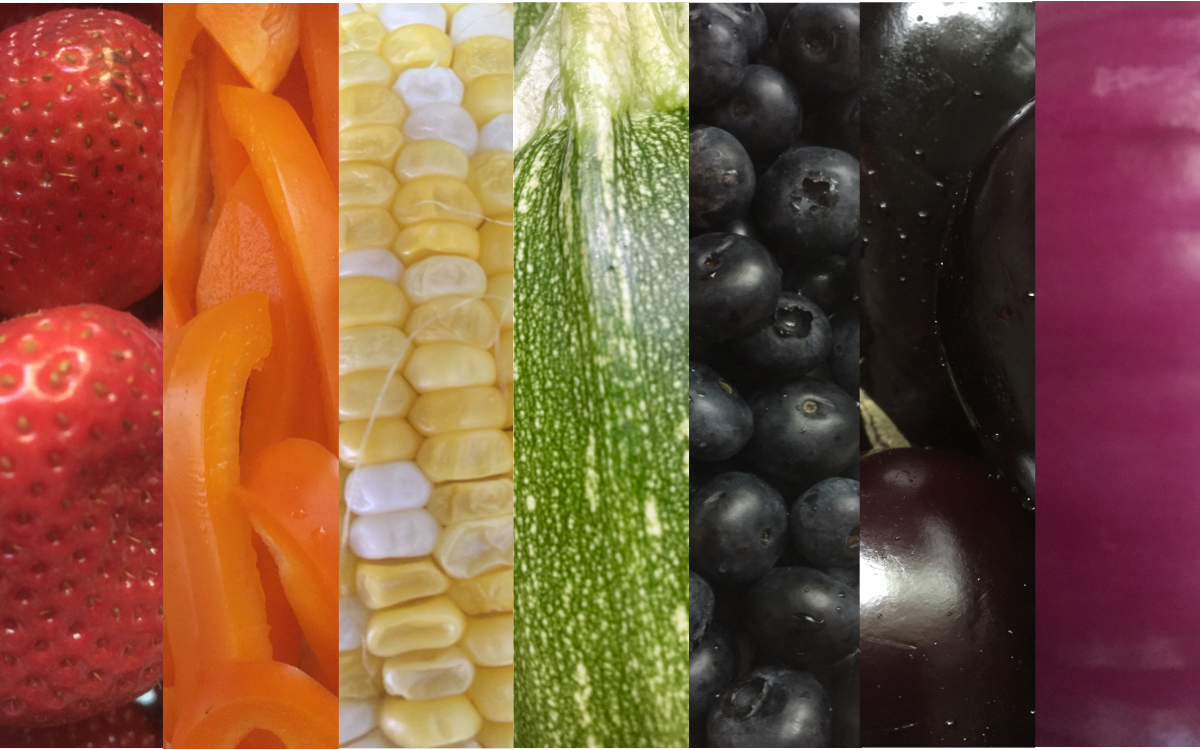
Rainbow of Fruits and Veggies, via Eat the Vegan Rainbow
Half a year ago I made a decision to ditch meat, and dairy, and eggs, and honey, and fish, and seafood. What I was left with was a whole bunch of plants that all of a sudden went from being a side dish to being the star ingredients of everything I was cooking.

Six months in I have to admit that cooking have never been more fun. Every single recipe is still an adventure because it offers an opportunity to experiment and challenge my preconceived views of what a dish should look and taste like. Additionally I have also discovered that many others are curious about plant-based eating and interested in learning more how to replace meat and cheese in their diets. I never expected that sharing my experiences and cooking tips and tricks would be so enjoyable but it is! I love blogging about the recipes I develop and I love engaging with those interested in vegan cooking techniques and strategies.

So, in observation of World Meat Free Day today, I wanted to help anyone who is still thinking whether to take the plunge into plant-based cuisine waters and share five recipes that will make your transition much smoother. These are the recipes that changed my views of what plants can do, and I hope they’ll help you as well!!!

  1. Tofu Bacon – this recipe is so fantastic that you may want to make a double batch as one will not last long. Shared by The Buddhist Chef, this recipe not only tought me how to make crispy tofu, but introduced me to liquid smoke, an ingredient that I know use all the time, especially when grilling as it gives grilled food, like this Grilled Eggplant, an extra edge.
  2. Cashew Cheeses – I approached cashew cheese with disbelief but recipes like this Easy Garlic & Herb Vegan Cheese, developed by Minimalist Baker, and this Cashew Ricotta Cheese, by Simple Veganista, completely changed my mind and my pallet. They also introduced me to nutritional yeast, something I know use pretty regularly for that pleasant cheese flavor.
  3. Jackfruit Carnitas Tacos (Pulled Pork Tacos) – this recipe by The Edgy Veg opened my eyes to the world of jackfruit, a fruit (or a vegetable, not sure which) that I’ve never heard of before. It turns out jackfruit is an absolute must have ingredient for vegan cooking and my crab-less Jackfruit “Crab” Cakes remains one of my favorite things to make and eat!
  4. Vegan Substitute for Ground Beef – this recipe by Glow Kitchen has been truly transformative as it convinced me that homemade meat substitutes are feasible, tasty, and super affordable, thus definitely worth an effort.
  5. Healthy Chocolate Pudding – this was the first vegan dessert I made and I am still amazed that some brave soul at some point said to themselves: “Enough is enough – I am putting avocados and bananas together and lets see what happens!”. Credit for this recipe goes to Whole Foods Market.

All in all, the most important thing you should do in order to be a great vegan cooking success is to keep an open mind. As these five examples show vegan recipes combine unexpected ingredients so don’t talk yourself from trying just because you were not raised eating jackfruit or combining bananas and avocados. For example, my most unexpected recipe is Vegan Popovers – who knew popovers don’t need milk or eggs?

Happy World Meat Free Day and enjoy your plant-based existence!!!


Copyright © Eat the Vegan Rainbow, 2017

Blueberry Cheesecake 2.0, a Real Space-Age Treat

Vegan Blueberry Cheesecake
Vegan Blueberry Cheesecake, via Eat the Vegan Rainbow

First time I had cheesecake I was twenty five! Yes, it’s true – I spent the first twenty five years of my life in a blissful ignorance, completely unaware that cheesecakes existed. But, soon after moving to US I did partake on a slice and fell in love immediately and over the years things just better and better.

First of all, cheesecakes are easy to make. They are also very versatile because you can customize them in many different ways. I used to make pumpkin cheesecake topped with baked apples and pecan caramel for Thanksgiving because pumpkin pie is sort of boring.

My other favorite cheesecake I used to make was plain vanilla topped with homemade blueberry syrup. So one night, as I was making myself a light dessert of blueberry smoothie, I got inspired to try and make Cheesecake 2.0 – the 21st century version that is dairy-free, gluten-free, and egg-free.

Being the space age type of dessert, this recipe uses an ingredient that you can’t find in a grocery store: agar powder. Chemically speaking, agar is a sugar polymer and I’ve used it a great deal to make many, probably thousands, of agar plates in Petri dishes, which I then used to grow bacterial cultures. (For those interested in the source, agar is isolated from algae (seaweed), so although not of plant origin, I think it is safe to say that definitely plant-like in many ways and not animal-derived.)

So, when I discovered that agar has a culinary application I was skeptical. But when I thought about what I need agar to do – act as a jelling agent in the same way gelatin would – I concluded that my skepticism was not founded in reality and chemical facts but some silly prejudice. Thus, I bought a small jar of agar powder and I’ve been using it to make hard (and shreddable) cheese quite successfully. In this recipe I took agar powder a step further and used it as the firming agent for the cheesecake. It did the trick and the result was a yummy cake with excellent smooth yet firm texture.

Blueberry Cheesecake 2.0
Blueberry Cheesecake for the 21st Century, via Eat the Vegan Rainbow

Blueberry Cheesecake 2.0

What you’ll need:

FOR THE CRUST

1 cup walnuts

1 cup cashews

1 tablespoon brown sugar

1 tablespoon vegan Butter

FOR THE CHEESECAKE FILLING

2 cups blueberries, frozen

1/2 cup oatmeal

1 1/2 cup vanilla almond milk, unsweetened

4 teaspoon agar

2 cups water

What you’ll do:

  1. Use a grinder or a food processor to grind walnuts and cashews to a relatively fine meal.
  2. Pour the ground nuts into an 8 to 9 in (20 to 23 cm) round springform pan.
  3. Add brown sugar and mix well.
  4. Add melted vegan butter (30 sec in a microwave should be enough to melt this amount) and using your fingers mix the melted butter in so that all of your nut and sugar mix is moist. Press the mix into the bottom of the pan to form a crust. Set aside.
  5. In a large blender mix almond milk, blueberries and oatmeal until smooth.
  6. To prepare agar powder, bring 2 cups of water to boil and add the agar. Use a whisk to mix everything together lower the heat to simmer and keep mixing and simmering for 4 to 5 minutes.
  7. Add hot agar to the blender in small batches, 1/2 cup at a time. Pause to incorporate then add more until the entire amount of agar is incorporated.
  8. Pour the filling into the springform pan and use a spatula or a flat spoon to spread around and flatten the top.
  9. Refrigerate for at least 4 hours, best overnight.
  10. Pop it out of the springform pan, cut and serve as is, or with fruit and/or vegan whip cream. I made one from chickpea water (aquafaba), but you can make any one you like or skip it!


Copyright © Eat the Vegan Rainbow, 2017

Creamy Mango & Chickpea Curry Tofu

Creamy Mango & Chickpeas Curry Tofu
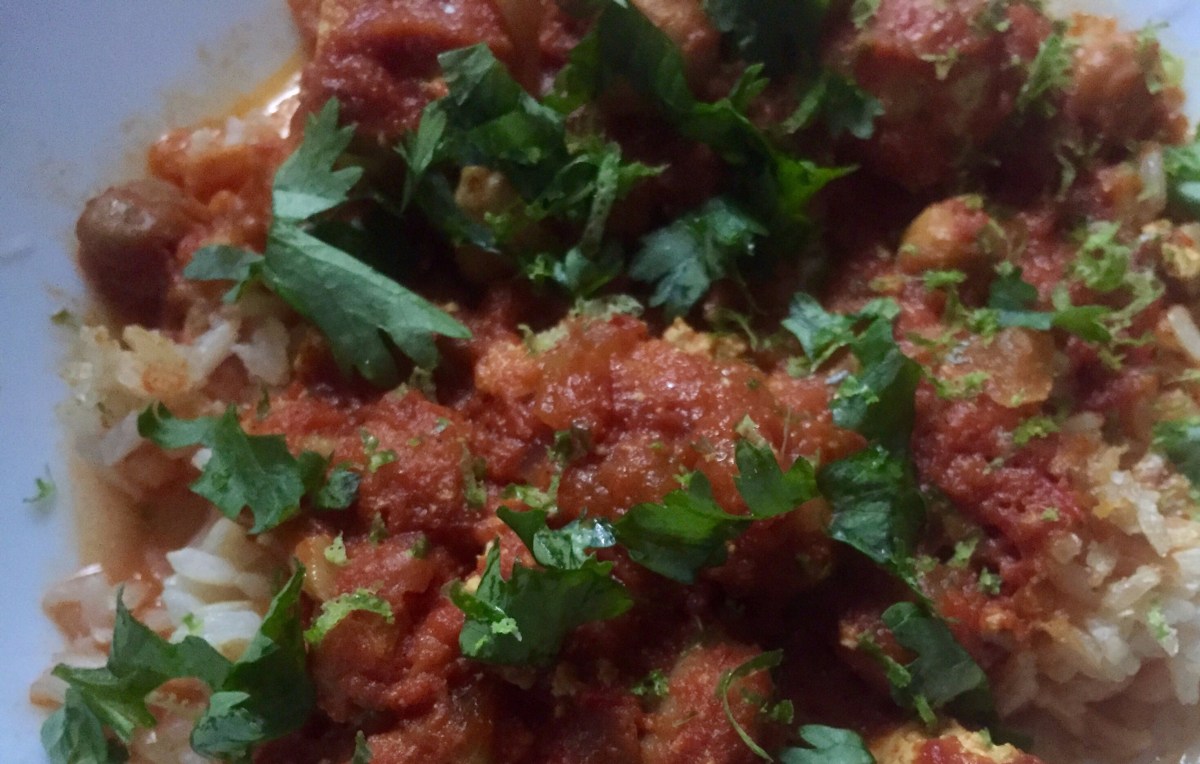
Creamy Mango & Chickpeas Curry Tofu, via Eat the Vegan Rainbow
Slow cooker (crock pot) is one of my favorite small kitchen appliances and definitely the best way to make dishes that come together only after long, long simmering. Putting everything into a slow cooker is so much easier than baby sitting a simmering stew bubbling away on the stove top! But: slow cooker is slow and if you’d like to have food ready for the dinner (supper) time, you need to remember to fill it up and turn it on 3 to 6 hours in advance. Once all is set and you press the start button, you are free to do whatever and enjoy the day knowing that your delicious dinner is simmering away.

I use my slow cooker often and I find that it works really well for things like stews, or dishes like Vegan Chicken Tikka Masala. Here is another example of a delicious curry that combines tofu, chickpeas and mango with some crushed tomatoes and coconut cream into a fragrant and very creamy curry.

Serve it with Saffron Brown Basmati Rice and you are done!

Creamy Mango & Chickpea Curry Tofu

What you’ll need: 

2 16 oz (454 g) tofu blocks, extra firm

28 oz (800g) can crushed tomatoes

2 15.5 oz (439g) cans chickpeas

1 cup mango chunks, frozen

15 oz (425g) can coconut cream

1 yellow onion, diced

3 cloves garlic, thinly sliced

2 teaspoons curry powder

1 teaspoon ground cumin

1/2 teaspoon turmeric

Fresh cilantro

Cooking spray


What you’ll do:

  1. Drain or press tofu for 30 minutes. I usually just leave the block of tofu in a strainer and flip the block over once. That’s usually enough for dishes that don’t need the tofu to be super dense and chewy.
  2. Cut the tofu into single bite chunks. From a 16 oz block I usually get 16 pieces so you can use that as a rough guideline.
  3. Line the inside of your slow cooker crock pot with a liner. You can skip this step of course – I just recommend it as it makes clean up an absolute breeze. Add the tofu, chickpeas that have been drained, and frozen mango chunks. You can use fresh as well but frozen mango chunks are just something I have on hand for my smoothies so it’s a bit of a staple in my kitchen.
  4. Add the spices and mix well.
  5. Dice the onion and slice the garlic. Place in a microwave safe dish, spray with cooking spray and microwave for 5 minutes. This will start the caramelization process of your aromatics and help them develop flavors.
  6. Pour the onions and garlic over the mango chunks.
  7. Pour in the crushed tomatoes and mix again.
  8. Add coconut cream and mix to incorporate.
  9. Put the lid on and turn your slow cooker on high for 3 to 4 hours.
  10. When playing, serve over rice, quinoa or couscous and top with fresh cilantro.


Copyright © Eat the Vegan Rainbow, 2017

Black-Eyed Peas Burgers

Black-Eyed Pea Burgers
Black-Eyed Pea Burgers, via Eat the Vegan Rainbow
Still hunting for that perfect meat-free burger? I’m with you and I’m still searching. But in the meantime my Roasted Red Peppers Chickpea Burgers I shared recently, and these Black-Eyed Peas Burgers here are really close to where I want my burgers to be.

As with the chickpea burgers, the big secret to getting the burgers to stick together is to let the patties firm up in the fridge or the freezer. The rest is really easy and requires a large mixing bowl, a stick (immersion) blender (or a food processor), and couple of easy to find ingredients. These are really simple and I’d say they qualify as a quick mid-week dinner.

Black-Eyed Peas Burgers

What you’ll need:

2 15.5 oz (439 g) cans black-eyed peas

3 large carrots

1/2 cup pumpkin seeds

2 tablespoons almond butter

2 tablespoons flax meal

1 teaspoon smoked paprika

1 teaspoon onion powder

1 teaspoon garlic powder

1 tablespoon sesame seeds

Cooking spray

What you’ll do:

  1. In a small mixing bowl combine flax meal with 4 tablespoons of hot water to make Flax Egg.
  2. Place black-eyed peas in a strainer and rinse well. Drain to remove excess water and pat dry. Place in a large mixing bowl.
  3. Use a food processor to chop the carrots very finely. Add to the mixing bowl.
  4. Add the rest of the ingredients, including the Flax Egg, and blend everything together using an immersion (stick) blender. If you don’t have a stick blender you can also use a food processor. The mix should be relatively smooth, but some chunkiness is OK.
  5. Line the large tray with wax paper. Use your hands to form the burger patties. They should be about 1/8 in (1 cm) thick. Arrange the patties on the tray, cover with another sheet of wax paper and put in the freezer for about 30 minutes. If you leave them in the refrigerator you will need to give them couple of hours.
  6. Place a large pan over medium-high heat and let it get nice and hot. Spray the bottom with the cooking spray and add burgers to the pan in small batches. Cook for about 5-6 minutes on one side then flip over and finish cooking for another 4-5 minutes on the other side.
  7. Serve as you would any other burger, perhaps with some Fat Free Roasted Potato Medallions on the side as a healthy alternative to French fries.
  8. Copyright © Eat the Vegan Rainbow, 2017