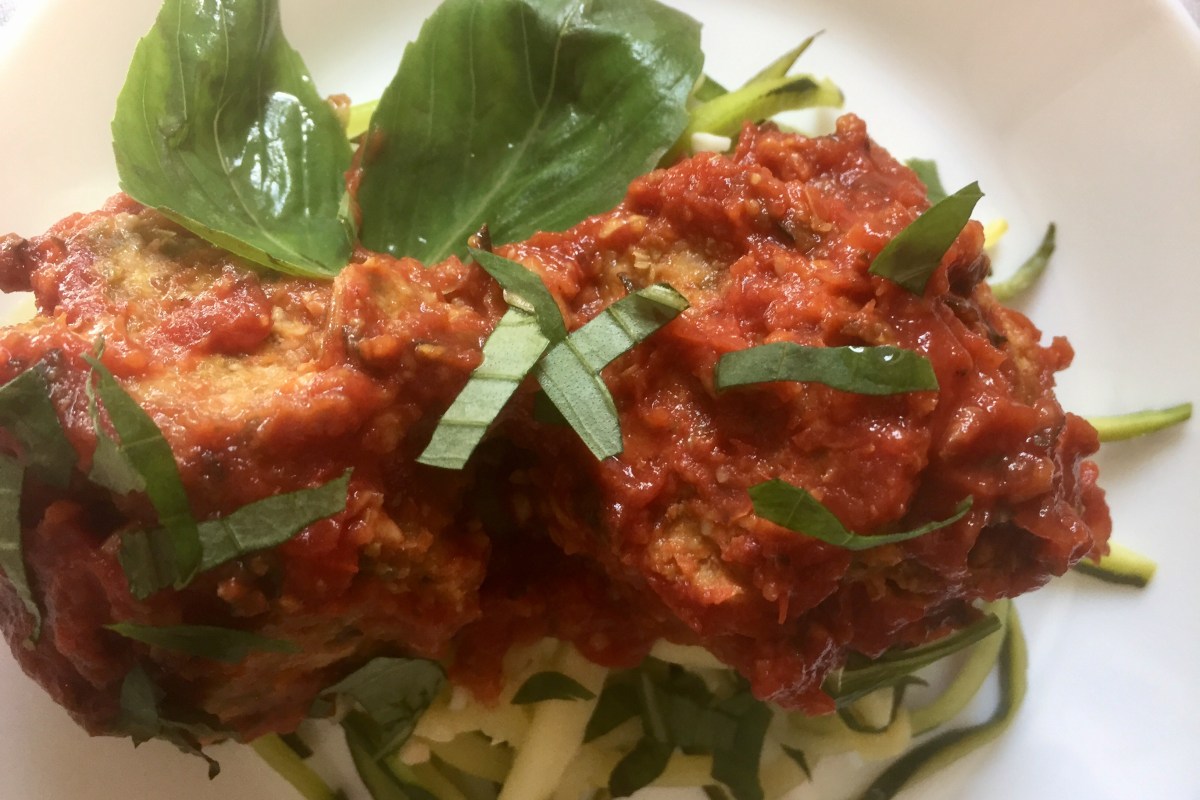
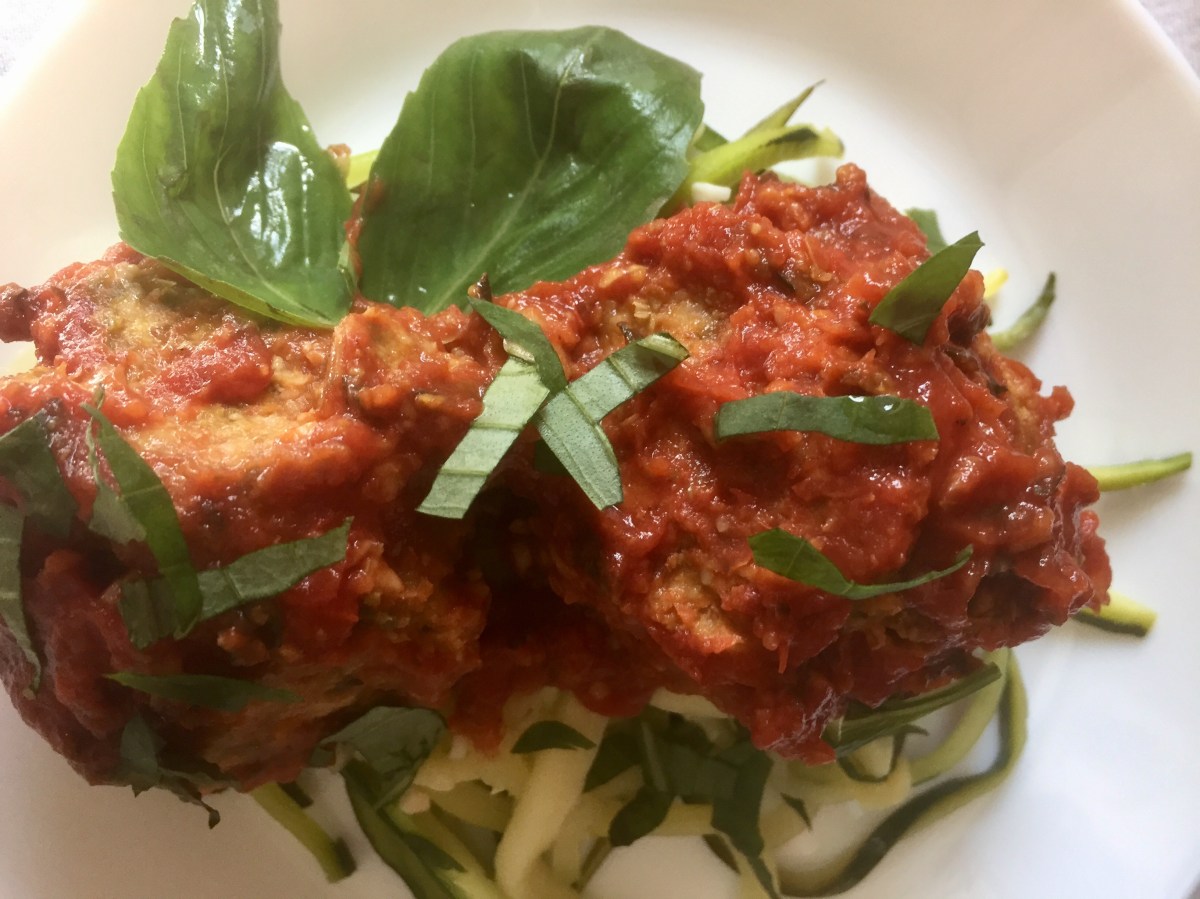
Gluten-free Vegan Spaghetti & Meatballs

VeganMeatballs_withZucchiniSpaghetti_DONE
Gluten-free Vegan Spaghetti & Meatballs, via Eat the Vegan Rainbow
Can gluten-free, vegan cooking be budget friendly, healthy, feed the whole family, and yet leave everyone feeling they are getting away with something? The answer is yes, and this recipe is my evidence. I use no fancy ingredients, and no fancy techniques.

How did I end up here? Well, as they say “Necessity is the mother of invention”. What happened is that I found myself facing a large bag of frozen vegetable mix, which I have cooked with many times before never to any great success. This is a classic item you can find in any grocery store – a bag that includes unspecified amounts of frozen peas, corn, green beans, carrots, and lima beans. The price on these is usually too hard to resist, and they keep really well if kept frozen so I usually have a couple in my freezer in case of an emergency where all other options dry up.

So one of those emergency situations came up and this time around, perhaps because of all this blogging I’ve been doing recently, I had a real brain wave. I decided to transform the relatively amorphous tasting vegetable mix into really incredible vegan meatballs, or should I say veggie balls?

VeganMeatballs_01
Frozen Vegetable Mix, thawed, via Eat the Vegan Rainbow
There are couple of simple tips that when put together make this recipe work. First of all, thaw your vegetables don’t cook them! Depending on the amount of veggies you use this may take 5-10 minutes in the microwave on high. Once the veggies are thawed and soft all through, use a stick (immersion) blender, or a food processor to make a thick paste out of it all. This will be a base for your “meatballs”.

Another thing that you will need to do is add flavor to the mix. Although each one of these veggies is lovely on their own and when fresh, put all together and after freezing and thawing they do lose some of their flavor. My secret ingredient in this recipe is definitely a dash of Trader Joe’s Chile Lime Seasoning Bland. If you don’t live in the area with a handy Trader Joe’s store near by, you can use regular chili powder and add some lime or lemon zest – that will do the trick!

You will have to be a bit patient with this recipe as it does take a bit of time. First of all, I use oats to help the meatballs stick together. I did not leave the oats whole, rather I blended them all into the veggie mix using a stick blender, added the spices, and left the mix to sit for about 15 minutes. That gives oats some time to absorb the liquid and make the mix stick together better, which helps for the next step – forming the “meatballs” and browning them. I recommend using a Dutch oven to brown the “meatballs”, as well as simmering the rich tomato sauce.

VeganMeatballs_03
Vegan “Meatballs” Browned in a Dutch Oven, via Eat the Vegan Rainbow
One word of advice is not to overcrowd your Dutch oven, and keep some room in between the “meatballs”. This helps them cook, and helps you maneuver them around. Once the “meatballs” are nicely browned set them aside and use the same Dutch oven for putting your tomato sauce together. I kept my recipe simple and my cost down by using canned crushed tomatoes and using some crushed garlic, dried oregano and dried basil to flavor the sauce. The sauce does not need to cook for long, and once it starts to simmer nicely and gently you can add the “meatballs” back.

VeganMeatballs_05
Vegan Meatballs in Tomato Sauce, via Eat the Vegan Rainbow
Don’t forget to lower the heat , bring the post to a very gentle simmer, and put the lid on! Without the lid you will soon end up with tomato sauce all over the stove top and the floor as this sauce does erupt in tiny little tomato sauce geysers.

To keep the recipe ultra healthy and gluten-free, I paired the meatballs with simple Zucchini Spaghetti.

Gluten-free Vegan Spaghetti & Meatballs

What you’ll need:

2 lbs (1 kg) bag of classic frozen vegetable mix

2 cups oats

1 tablespoon tomato paste

1 tablespoon soy sauce, reduced sodium

1 teaspoon garlic powder

1 teaspoon onion powder

1 teaspoon chili powder

1 teaspoon Trader Joe’s Chile Lime Seasoning Bland

1 1/2-2 28 oz (800 g) can crushed tomatoes

2 tablespoons crushed garlic

1 teaspoon dried oregano

1 teaspoon dried basil

Cooking spray

Fresh basil for serving

What you’ll do:

  1. Place the frozen vegetable into a microwave safe dish and microwave on high for 5-10 minutes to thaw the vegetables and slightly heat them through.
  2. Place the vegetables into a large mixing bowl. Use the stick blender to grind the vegetables into a relatively fine paste.
  3. Add oats and blend again.
  4. Add tomato paste, soy sauce, as well as onion, garlic, chili and lime chili powder. Mix well and let stand for 15 minutes or so.
  5. Spray the bottom of a large Dutch oven with cooking spray and bring to medium high heat. Use 1/4 cup or the ice cream scoop to scoop out the “meatball” mix and form the balls. Place them into the hot Dutch oven and let brown for 2-3 minutes. Turn the “meatballs” over and brown on the other side. Take them out of the Dutch oven and set aside. Spray with more cooking spray if needed and add another batch of “meatballs”. Continue until all your “meatballs” have been browned.
  6. Bring the heat up to high, add more cooking spray, and add crushed garlic and dried oregano and basil. Let it bloom, develop & release the aroma for 1-2 minutes. Add crushed tomatoes. Depending how much tomato sauce you’d like to have you may need to adjust the amount of crushed tomatoes you add. Bring the tomato sauce to a simmer and let it simmer for 5-10 minutes.
  7. Turn the heat way down and add back the “meatballs”. You will likely have two layers of meatballs which is fine, but it’s a good idea to keep in mind that they are relatively soft so treat them gently! Make sure they are nicely snuggled and covered by the sauce. Put the lid on and let the “meatballs” and sauce simmer for 15 – 20 minutes.
  8. When you are ready to serve, start with a generous amount of Zucchini Spaghetti, add couple of vegan meatballs, spread some sauce, and top with fresh basil. Enjoy!

Update: Few days ago I used the same “meatball” mix and made a “meatloaf” out of it. It worked really well!!! Here are couple of pictures to show you what it all looks like. One tip: bake the “meatloaf” on 375 F (190 C) for 25-30 minutes first, before putting on the tomato paste, then bake for 15 minutes more. Let the “meatloaf” stand for 15 minutes before cutting – the loaf will be soft when it comes out of the oven but it will firm up!

Copyright © Eat the Vegan Rainbow, 2017

Quinoa & Cherry Tomatoes Stuffed Eggplant

stuffed-eggplant-done
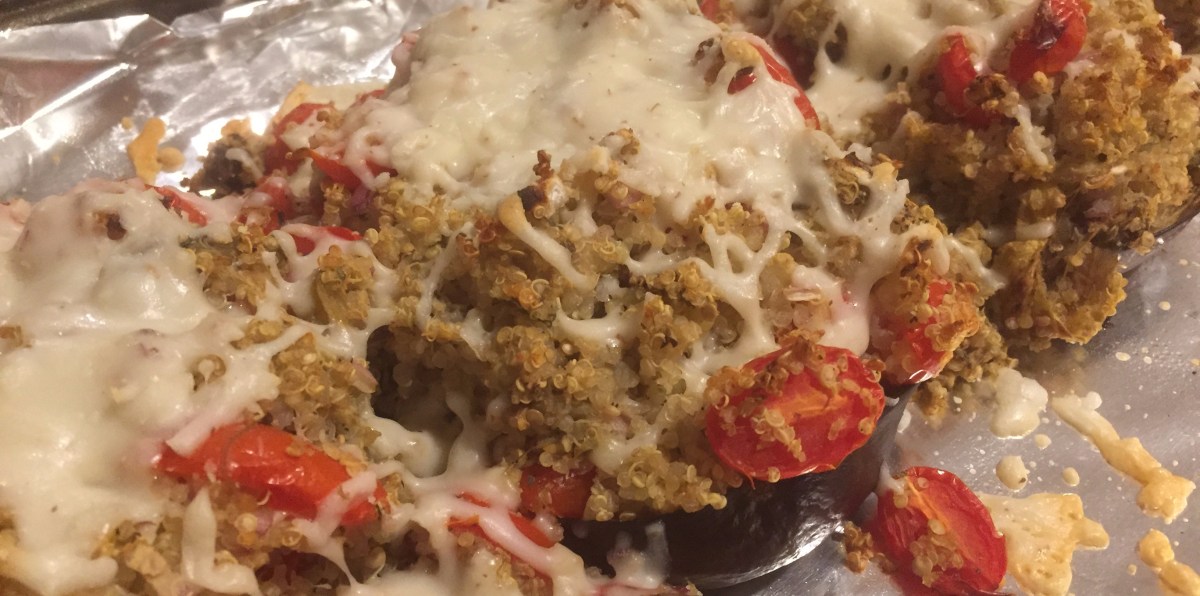
Stuffed Eggplant with Quinoa and Cherry Tomatoes, via Eat the Vegan Rainbow
One could say that I am on the stuffing kick: I stuffed some peppers, made a Mexican lasagna, which is almost like stuffing corn tortillas, and played around a zucchini moussaka. Perhaps it is time to say enough is enough and move away from stuffing, but I just can’t. Stuffed things are simply too much fun to eat and so simple to make that I can’t let go. Plus, although you may think you’ve reached the point where there’s nothing new to try, a new idea pops into your mind and you simply have to pursue it.

This happened to me the other day when I returned home from grocery shopping with two nice and plump pieces of eggplant in my bag. For me eggplant is one of those vegetables that’s neither here nor there. It’s a bit complicated to make into something great and delicious, especially if you decide not to bread it, fry it, or stuff it with a ton of cheese – Eggplant Parmesan I am looking at you!

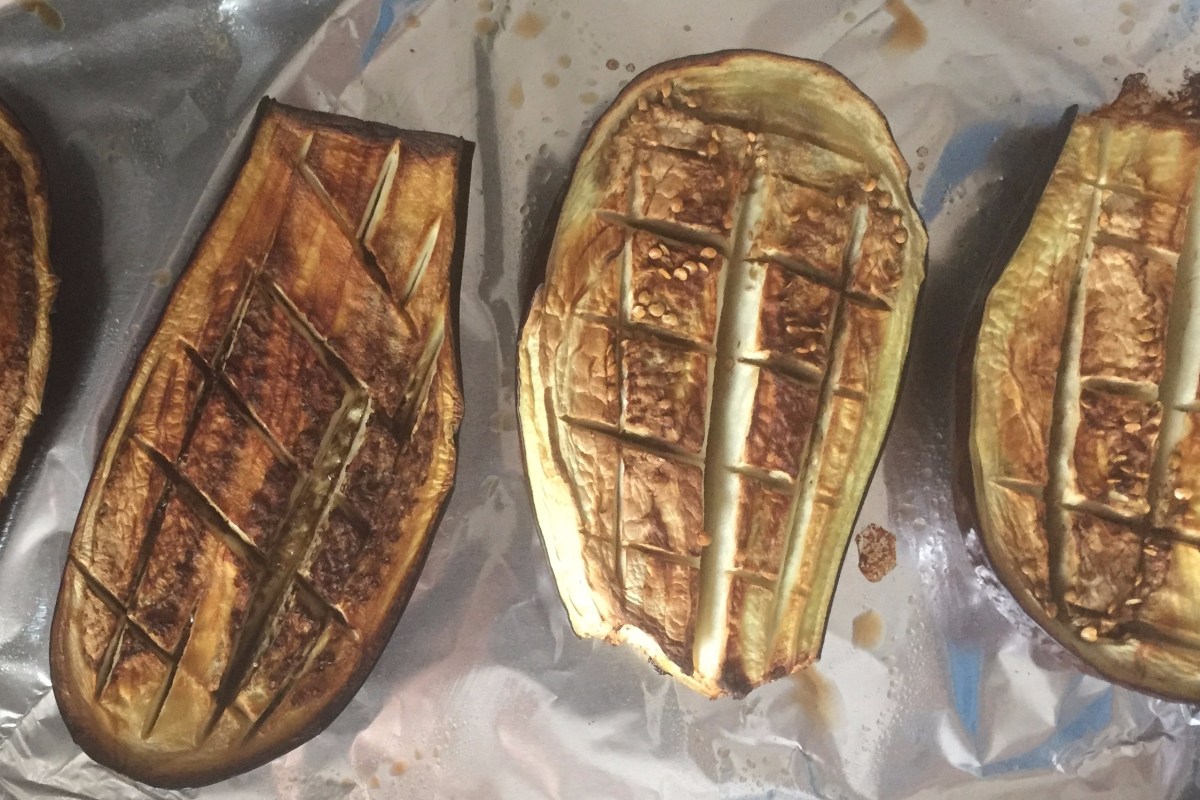
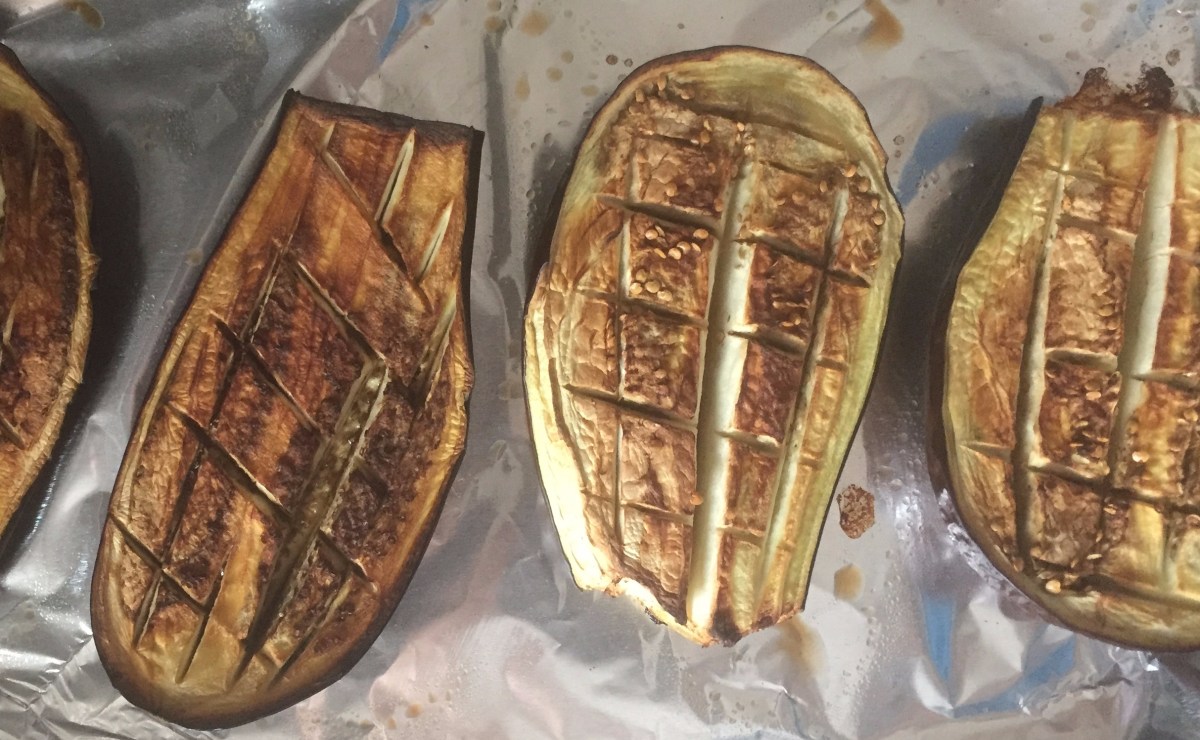
To make eggplant ready for stuffing and minimize the amount of oil needed to almost zilch, I decided to roast it first and then stuff it. Roasting does take a bit of time, although not too much as 20-30 minutes at 425 F (220 C) usually does the trick.

stuffed-eggplant-step-0
Roasting the Eggplant is the First Step En Route to Stuffing, via Eat the Vegan Rainbow
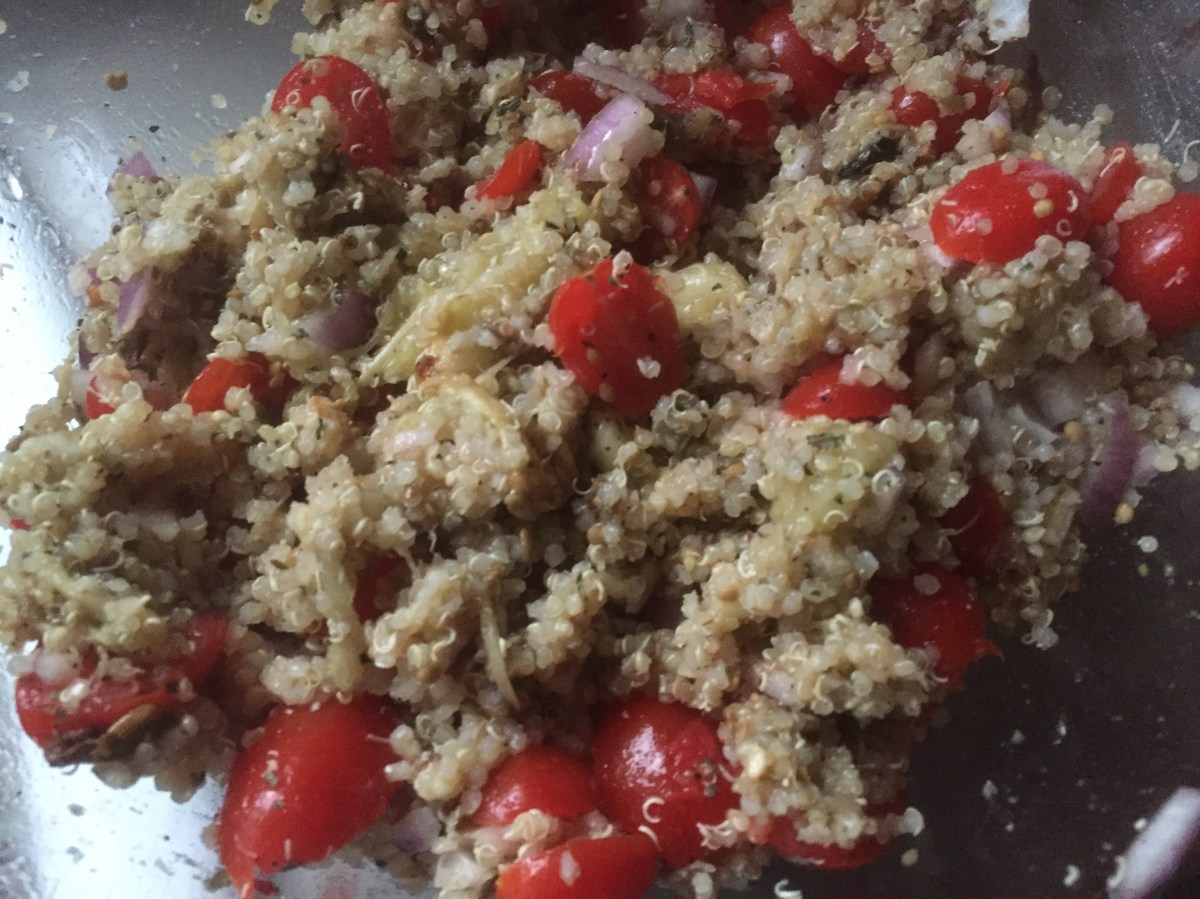
Once the eggplant is out of the oven leave it to cool for 10-15 minutes. This makes it much easier to handle as you will need to scoop out the roasted eggplant flash and mix it with the rest of the stuffing. One time saving tip is to cook your quinoa while the eggplant is roasting and cooling. That way both of your key stuffing ingredients will be ready to go. The rest is easy. You need to wash and half some cherry tomatoes, and dice one red onion. Mix everything together with a bit of dried or fresh basil or oregano, freshly ground black pepper, and even some lemon or lime zest to the stuffing. Any, or all, of these work well together!

stuffed-eggplant-step-1
Stuffed Eggplant with Quinoa and Cherry Tomatoes stuffing, via Eat the Vegan Rainbow
Once the stuffing is back in the eggplant shells, and the cheese is sprinkled lightly over the top, the dish goes back to the 350 F (175 C) oven for another 15 minutes or so.

Bon appétite!

Quinoa and Cherry Tomatoes Stuffed Eggplant

What you’ll need:

2 eggplants, large

1 red onion, diced

1 cup quinoa

2 cups water (or vegetable stock)

1 pint (300 g) cherry tomatoes

1/2 cup vegan cheese, shredded

1 teaspoon dry basil

Black pepper, freshly ground

Cooking spray

What you’ll do:

  1. Pre-heat oven to 425 F (220 C).
  2. Wash the two pieces of eggplant and cut in half lengthwise. Place on the aluminum foil covered baking sheet, crosshatch the surface and spray with a cooking spray. Roast in the oven for 20 minutes or until the top is nicely browned. once the eggplant is out, lower the oven temperature to 350 F (180 C).
  3. While the eggplant is roasting, prepare quinoa according to the instructions on the box. I usually cook quinoa in water, but you can definitely use vegetable (vegan) stock if you’d like to add a bit extra flavor.
  4. Once quinoa is fully cooked, transfer into a large mixing bowl. Mix with diced onion and cherry tomatoes that you’ve cut in half lengthwise. Next, scoop out eggplant flash and add to the quinoa stuffing. Lastly, add basil and freshly ground black pepper and mix well.
  5. Spoon a generous amount of stuffing into each eggplant half, spray the top with some cooking spray, and top with shredded cheese. Put the stuffed eggplant back into the oven until the stuffing is heated through, tomatoes cooked, and the cheese melted. This should not take more than 15-20 minutes.
  6. Serve warm!

Copyright © Eat the Vegan Rainbow, 2017
Vegan Zucchini Moussaka

zucchinimousaka_done
Vegan Zucchini Moussaka, via Eat the Vegan Rainbow
Growing up moussaka was probably one of my least favorite dishes. Somehow, layers of potato and ground meat, cooked in rich Béchamel-type of sauce just did not work for me. The version that used zucchini instead of potatoes worked a little bit better, especially when paired up with plain yogurt, but even then the dish was too bland yet to heavy for me.

I decided to give the moussaka of my youth a vegan make-over and I’m happy to report that veganizing this traditional recipe worked! I used rainbow carrots, yellow onion, celery, vegan ground “beef”, all the zucchini ends that are not quite right shape or size to make good layers, and a generous amount of tomato paste for my stuffing.

zucchini-mousaka-ingredients
Zucchini Moussaka ingredients, via Eat the Vegan Rainbow
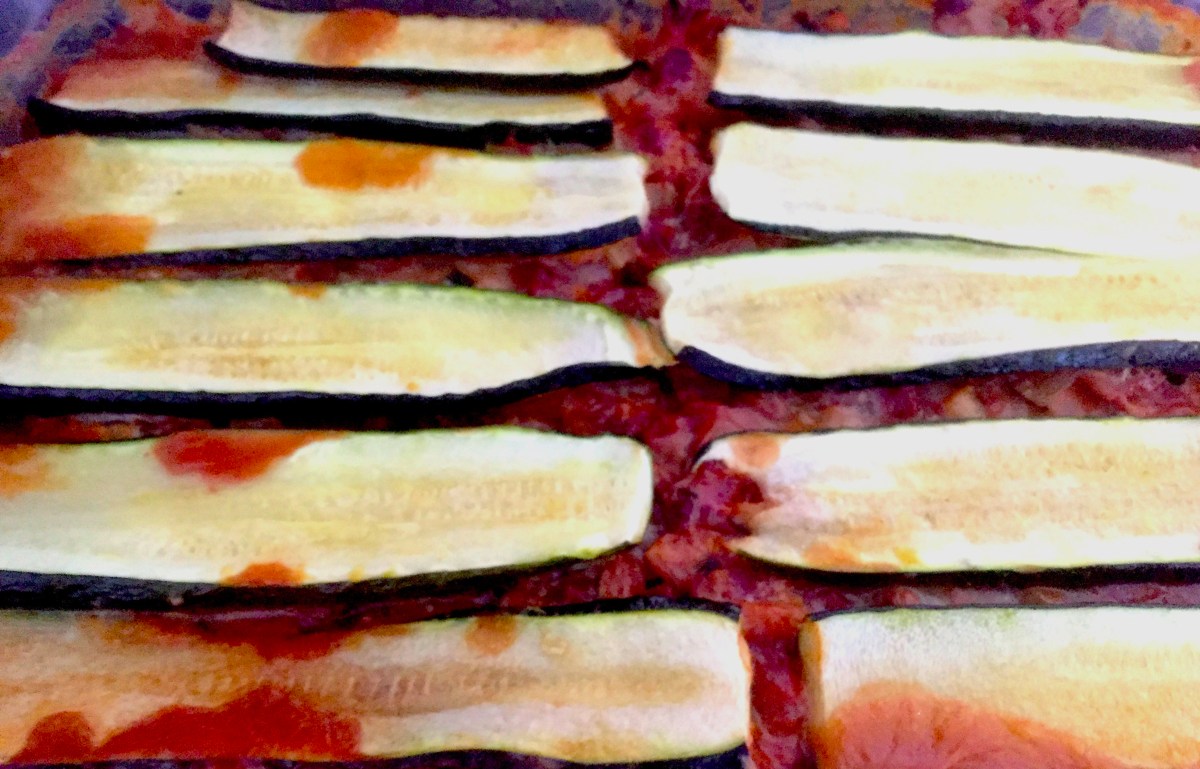
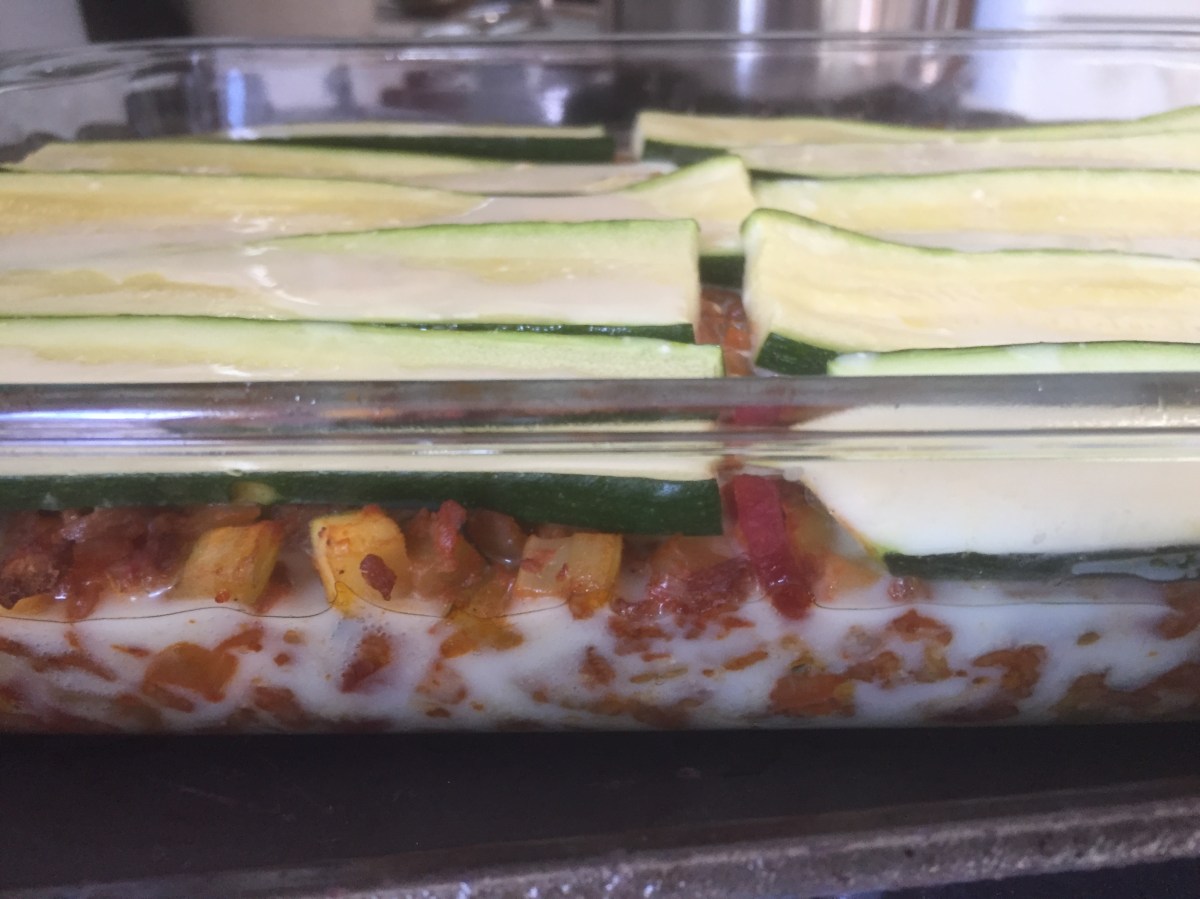
For Béchamel sauce, which usually uses flour, butter and milk, I used almond milk, nutritional yeast and corn starch to make the sauce vegan and gluten free. My moussaka starts with a well oiled deep baking dish, a layer of zucchini slices, stuffing, another layer of zucchini slices and finishes with the vegan Béchamel sauce.

zucchini-mousaka-step-2
Zucchini Moussaka with Vegan Béchamel sauce, via Eat the Vegan Rainbow
The assembled moussaka goes into the oven to cook covered for 30 minutes and uncovered for another 15 minutes. The vegan Béchamel sauce gives this dish great thickness and richness, without making the moussaka heavy. Your taste buds and your tummy will thank you for taking it lightly!

Vegan Zucchini Moussaka

What you’ll need:

4 zucchinis

4 rainbow carrots, diced

6 stalks celery, diced

1 yellow onion, diced

1 cup of vegan ground “beef”, store bought or homemade

2 tablespoons tomato paste

1 teaspoon smoked paprika

2 cups unsweetened, plain almond milk

3 tablespoons corn starch

1 tablespoon nutritional yeast

Cooking spray

What you’ll do:

  1. Preheat the oven to 350 F (175 C).
  2. Spray the bottom and sides of your 13 x 9 in (33 x 23 cm) baking dish with cooking spray. Set aside.
  3. Wash and slice zucchini lengthwise to make 16 to 18 slices that are about 1/4 in (6 mm) thickness. Don’t throw out the left over and edge pieces – dice them to medium size dice and put them in a large mixing bowl.
  4. Add diced onions, carrots and celery to the mixing bowl, as well as vegan ground “beef”, tomato paste, and smoked paprika. Mix well.
  5. Line the bottom of the baking dish with zucchini slices. Pour the filling into the dish. Top with another layer of zucchini slices.
  6. Separately, mix the almond milk, corn starch and nutritional yeast together. Make sure the mix is smooth and lump free. Pour over the moussaka.
  7. Cover the moussaka with foil and bake for 30 minutes. Remove the foil and bake for additional 15 – 20 minutes, until the top is nicely browned.
  8. Take out the oven and let stand for 5-10 minutes before serving.

Copyright © Eat the Vegan Rainbow, 2017
Vegan Stuffed Peppers with Homemade Beef Substitute

veganstuffedpeppers
Vegan Stuffed Peppers with Homemade Beef Substitute, via Eat the Vegan Rainbow

My mom is the queen of stuffed bell peppers. Her peppers have been well-known within our extended family, and frequently requested by friends and family when they visit. What I am saying is that stuffed bell peppers should be in my DNA, but it took me years to transform what I learned in my mom’s kitchen to a dish that will be a crowd pleaser.

The first major breakthrough in my pursuit to a perfect stuffed bell pepper recipe came when I realized that cutting the peppers in half lengthwise makes my life so much easier than cutting just the top off. Cutting peppers lengthwise makes cleaning out the seeds and the spines a breeze, plus helps distribute the stuffing and helps the stuffing stay put. It also helps peppers cook faster. Another thing that I found through many round of experimentation is that it helps if you pre-cooks peppers just a bit before stuffing them. I tried parboiling and it helps but it changes the flavor of peppers in a direction that I don’t really like. So, I recommend par-roasting, which means letting your peppers roast for 10-15 minutes, until they just start to soften and get browned on the surface. This is a great way to jump start cooking your papers and add some flavor.

pepperrainbow
Pre-roasted Bell Peppers, via Eat the Vegan Rainbow

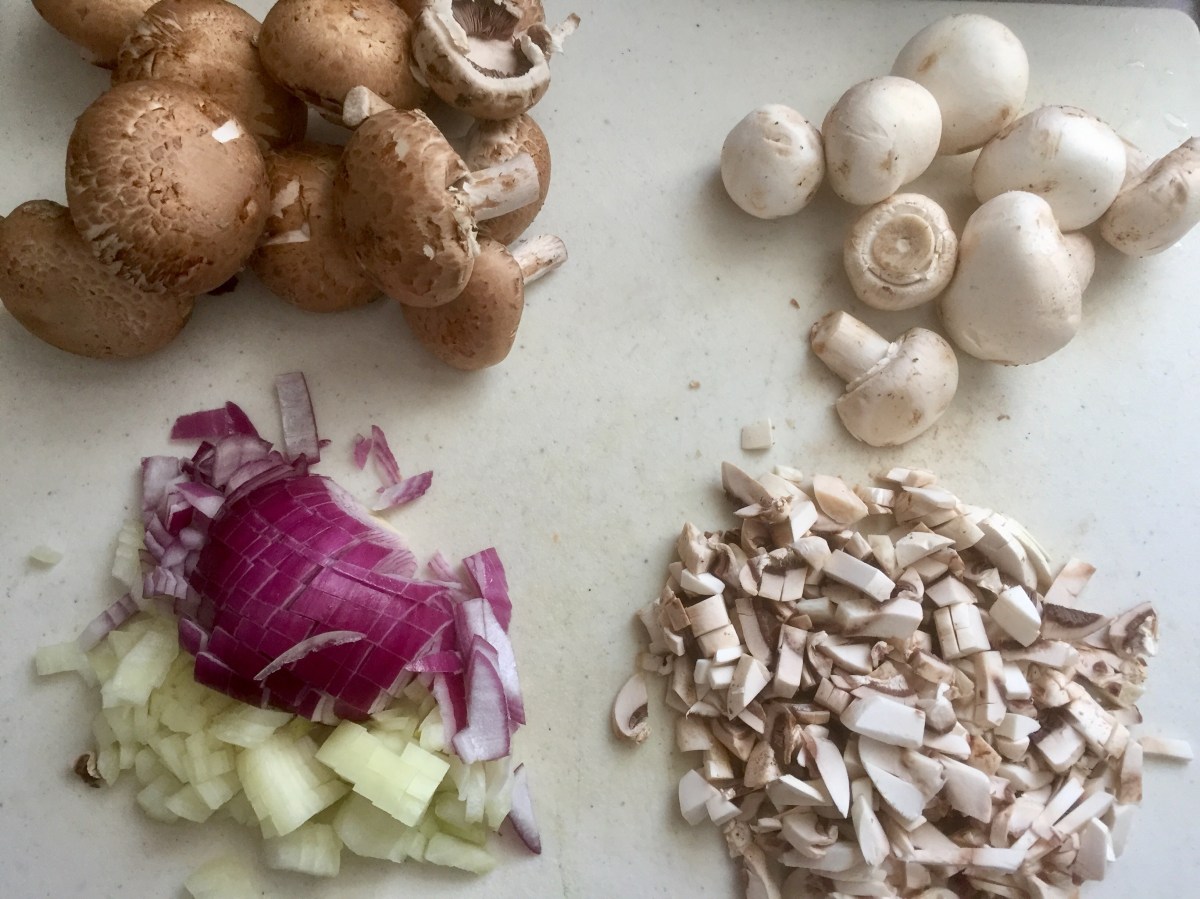
The second breakthrough came when I discovered that the stuffing does not need to include a starch component. You can have lovely stuffed bell peppers without filling them with rice, or potatoes, or quinoa, or barley, or any of that stuff. I am not saying these are bad things to use, but most recipe use them as space fillers more than anything else. But for me in this recipe, a mix of yellow onion, red onion, white mushrooms, and baby bella (crimini) mushrooms. One tip here is to chop all these to pretty small pieces so that they match the size of ground meat chunks you would usually find in a stuffed bell pepper recipe. Another tip: for a recipe like this you can use both the mushroom tops and stems, and minimize the waste!

stuffedpepperswithmushroom
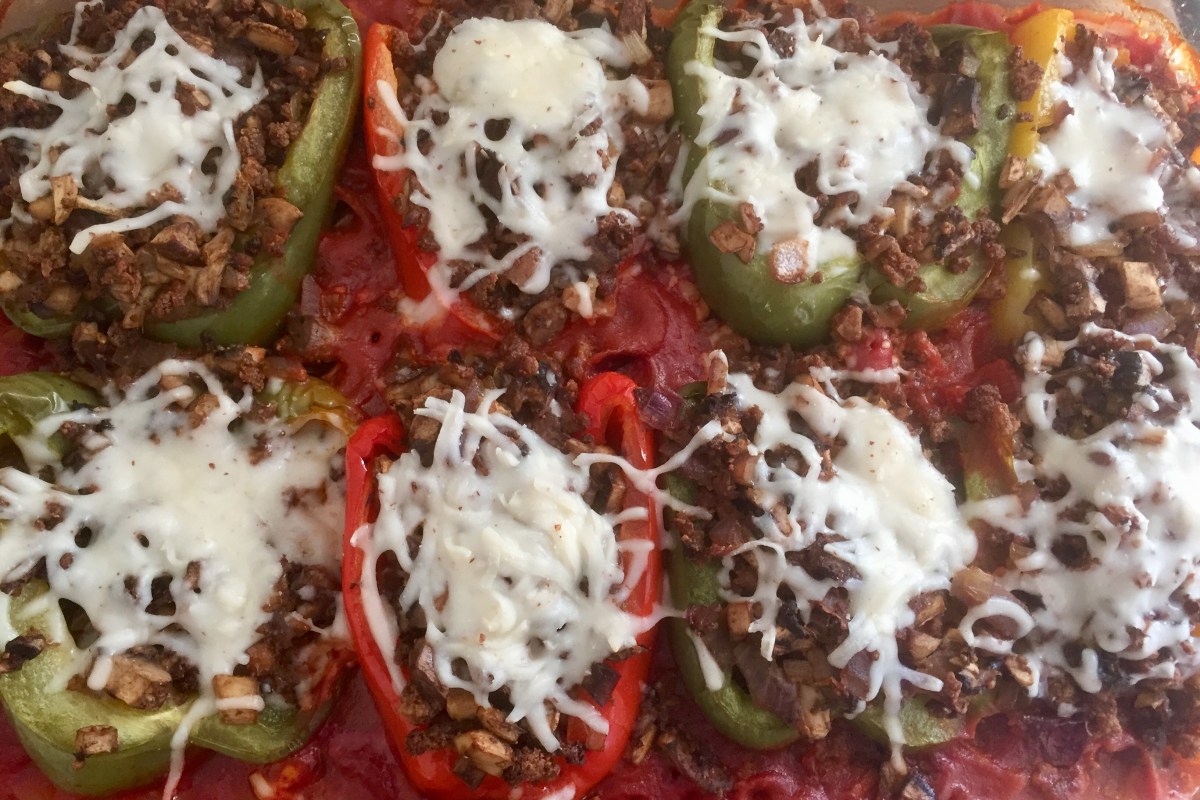
Vegan Stuffed Peppers with Homemade Ground Beef Substitute, via Eat the Vegan Rainbow

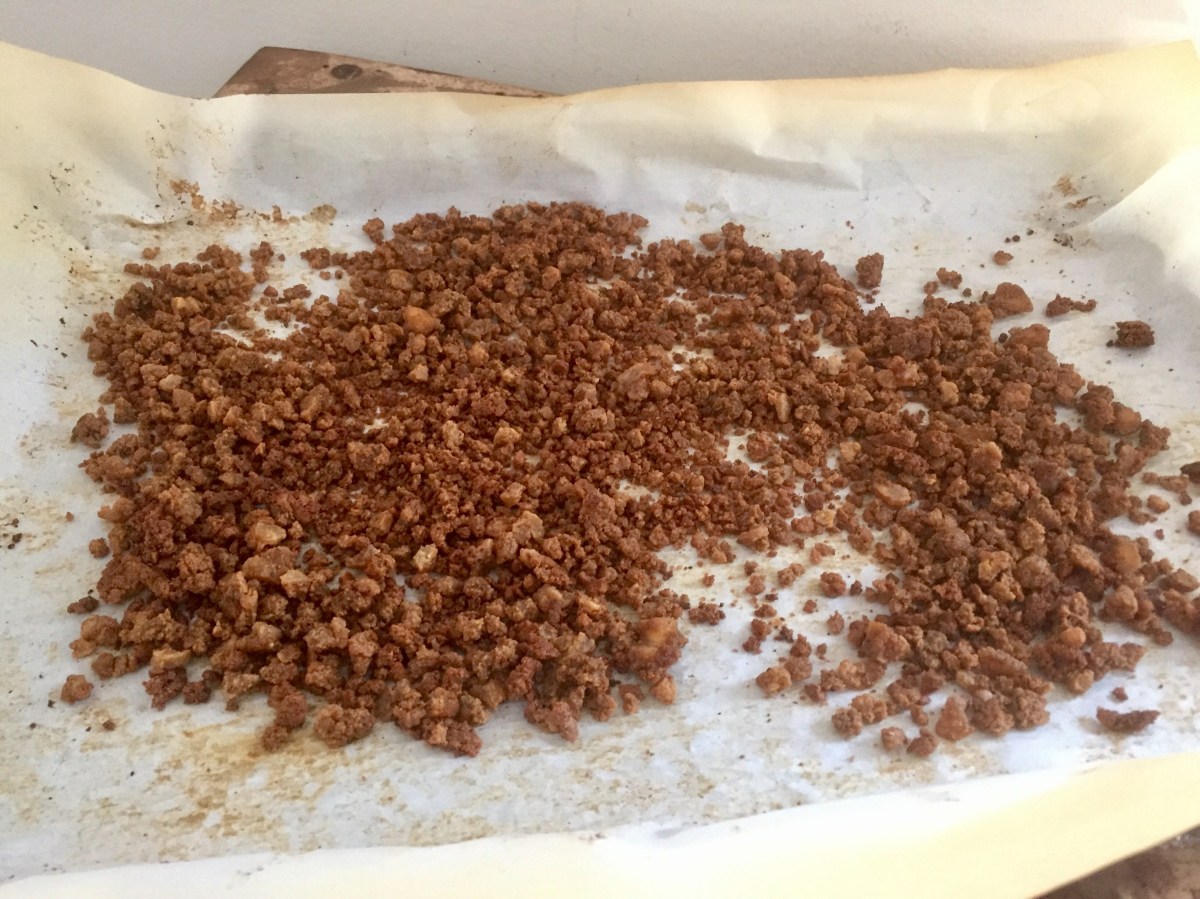
This brings me to my most recent breakthrough: vegan substitute for ground meat. I followed this recipe I found on Glow Kitchen, with only one modifications – I did not add olive oil and used cooking spray on my baking sheet instead. The recipe produces amazing ground beef substitute and uses tofu and a handful of pantry staples. The prep time is a bit on a longer side, as it takes about 1 hour in the oven with frequent stirring, but it is worth it!!! I think you will love this so much that I recommend doubling the recipe right off the bat.

vegangroundbeef
Vegan Ground Beef Substitute, recipe via Glow Kitchen, execution via Eat the Vegan Rainbow

Finally, I did use some vegan cheese to top the stuffed peppers, but you can definitely skip that step or top them with fresh Italian (flat leaf) parsley. Or both!

Vegan Stuffed Peppers with Homemade Beef Substitute

What you’ll need:

4 bell peppers (red, orange, yellow, green – any color will do)

8 oz. (225 g) white mushrooms, finely diced

8 oz. (225g) baby bella (crimini) mushrooms, finely diced

1/2 large yellow onion, finely diced

1/2 red red onion, finely diced

1 batch of Vegan Substitute for Ground “Beef”

15 oz. (425 g) crushed tomatoes, can

1 teaspoon smoked paprika

1/4 cup vegan cheese, shredded

Cooking spray

What you’ll do:

  1. Prepare the ground beef substitute according to instructions here. You can make this a day ahead, which is what I did. Also, you can use any store bought ground beef substitute you like.
  2. Preheat oven to 425 F (220 C).
  3. Wash and dry the peppers, then cut lengthwise and clean out the seeds and spines. Put them into a roasting pan and spray gently with cooking spray. Par-roast for 15 minutes or so. Take them out of the oven and remove any liquid that peppers released during roasting. Set aside.
  4. Lower the oven temperature to 350 F (175 C).
  5. Sauté onions and mushrooms on medium heat with a bit of cooking spray for 5-8 minutes. Stir in beef substitute and sauté for another 5 minutes. Turn the heat off and mix in smoked paprika. Your stuffing is ready for the next step!
  6. Pour the can of crushed tomatoes into your baking dish. Place par-roasted peppers in, and fill them with the stuffing. Cover the baking dish with foil and put in the oven for 15-20 minutes. Remove the foil and bake uncovered for 10 minutes.
  7. Sprinkle the cheese on top and let it melt which will take another 5 minutes. And that is it. You are ready to enjoy!

Copyright © Eat the Vegan Rainbow, 2017
Vegan Saag Paneer

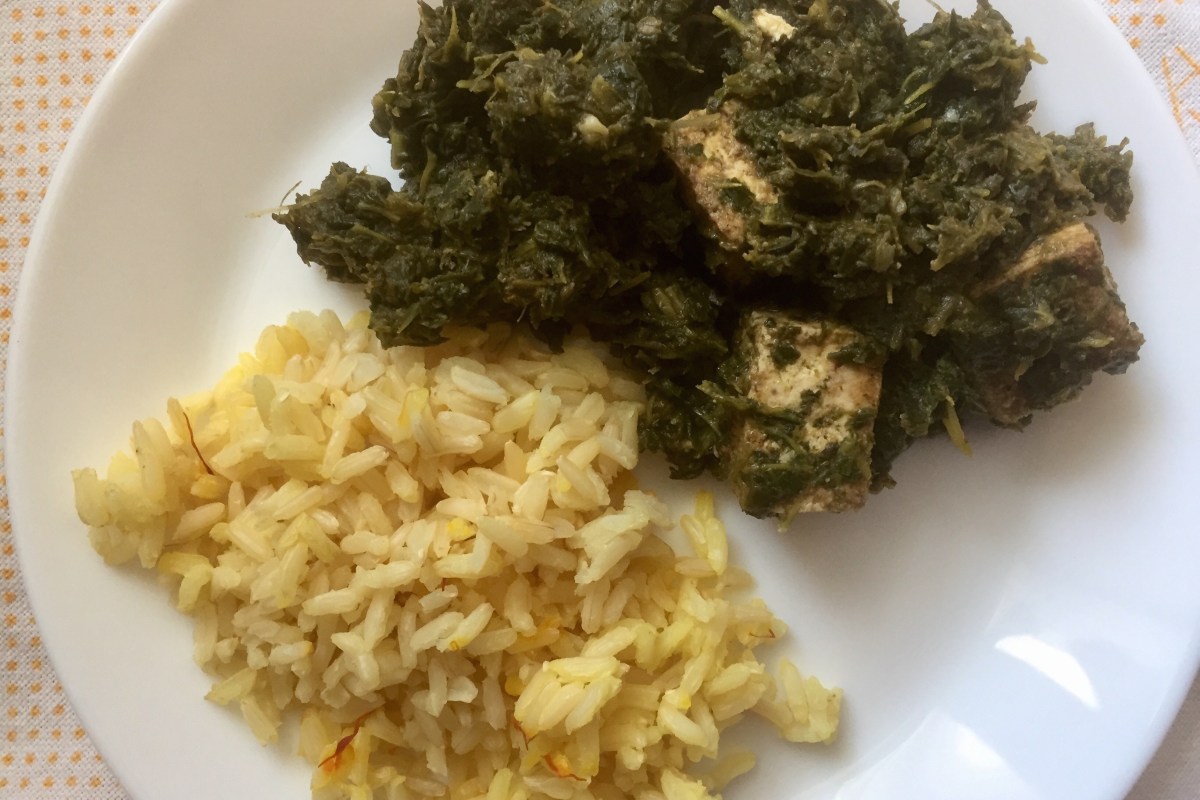
vegansaagpaneer_saffronrice
Vegan Saag Paneer with Saffron Brown Basmati Rice, via Eat the Vegan Rainbow

Few days ago, I shared my recipe for Vegan Chicken Tikka Masala that uses young jackfruit as a substitute for chicken, and slow cooker as a substitute for using ghee to enhance the flavor, as well as huge time and effort saver. Since then I decided to tackle another jewel of Indian cuisine, Saag Paneer. Saag is a traditional Indian dish made of leafy green vegetables, which is a vegan friendly part of this equation, and paneer is soft, white cheese very common in South Asia, a vegan less friendly ingredient. Putting green leafy vegetables, like spinach, together with cheese, spices and cream is a no-brainer, so it is no surprise that Saag Paneer is very popular.

In order to build a vegan version of Saag Paneer, I focused on transforming extra firm tofu into paneer. This turned out to be easier than I expected. First of all, texture of extra firm tofu and your average paneer are very similar. Additionally, they both have mild flavors and creamy consistency. So far so good!

You do need some time and patience with this one though. I prepped tofu the way I usually do by leaving it in the sieve in the fridge overnight. You can use any other method of getting rid of the excess moisture – I prefer the sieve because it requires no work, cans and paper towels are tedious and a bit wasteful, and I am yet to invest in the tofu press. The next morning I cubed the tofu, and let it “marinate” in the dry spice mix for 4-6 hours.

veganpaneer
Vegan Paneer, via Eat the Vegan Rainbow

Even after sitting in the spice mix, the tofu paneer is not quite ready. Although you can use it, I strongly recommend that you first roast the tofu for 20-30 minutes. This roasting step locks in the spices and adds slight crunchiness that makes every bite a treat.

Few additional tips that will help you put this dish together are to do with spinach. I use frozen chopped spinach, as it is ready to go. The traditional Saag Paneer recipe uses quite a bit of cream to make the spinach nice and creamy. I use coconut milk to add a bit of creaminess to it, and the coconut milk adds a bit of its own nutty flavor that I enjoy. But, I don’t rely on coconut milk alone and have discovered some time ago that stick (also known as hand or immersion) blender is indispensable for creating spinach that’s beyond creamy! If you don’t have a stick blender, you can use a blender or a food processor to purée your spinach.

Once the spinach is puréed, it is ready to meet the tofu paneer, and after about 15 minutes of simmering the Vegan Saag Paneer will be ready to meet your taste buds!

img_1315
Vegan Saag Paneer, before the final mix. Via Eat the Vegan Rainbow

Vegan Saag Paneer

What you’ll need:

For tofu paneer

14 oz. (400 g) extra firm tofu

1 tablespoon garam masala

1 tablespoon ground cumin

1 teaspoon garlic powder

For creamed spinach

2 lbs (1 kg) frozen, chopped spinach

1 tablespoon garlic, minced

2 tablespoons tomato paste

7 fl. oz. (200 mL) coconut milk, reduced fat

Cooking spray

What you’ll do:

  1. Place tofu into a strainer and leave in the refrigerator to drain overnight. Then pat dry with a towel and cut into 1 in/2.5 cm cubes.
  2. In a ziplock bag mix dry spices (garam masala, ground cumin and garlic powder) and add tofu cubes to it. Zip the bag and toss gently to coat the tofu pieces evenly. Leave in refrigerator for 4-6 hours.
  3. Heat the oven to 425 F (220 C). Line a baking sheet with parchment paper and space tofu cubes evenly with some room between the cubes. Don’t brush the spice mix off, just roast the tofu pieces as is for 10-12 min, then go in and flip them over and put them back for another 10-12 min, so that they roast on all sides and get golden brown.
  4. On the stove top, spray the bottom of your pan with cooking spray and heat to medium high. Add minced garlic (I prefer the jar variety that taste great in a dish like this and requires no work), and let it start to develop the aroma for about 1-2 minutes. Next add the tomato paste, and let it mature for 1-2 minutes.
  5. Add frozen spinach. Cook with occasional stirring for 15-20 minutes. Let cool for 15-20 minutes, add coconut milk, and then purée with a stick blender until smooth.
  6. Add roasted tofu and mix gently until tofu is well incorporated. Simmer for 15 minutes. Enjoy with a piece of naan bread, or with Saffron Brown Basmati Rice.

Note: please note that unlike most Saag Paneer recipes I do not add spices to spinach. The flavor intensity comes from tofu paneer, so it is important that your tofu is well coated with the spice mix and nicely roasted until golden brown.

Copyright © Eat the Vegan Rainbow, 2017
Vegan Mexican Lasagna with Soy Chorizo

veganfajitalasagnawithsoychorizo
Vegan Mexican Lasagna with Soy Chorizo, via Eat the Vegan Rainbow

Few years ago when I was first trying to minimize the amount of gluten in my diet, I discovered that corn tortillas work very well as a substitute for lasagna noodles. Corn tortillas as lasagna noodles have quite a few advantages over the regular kind. First of all, they are ready to go and don’t need any preparation. Having said that, I did initially experiment with toasting them just slightly before use, and this did enhance their flavor but at the end the taste benefit was not sufficient to going through the toasting process.

To me the second advantage is the flavor. The regular lasagna noodles are more of a bystanders without adding any specific flavor to the dish, while corn tortillas are in the midst of flavors. As I started using them in lasagnas, I also transitioned away from using Italian ingredients and flavors and to using types of things that you would find in burritos or fajitas.

This Vegan Mexican Lasagna with Soy Chorizo recipe uses the same strategy. I combine two types of peppers and two kinds of onions, which when nicely browned add a hint of fajitas to this lasagna. On this occasion I gave them a pretty fine dice, but you can definitely cut them lengthwise if you are into getting even closer to that fajita style.

mexicanlasagna_ingredients
Vegan Mexican Lasagna with Soy Chorizo Ingredients, via Eat the Vegan Rainbow

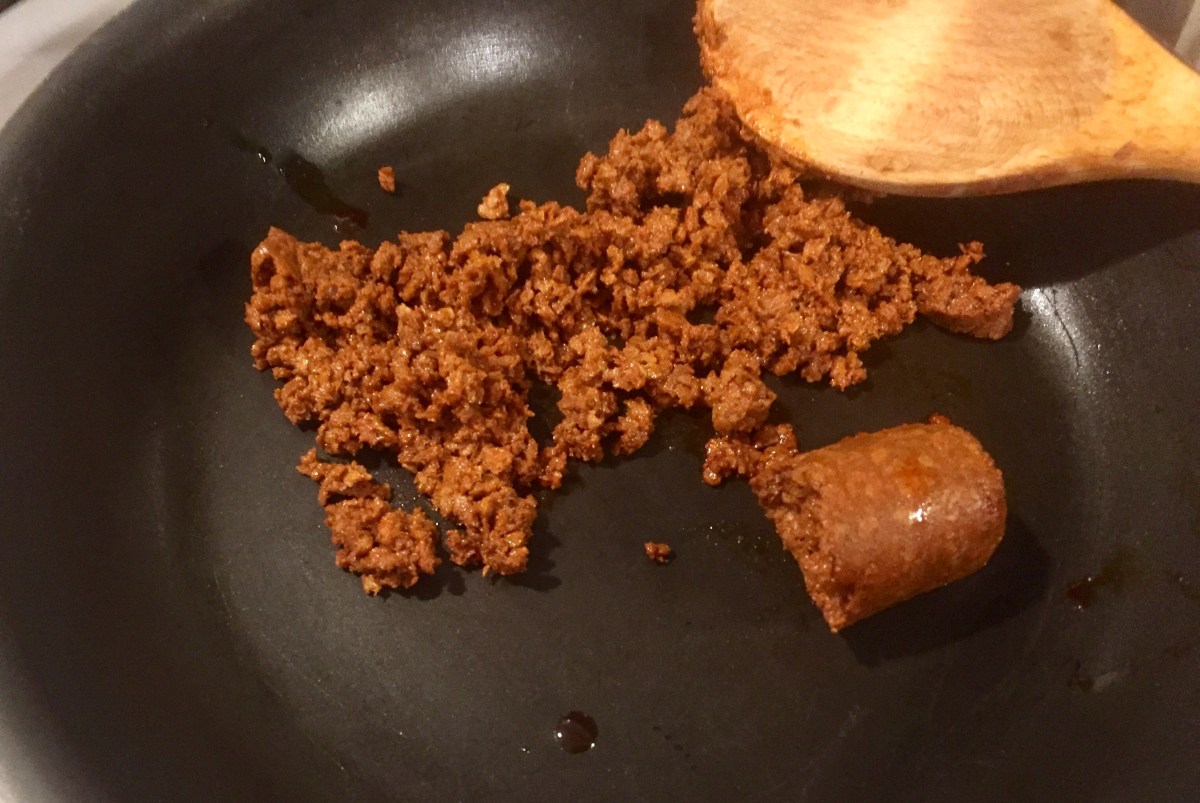
This recipe uses Trader Joe’s Soy Chorizo and because of the intense flavors that this soy chorizo brings to table you will not need to add much, if any, additional spices. Additionally, this soy chorizo is fairly oily so I start with the soy chorizo, let it brown just slightly and release the oil, and then I add peppers and onions and let them cook until veggies are gently caramelized.

mexicanlasagna_soychorizo
Trader Joe’s Soy Chorizo, via Eat the Vegan Rainbow

Once the stuffing mix is done, it is time to assemble the lasagna and, about 25-30 minutes later, enjoy this dish rich in flavor!

Vegan Mexican Lasagna with Soy Chorizo

(2-4 servings)

What you’ll need:

1/2 Trader Joe’s Soy Chorizo

1 red pepper, diced

1 orange pepper, diced

1/2 red onion, diced

1/2 yellow onion, diced

Cooking spray

8 corn tortillas

1/4 cup shredded cheese, vegan

8 x 8 in (20 x 20 cm) baking dish

What you’ll do:

  1. Preheat oven to 375F (190C).
  2. Put Soy Chorizo into a non-stick pan and turn the heat on to medium high. Please note that Trader Joe’s Soy Chorizo comes in a inedible casing that you will have to remove and discard. Use your mixing spoon to break it apart. Let it brown and release its oil for 3-5 minutes.
  3. Add diced peppers and onions to the pan, and let them gently brown and caramelize for 5-10 minutes. The exact time depends on whether you prefer your peppers and onions a bit more on the crunchy side or a bit more on a soft side.
  4. Spray the bottom and the sides of your 8 x 8 in (20 x 20 cm) baking dish with the cooking spray. Place 4 tortillas on the bottom. Add your filling and spread over tortillas evenly. Top with 4 tortillas. Spray the top lightly with cooking spray. Sprinkle the cheese, and cover the dish with foil.
  5. Put the Mexican lasagna into the oven and bake for 20 minutes covered, and the last 5 minutes uncovered so your cheese topping gets nice and melted.
  6. Enjoy!

Note: Just before serving Vegan Mexican Lasagna with Soy Chorizo you can sprinkle the top with fresh cilantro and a squeeze of lime. And while we are packing on some good Mexican flavors, why not add some fresh simple salsa, guacamole, or pickled jalapeños on the side?

Copyright © Eat the Vegan Rainbow, 2017

Vegan Chicken Tikka Masala

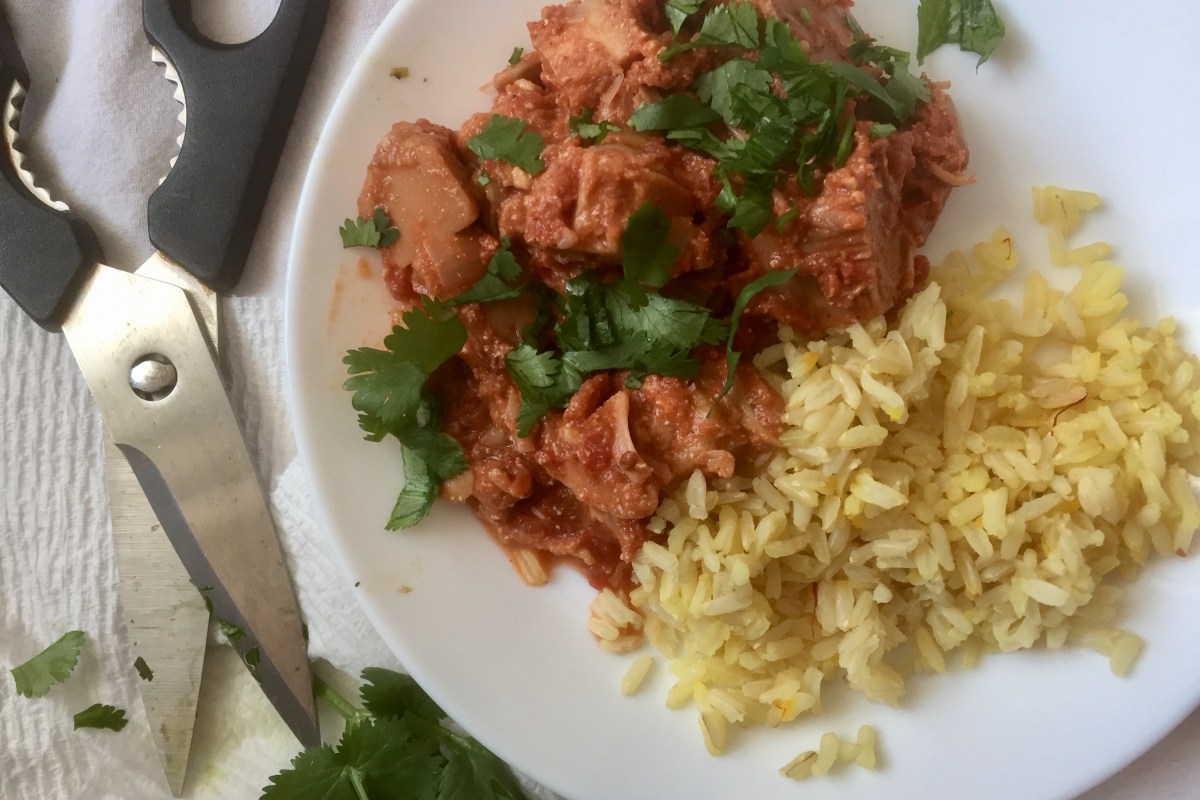
veganchickentikkamassala
Vegan Chicken Tikka Masala with Saffron Brown Basmati Rice, via Eat the Vegan Rainbow
Chicken Tikka Masala has been on the menu of all Indian restaurants that I ever went to. But the origins of this dish are far from clear, some claiming that the dish was created in Glasgow, while others claim it originates from Punjab. Regardless of its origin and history, every Chicken Tikka Masala recipe I ever tasted had five things in common: juicy and tender chicken,a yogurt marinade, fragrant tomato simmer sauce, cream, and lots and lots of ghee (clarified butter).  These five things make Chicken Tikka Masala incredibly tasty, as well as elaborate to make, as well as very heavy on saturated fat and calories.

Well, I think the dish is overdue for a makeover, and there are many that agree with this view. While researching, I found many recipes that explore using tofu, meatless chicken strips, cauliflower, chickpeas, or other things as a chicken substitute, and I bet these all taste great. But, what I wanted to do here is take my new favorite ingredient, jackfruit, which I recently transformed into a fabulous Jackfruit Tacos, and see if it works in an Indian dish.

I also wanted to make a lengthy prep into something more manageable, so my recipe uses a slow cooker to do all the work of bringing jackfruit, spices and the tomato simmer sauce together. This also helps with the fat content, which I cut way, way down while maintaining the intensity of the flavors. The resulting recipe is straightforward but there are couple of tricks and tips to it.

First tip is to use a slow cooker liner. I am not sure if there are other brands out there, but I found that Reynolds Slow Cooker Liners work really well. The food gets cooked perfectly and the clean up is a breeze!

Second tip is to quick pre-cook your aromatics. In this case I use onions and garlic, and apply a method that I found in one of the America’s Test Kitchen cookbooks where you mix your aromatics with a bit of oil and microwave them for 5-6 minutes before adding them to the slow cooker. I’ve been using this method for more than a year now and apply it to get the aromatics (onions, garlic, carrots, celery,…) going, because I found that the slow cooker just can’t get them to develop the slightly caramelized flavor that a stow top cooking will do for you. However, microwaving with a bit of oil takes care of that and works perfectly!

Third tip is to rinse, drain and dry your jackfruit, assuming that you are starting from the canned version, and chopped it into small pieces. Do make sure that jackfruit is well rinsed and drained. Otherwise you will end up with Vegan Chicken Tikka Masala that may be too salty and too soupy.

So, once you have your jackfruit and your aromatics ready, it’s time to get cooking!

veganchickentikkamasala
Vegan Chicken Tikka Masala in a slow cooker, via Eat the Vegan Rainbow

Vegan Chicken Tikka Masala

What you’ll need:

2 cans (10 oz, 280 g) young jackfruit in brine

1 can (28 oz, 800 g) crushed tomatoes, no salt added

1 yellow onion, diced

2 tablespoons garlic, crushed

2 tablespoons tomato paste

2 teaspoons ginger, freshly grated

2 teaspoons garam masala

2 teaspoons ground cumin

1/2 cup cashews, raw

1/4 cup almond milk

cooking spray

fresh cilantro

What you’ll do:

  1. Place diced onions, garlic (I use the one from the jar, as I shared in my Oh My! It’s Vegan Shepherd’s Pie! post) and tomato paste in a microwave safe bowl. Spray the aromatics with cooking spray, mix well and microwave on high for 5-6 minutes. Be careful when you handle the bowl, it will be hot so I recommend using oven mittens.
  2. Line your slow cooker with the liner, and add the can of crushed tomatoes, jackfruit that has been rinsed, dried and chopped to small pieces, as well as all the spices and the microwaved aromatics. Mix well. Cover and turn your slow cooker on “HIGH” for 4 hours.
  3. While the slow cooker is going, start soaking the cashews in water. Let them sit for 4 hours in the refrigerator and once your slow cooker is done take the cashews out, dump the water out and place the cashews and almond milk in a blender. What you are doing here is making vegan Cashew Cream, and this amount of cashews should give you more than enough to make this Vegan Chicken Tikka Masala into a creamy perfection. However, do take it easy when adding Cashew Cream and what I usually do is add the cream one tablespoon at the time, mix Vegan Chicken Tikka Masala well, and check for flavor. I keep adding the Cashew Cream until I am happy with the flavor, color and consistency. Don’t worry if you discover that you made a bit too much Cashew Cream, you can always use it to top your backed potatoes, or turn it into Vegan Herb Mayo.
  4. When  ready to serve, plate your Vegan Chicken Tikka Masala, or should I call it Jackfruit Tikka Masala?, with some Saffron Brown Basmati Rice and top it with fresh cilantro.

Note: Cilantro does tend to go flat in few days from purchase so one way to keep it fresh for longer is to rinse it out soon after you get back from the grocery store, put them in a glass jar like you would a bunch of flowers, and keep them on your kitchen counter top – which is a trick I picked up watching Rachel Ray. Also when it comes to cilantro, basil and parsley, I prefer to use my kitchen scissors to cut them up!

Copyright © Eat the Vegan Rainbow, 2017