Hottest Summer Trend: Carrot Dogs

fullsizerender-4
Hottest Summer Trend: Carrot Dogs, via Eat the Vegan Rainbow

There are many ways for plant-based and vegan eaters to enjoy one of the summer food staples, the hot dog. Most grocery store (supermarket) chains in US now carry plant-based hot dogs, and I tried a few. They are OK, and some are really, really good! This makes dinner really quick and easy – from fridge to plate in less than 15 minutes, but the store bought vegan hot dogs are not cheap, and depending on the brand they may not taste all that great.

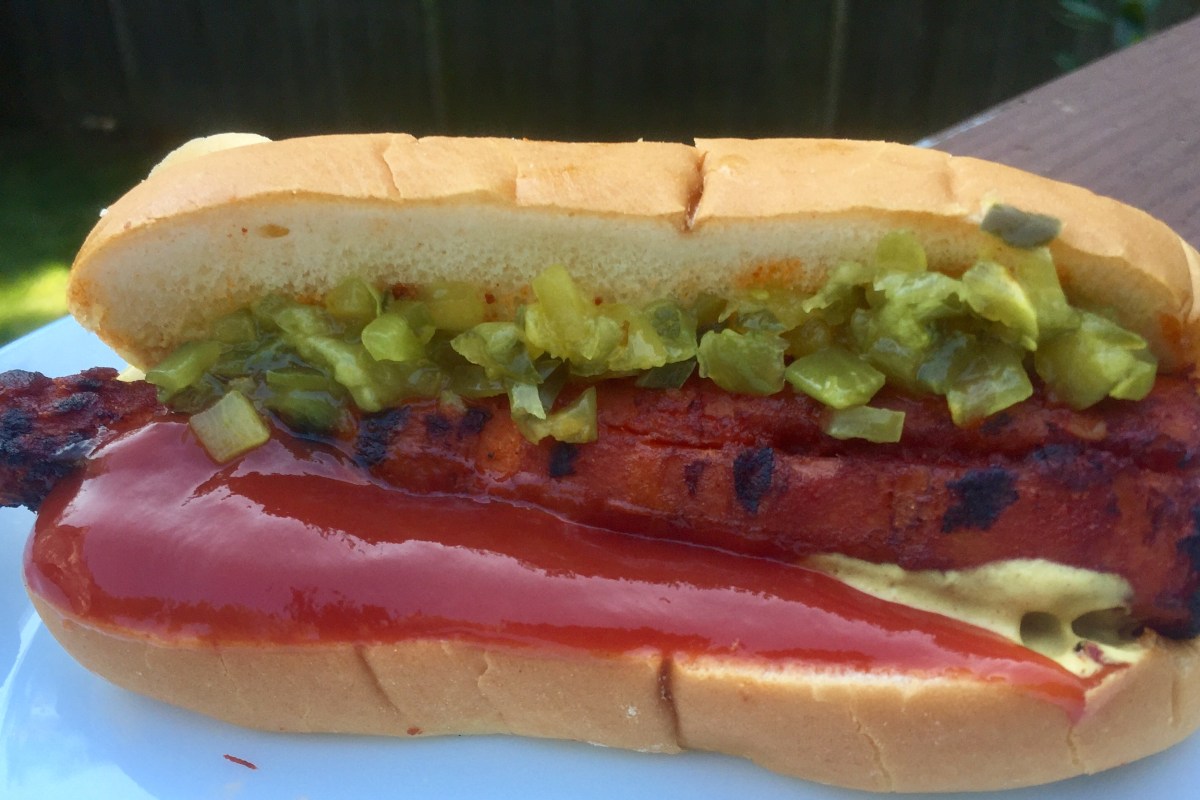
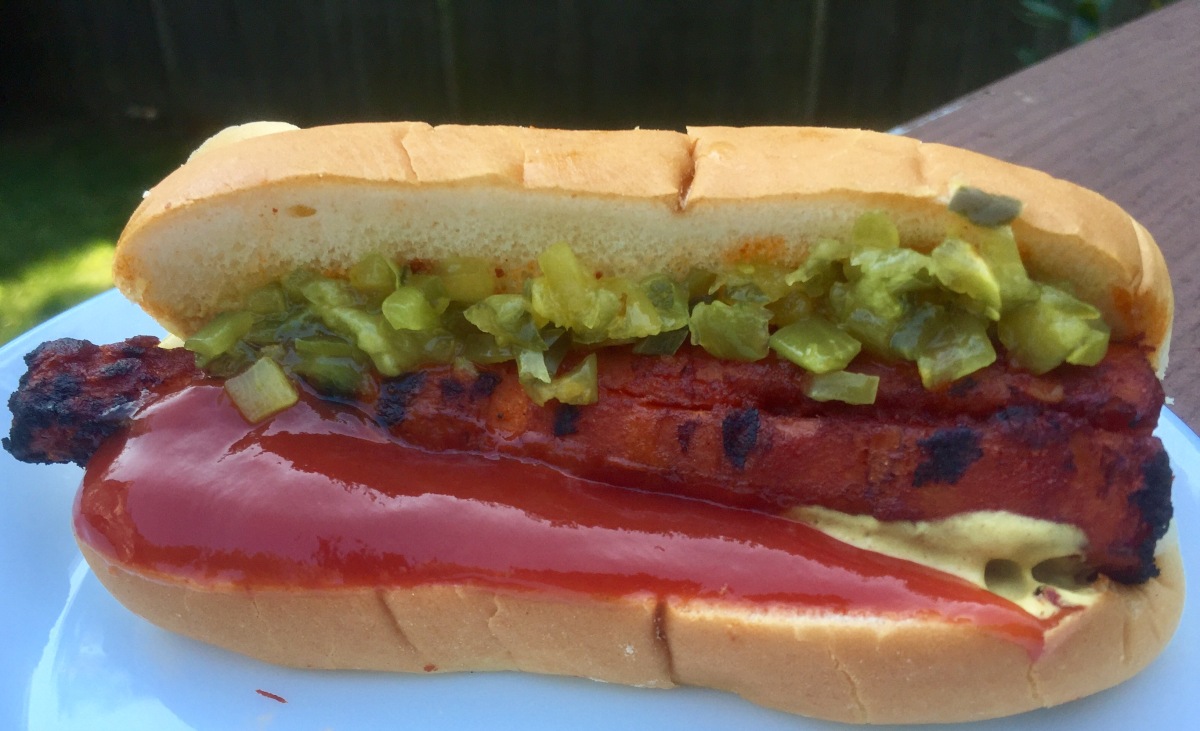
Enter a super cheap, super easy, super cute and super hero hot dog alternative: carrot dog! If you have not seen or tried these you are missing out. Carrot Dogs are what they are – carrots made into a hot dog. Now, some of you may think that carrot is a carrot and it’s perfect the way it is. I agree: carrots are perfect as they are, and joy to munch any time. But, we all now carrots have always led a secret agent life as a sweet vegetable that can be made into a cake, a muffin, a cookie or in many other things. So why not a hot dog?

I started seeing posts on Carrot Dogs few months ago and had to admit it to myself: Carrot Dogs are an IT items this summer. So, I went for it and boy or boy do I like the results. I made carrots dogs couple of times now and they made the rounds: to the beach, to the back yard BBQ party, to the laid back late summer dinner outdoors. Trust me: they are absolutely worth it!

One thing to keep in mind is the thickness of your carrots. They should be relatively evenly cylindrical and about the diameter of a regular hotdog. Take some time to eyeball your carrots and pick those that look they fit the part. Also, keep in mind that they should fit nicely into your hot dog bun, so cut them accordingly. If you want to get really realistic, you can shape their ends into a hot dog looking end lobes, but I didn’t. All this is purely cosmetic and at the end of the day will not change the taste. But, if you are entertaining and want to go for a real WOW factor, take some time to fine tune the look of your carrot dogs. You may want to do this final fine sculpting step after your carrot dogs are cooked, as they will be softer and easier to carve.

Speaking of cooking carrot dogs, there is one major trick to a perfect carrot dog: boiling the carrots just enough to make them as soft as a regular hot dog would be. This is a bit tricky because that level softness in a carrot is only a step or two removed from when the carrots start to fall apart when handled with a fork or a pair of grill tongs. The exact time will depend on how thick your carrrots are, and what variety they are. I started with boiling the carrots for 11 minutes and that turned out not to be enough, so I went up to about 15 to 16 minutes which was much better. I also tried the pressure cooker – that was way too much!

Once you have your perfectly shaped and perfectly cooked carrot dogs, they will need to spend some time marinating in a mix of oil, vinegar, and spices which all work together to add a layer of hot dogginess to the carrots. The marinating step can take anywhere between half an hour to couple of hours. Longer is fine, and you can make your carrots a day ahead and leave them to marinate overnight in the refrigerator. Less than half an hour is probably not going to be long enough.

The second to last thing that remains to be done is grilling, and that takes only a few minutes per side. The dogs are fully cooked so all you really want to do here is add some grill marks and get some caramelization going. If you like your hot dog buns warm, you can put them on the grill once your carrot dog is a minute away from being done. So, the very last thing is to put the dog into the bun and top it with your favorite hot dog topping. I go a bit wild with my condiments and pile on ketchup, yellow mustard, and dill relish but really anything goes. Bite in, and be amazed at how great carrot dogs taste. Believe me, you will immediately understand why people are raving about these!!!

Carrot Dogs

What you’ll need:

8-12 carrots (or as many as you like)

1/2 cup vegetable broth

1/3 cup apple cider vinegar

3 tablespoons vegetable oil

3 tablespoons soy sauce (reduced sodium)

1 tablespoon smoked paprika

2 teaspoons garlic powder

2 teaspoons onion powder

1 teaspoon ground yellow mustard

Cooking oil (for oiling the grill)

Hot dog buns, mustard, ketchup, relish, sauerkraut, chili – anything else you like – for serving!!!


What you’ll do:

  1. Peel and cut your carrots to be about the length of your hot dog buns. You don’t need to be super precise but do try to pick carrots that are more or less cylindrical, and about the same diameter as this will help them cook more evenly.CarrotDog
  2. Place carrots into a pot – I use the pot with large bottom so the carrots can lay flat – and cover with water. Bring water to boil, and boil carrots for 10 to 16 minutes. You will need to keep an eye on your carrots and check from time to time as the exact time will vary from a carrot variety to a carrot variety, and depend on how thick your carrot dogs are.
  3. While carrots are cooking, whisk together the marinade by mixing together vegetable broth, vinegar, oil, soy sauce, smoked paprika, garlic powder, onion powder and ground mustard.
  4. Run the hot carrots under the cold water to stop the cooking, drain, pat dry, and add to the marinade. Marinate for about 30 to 60 minutes at room temperature or overnight in the refrigerator.
  5. Prepare the outdoor grill for grilling as you would normally do. I have a gas grill and turn all my burners on full blast for 5 minutes, with the lid down to burn off any leftovers from last time. Then I dial them back and use my brush to clean off any remaining bits and pieces from the grill grates. Once that’s done I dip a paper towel in some oil and using a pair of long tongs pass the oiled paper towel over the grill grates. Now we are ready!
  6. Place your carrot dogs on the grill over medium high heat and grill for couple of minutes on each side, or until nice grill marks form. You could brush the carrot dogs with the marinade as they cook to prevent them from drying out, but the process is quite quick and this may not be necessary. One tip: if you marinated your carrot dogs in the refrigerator, take them out a hour before you plan to grill them to let them come to room temperature. That will help with flavors and the grilling.
  7. Enjoy the carrot dogs the way you would any ole’ hot dog!

Copyright © Eat the Vegan Rainbow, 2017

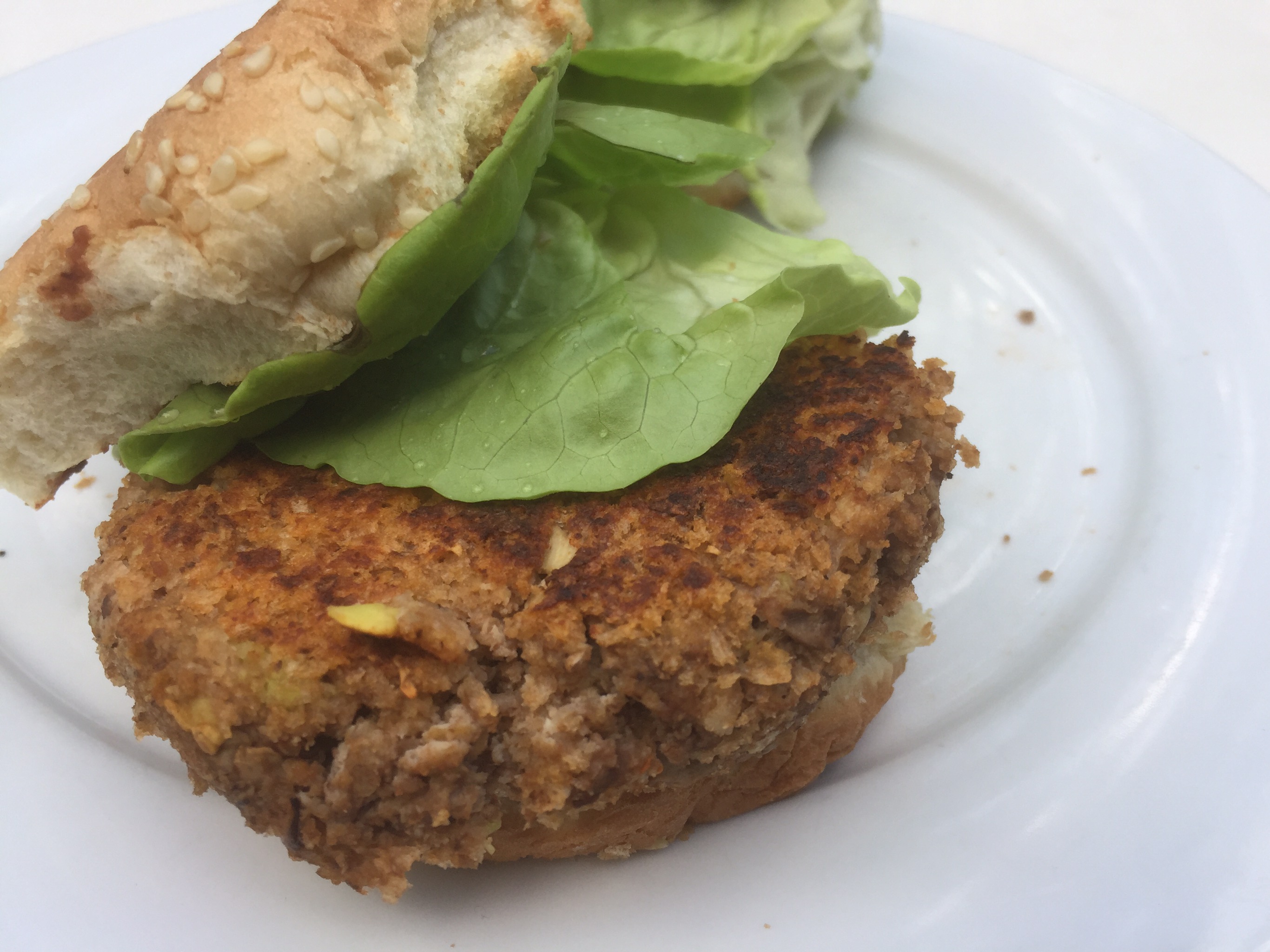
Avocado Burgers

You probably know that veggie burgers are going through somewhat of a revolution, with companies like Beyond Meat and Impossible Foods, leading the way within US in creating plant-based products that taste and look like the real meat.  I have not had an Impossible Burger yet, but I can attest to Beyond Burger being everything its creators wanted it to be – a plant-based burger that looks, cooks and tastes like fresh ground beef burger. It is absolutely spot on, thanks to some interesting protein biochemistry and biophysics that transfrorms pea protein into ground beef, as well as the use of plenty of fat for that greasy burger feeling, and a good amount of salt. And fat and salt are likely two components of this burger that, in addition to getting the texture of the protein component just right, make this type of burger so realistic and so delicious and so addictive.

Indulging in one of these burgers as an occasional treat is all fine and good, but making it on a daily basis is almost us unhealthy as eating the beef patty. That’s why I’ve been focusing on creating plant burgers (call them veggie burgers if you like) that can work on a grill or in a grill pan, look very burgery, and taste great without huge amounts of salt and fat. My blog now has the entire section dedicated to Burgers, Hot Dogs & More. Some of the burgers I made taste very much like a beef patty, some less so… At the end, what I discovered is that plant burger needs to pass two tests in order to qualify for being on my plate: it has to hold its shape well and sustain grilling on the grill or in a grill pan, and it has to taste amazing. Any burger that checks those two boxes off deserves to be shared!

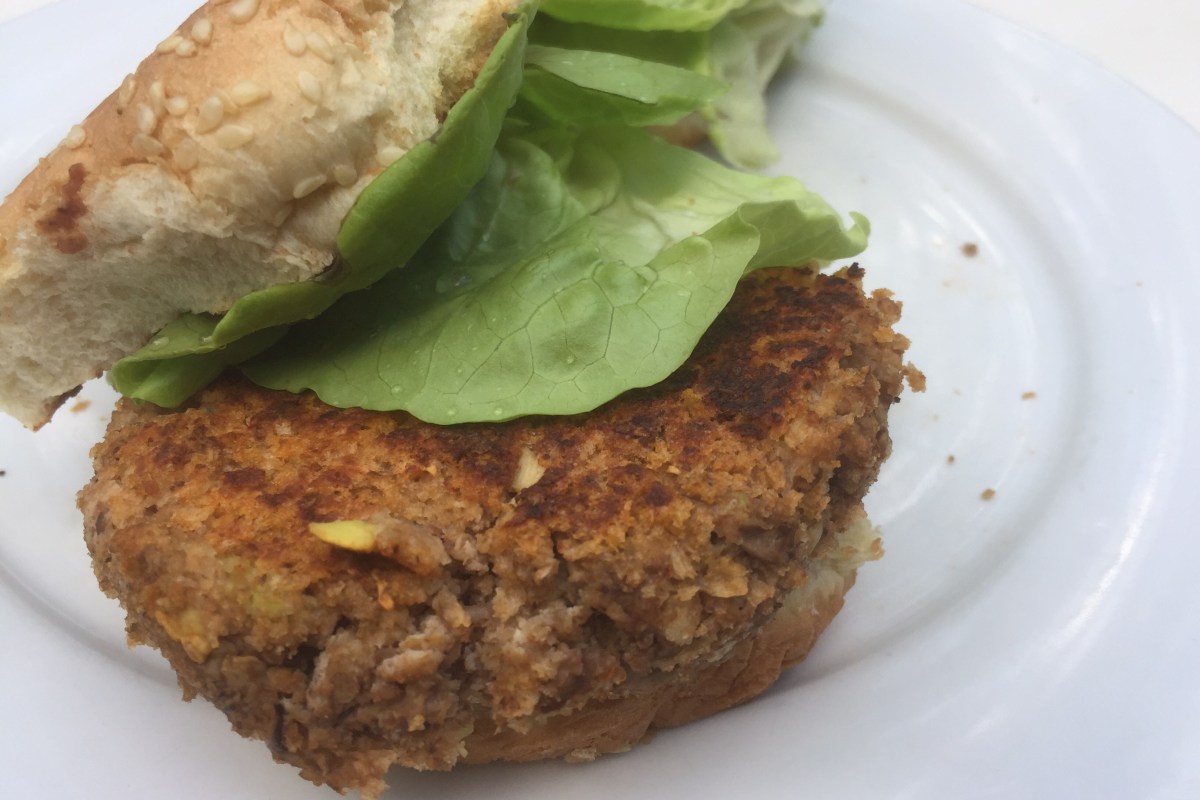
The patty I am sharing today has three twists. Twist number one is that I decided to try using avocados as a fat source to add some juiciness to the burgers. Avocados, also known as Alligator Pear – isn’t that awesome? – are not something I ever considered cooking with but we recently had a huge avocado sales in my local grocery store and I got more than I should and there is a limit to how much avocado toasts one can eat in a week, so I was looking for something else to do with them. The idea to try making a burger with avocados was inspired by their high fat content and their creamy consistency (when they are ripe and perfect). I did quite a few internet searchers to see what other have done, but I could not find a single recipe that used avocados inside the actual burger patty. So, off I went to see if Avocado Burgers can be made into reality.

My twist number two is one of my favorite tricks to add umami flavor to just about anything – finely ground mushrooms. They work wonders in a dish like Meatless Shepherd’s Pie, or more generally any time you want to recreate that special “je ne sais quoi” of ground beef.

Final twist to this story is using extra firm tofu that has been frozen for few days than thawed all the way over the course of one to two days in the refrigerator. Freezing and defrosting tofu changes its texture daramatically. The tofu becomes tougher and stronger, and it absorbs the marinades and flavors better. There are no tricks to freezing tofu in my kitchen as I just put the container tofu comes in from the store into the freezer, but if you need a more refined method The Spruce has detailed step by step instructions. Before you use tofu, drain it well and then dig in – use your hands to press and squeeze and get the excess water out. I suppose you could use the tofu press for this or a method where you place tofu slices between paper towels and place a large weight on top for twenty minutes, but because tofu that’s been frozen then defrosted has this tougher and stronger texture, using your hands actually works quite well. Plus, you can easily go from squeezing to crumbling, which is the next step. At the end you will end up with a pile of small tofu crumbles.

To this pile of crumbles you will add mashed avocado, ground mushrooms, tomato paste, and couple of staples when it comes to boosting umami and grilled food flavors: soy sauce or liquid aminos, Worcestershire sauce and liquid smoke. The patties will be soft so it is a good idea to stick them into the fridge or a freezer to firm up before cooking. I felt like pairing only some crispy lattice with this burger but pickles, mustard, ketchup, tomatoes, and all the other common burger fixings will go well with it too!

Avocado Burger

What you’ll need:

1 16 oz. (450 g) block of extra firm tofu, frozen then thawed

8 oz. (225 g) crimini (baby bella) mushrooms

1 large avocado, ripe

2 tablespoon tomato paste

1 tablespoon Worcestershire sauce, vegan

1 tablespoon soy sauce or liquid aminos

1 teaspoon garlic powder

1 teaspoon liquid smoke

Cooking spray (for the pan)

What you’ll do:

  1. Freeze the tofu few days in advance and when completely frozen take it out of the freezer and leave it in refrigerator for a day or two, until completely defrosted. Drain the tofu and using your hands squeeze the water out of tofu. The tofu should feel like a relatively tough sponge soaked with water at the beginning, and at the end it should feel moist but not dripping wet. Crumble the tofu into a large mixing bowl.
  2. Chop the mushrooms using a food processor until they are finely ground. Few chunkier bits here and there will not hurt but try to get the mushrooms to be about the same consistency as your tofu crumbles. Add to the tofu.
  3. Cut and peel the avocado, and scoop out the green flesh into a small bowl and mash with the fork until finely mashed. Ideally the avocado should be as smooth as you can get it, and if you are using a perfectly ripe avocado this should not be a problem. Side note: If you discover that your avocado is tough that means that it is not ripe enough. If your avocado is turning black it means that it is past its prime. Unfortunately, when it comes to avocados only the perfectly ripe, perfectly green and perfectly soft will work, for this or any other recipe. If your avocados are tough to touch it means they need to ripen and you can help them out by putting them in a paper bag, closing it tightly and leaving them on the kitchen counter overnight. That usually helps – and if they are really, really green you can a ripe banana to the bag to help avocados along. 
  4. Add the avocado purée to the tofu mix, as well as the rest of ingredients.
  5. Mix well to combine using your hands. You want to work the mix a bit, which means squeezing and mixing at the same time. Once everything is combined together, use your hands to form patties. Place the patties onto a tray lined with wax paper, and put them into the refrigerator for 30-60 minutes or into a freezer for 15 minutes or so.
  6. Heat your grill pan or a cast iron skillet over the medium high heat. Spray with cooking spray and add 2-3 patties at a time. You need to leave enough room around tha patties to be able to flip them so keep that in mind. Cook on one side for 5 minutes then flip over and cook for another 4-5 minutes, until both sides are nice and brown.
  7. Serve on your favorite hamburger bun with your favorite toppings. And in case you have couple of avocados still left over, go wild – slice them up, toss them on top, and have yourself a Double Avocado Burger!

Copyright © Eat the Vegan Rainbow, 2017
Coconut Bread Pudding: So Yummy, Good for the Tummy

Easy Coconut Bread Pudding
Easy (and Vegan) Coconut Bread Pudding, via Eat the Vegan Rainbow

A lovely dessert is always a welcome ending for a great meal. I have a major sweet tooth, but I am not a great baker and cake maker. So, my desserts are usually no-bake, like the Chocolate Bon Bons and the Blueberry Cheesecake, or simple cookies, muffins and crumbles that are full of fruit and really forgiving when it comes to exact measurements.

Still, none of those come even close to the simplicity and versility of my Coconut Bread Pudding. This bread pudding requires no prior knowledge of baking techniques, and uses plant-based ingredients. The final product is deliciously sweet, comforting and satisfying, so you can eat it as a dessert, as well as breakfast or brunch.

In terms of the skills required to make this wonder bread pudding happen, you only need how to mix and soak. The recipe starts with a super easy wet mix which you can whisk in a flash. Then comes bread which you can cut up or break into chunks by hand. The best type of bread to use here is a spongy one, because the main thing the bread needs to do is soak up the wet ingredients. One trick people sometimes use is to leave a loaf of bread on the kitchen counter for a day or so, and use this, slightly stale bread, to make the bread pudding. In my opinion there’s no reason to do this on purpose, but if you have stale bread on your hands then transforming it into a bread pudding is the way to go! Regardless whether you use fresh or stale bread, you should give your bread chunks time to soak up all the juices before taking the next step, so leave them in the wet mix for at least fifteen minutes.

Once the bread is ready, add raisins and shredded coconut, mix gently, pour into a baking dish and about half an hour later you will have a kitchen that smells like heaven and a bread pudding that tastes like paradise!

Coconut Bread Pudding

What you’ll need:

6 slices of bread, cubed (or about 1/2 of a large bread loaf)

1 cup almond milk

1/4 cup orange juice

1/4 cup brown sugar

1/4 cup coconut flakes, unsweetened

1/4 cup raisins

1 tablespoon cinnamon

1/2 teaspoon nutmeg

Cooking spray


What you’ll do:

  1.  Preheat the oven to 400 F (205 C).
  2. Chop the bread into 1 x 1 in (2.5 x 2.5 cm). Note that these are approximate measures and you don’t have to go crazy here. The point is to have bread chunks that can hold their shape yet have enough surface area to soak up all the liquid. If you are using stale bread you can go smaller. If you like your bread pudding to maintain more of your bread dough texture go bigger! Place the bread chunks into a large mixing bowl.
  3. In a separate mixing bowl (or a large soup plate, which is my preferred way) mix the wet ingredients, everything except raisins and coconut flakes.
  4. Pour over the bread chunks and gently fold everything together. Be gentle here if your bread is very soft because you don’t want to end up with a mushy mess. Larger bread chunks and more rustic bread can take a bit more beating but do proceed with caution. Let the mix rest for at least 15 minutes.
  5. When the bread has soaked up (almost all) the liquid, add raisins and coconut flakes and mix gently. At this point your bread chunks will be fragile and mushy so you want to preserve their structural integrity as much as possible so give your pudding a more interesting texture.
  6. Spray a bottom of a deep 8 x 8 in (20 x 20 cm) baking dish with cooking spray and pour the bread mix in.
  7. Put in the oven and bake for 25 to 35 minutes. Keep an eye on your oven, as you want the top of your bread pudding to be nice and brown. Let it cool for a moment or two and dig in. You can sprinkle powdered sugar on top of you like, or add some fresh fruit if you are feeling adventurous!

Enjoy for breakfast, brunch, snack, dessert… Sky is the limit!

Copyright ©Eat the Vegan Rainbow, 2017

Vegan Caprese Salad in a Sandwich

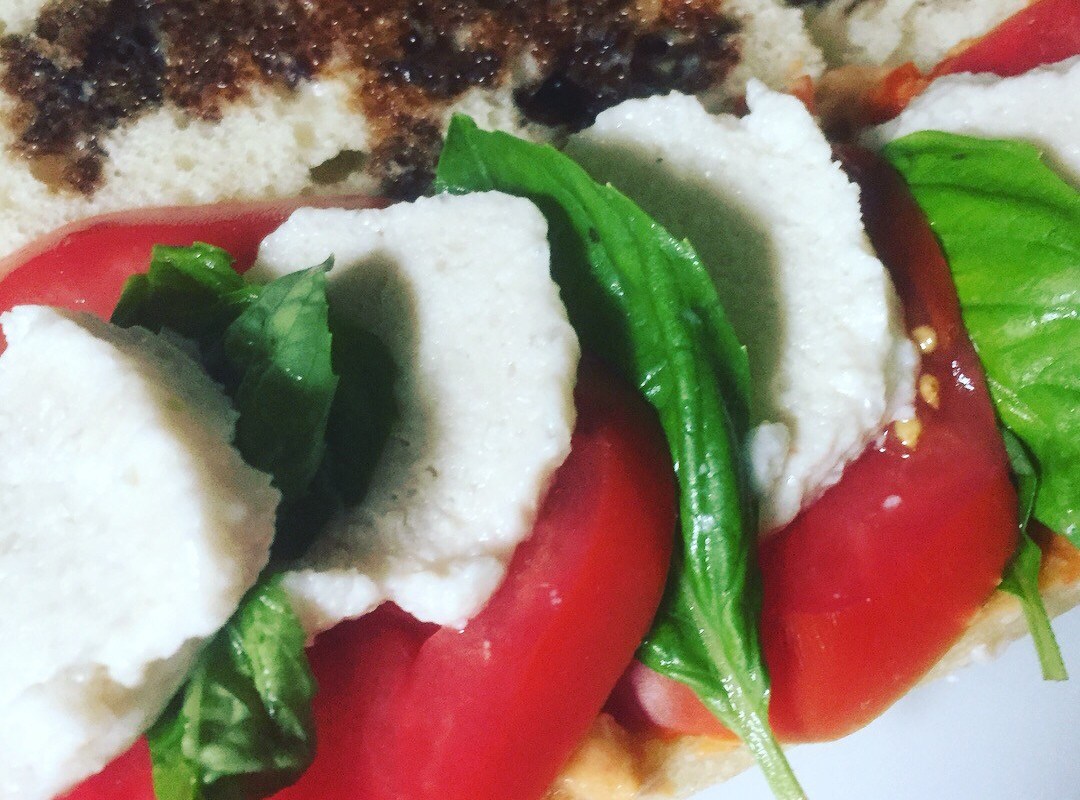
img_2518
Vegan Caprese Salad in a Sandwich, via Eat the Vegan Rainbow

In my other life, as the editor of two leading journals for chemical and structural biology (I know, sounds intimidating!), I once used Caprese Salad – tomatoes, basil, and fresh mozzarella – as an example of how simple is incredibly powerful, beautiful and irresistible, in an emphatic attempt to convince scientists to implement principles of simplicity when writing their scientific papers.

Here, my interests are purely culinary as I set out to recreate the Caprese salad out of plant based ingredients only. I started from a batch of vegan fresh mozzarella, following a recipe developed by Jules Aron and included in her “Vegan Cheese: Simple, Delicious, Plant-Based Recipes” book.

The path to fabulous vegan fresh mozzarella is long and slippery- meaning that it will take you about two to three days to have ready to eat batch of cheese on your hands, and there are few places along the way where a little mistake can derail your cheese making process. Having said that, I found Jules’s recipe to be clear and helpful, and the final result AMAZING!

I made only some minor adjustments to the recipe, as I used cashew yogurt for fermentation stage of the mozzarella, and agar powder and tapioca starch to firm it up – Jules recommends Kappa carrageenan powder and tapioca flour (which I think is the same thing as tapioca starch but it’s worth mentioning as a point of difference)!

The process starts, as many vegan cheeses do, by soaking some nuts. I usually cover the nuts, in this case cashews, with water and leave them in the fridge overnight. The next step for this cheese is blending the well soaked cashews, that have been drained and rinsed, with some almond milk or water until nice and smooth – I used almond milk.

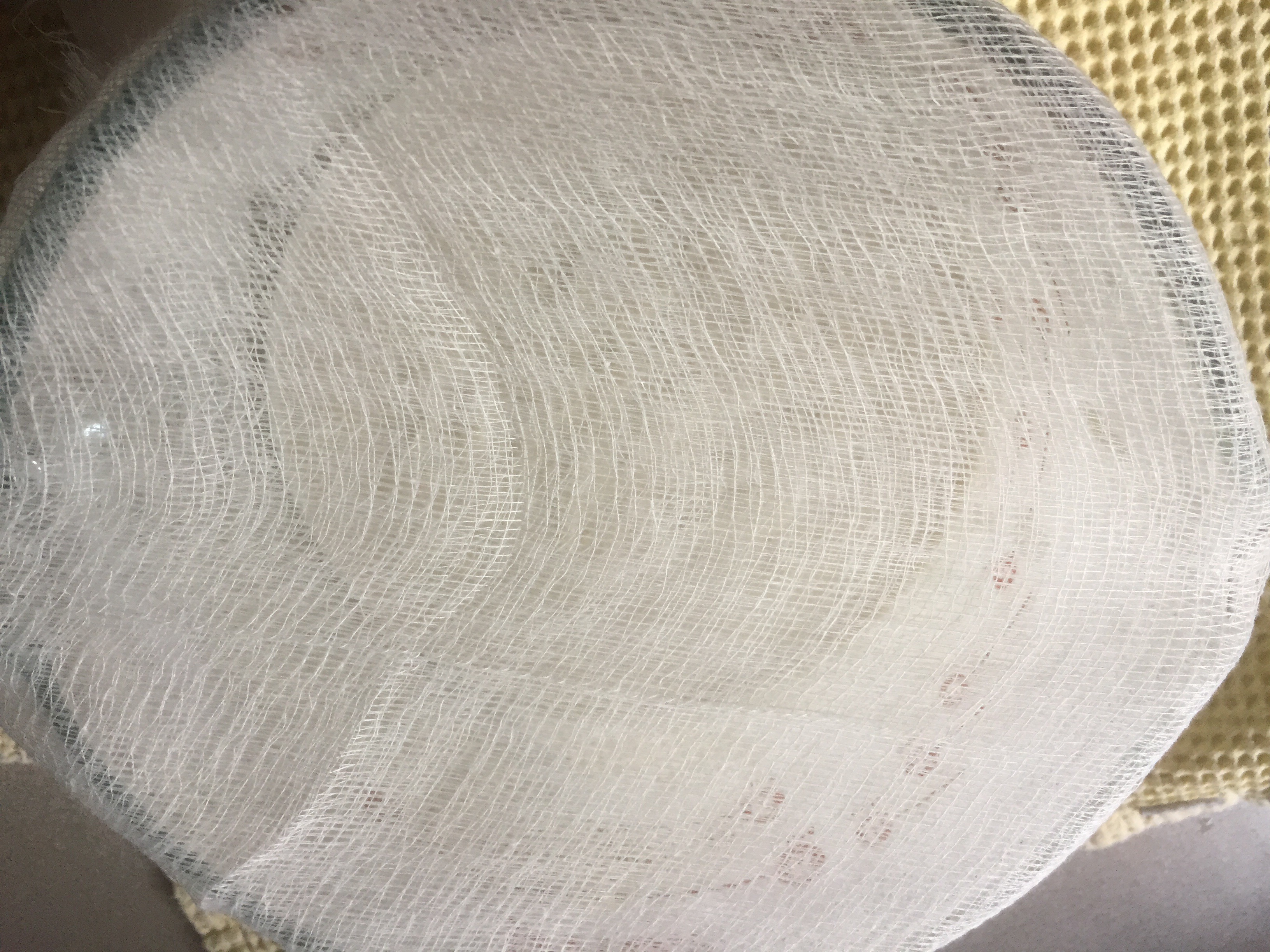
Then, you add yogurt – here I used an amazing Cashew Yogurt by Forager – cover with cheese cloth and leave on the kitchen counter for a day or so. Make sure that your yogurt contains live cultures as you want the bacteria to start the process of fermentation and acidification, yielding a nice, subtly tangy flavor.

Making of vegan mozzarella, via Eat the Vegan Rainbow

The penultimate step is adding the thickener to the cheese mix, cooking it until it starts to thicken to a consistency of very thick oatmeal, porridge or polenta.


While the cheese was cooking, with frequent stirring, I made the brine. I used tap water and ice cubes, plus a tablespoon of plain kitchen salt since that’s what I had handy, and mixed it all until salt was fully dissolved.

Once the cheese was cooked, I used my measuring spoon (tablespoon size) to measure out cheese balls, formed a bit with hand – watch out here as it may be hot, so you can form the balls using two spoons at the same time. Dump the balls into ice/water/salt mixture, cover with cheese cloth and leave in the fridge overnight. Jules recommends at least 4 hours, so I just left my fresh mozzarella cheese balls to rest until the next day.

img_2513
Vegan Fresh Mozarella Balls in Brine, via Eat the Vegan Rainbow

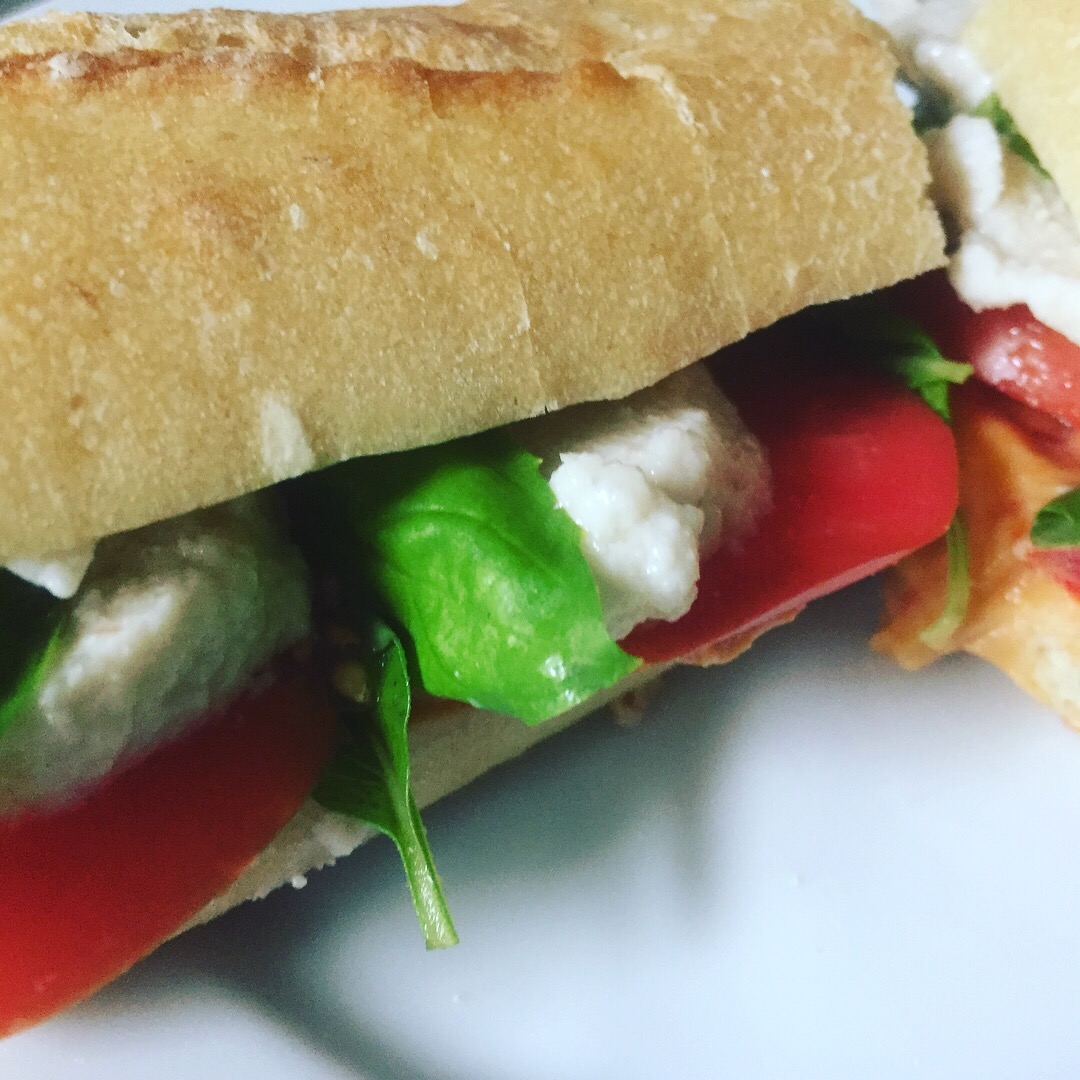
Waiting wasn’t easy but it was worth it!!! I got some fresh baguette, fresh basil, a ripe tomato, a drizzle of balsamic vinegar, and my homemade vegan fresh mozzarella, and made myself a phenomenal sandwich for lunch.

I transferred the fresh mozzarella with the brine and all into a container with a tight lid, and stored it in the refrigerator. It lasted for about one week, at which point it was all gone!!! I will be making some more soon, but next one from Jules’s book I want to try is an almond-based baked feta!!!

Since this post is all about another person’s recipe, I am not sharing the notes, but encourage you to go visit Jules’s site, and get her book or better still borrow it from your local public library, which is what I did. I am happy to share what my Caprese Salad in a Sandwich looked like – it’s a real feast for your eyes!!!

img_2520
Vegan Caprese Salad in a Sandwich lunch, via Eat the Vegan Rainbow

Copyright ©Eat the Vegan Rainbow, 2017

Tapioca Pearls with Spicy Almonds and Toasted Coconut

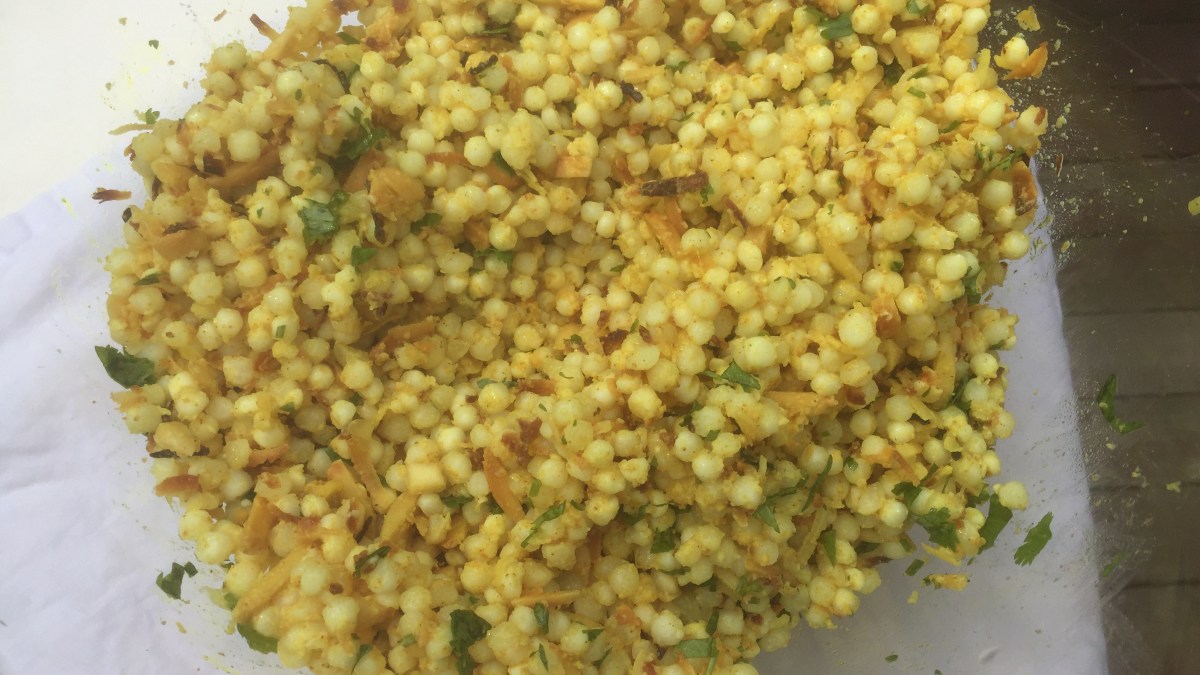
img_2521.jpg
Tapioca Pearls (Sabudana) with Spicy Almonds and Toasted Coconut, via Eat the Vegan Rainbow

Most people probably think “bubble tea” when they hear “tapioca pearls”. But these delicious little pearls are definitely worth getting to know more intimately, especially in the context of gluten free cooking. They are inexpensive and very simple to make. They actually require no cooking – just soaking – so although no cooking skills are required, some level of patience (and a good amount of time) is.

Before we go any further lets try to answer this questions first: “What are tapioca pearls?”. They can come in different sizes and colors. The ones I will focus here are white and small, close to the size of Israeli couscous. But unlike the couscous, which is made with wheat and thus off limits for those watching their gluten intake, tapioca pearls are made from starch extracted from cassava root. So, they are little starch balls when all is said and done. Think micro potatoes that don’t need peeling!

If you are into Indian food, you have likely already had some tapioca pearls because they are often used to make desserts, like kheer pudding. Earlier this summer I had some homemade Sabudana Khichdi and I loved it. Sabudana Khichdi is a traditional dish and usually consumed during Hindu fast days. The dish includes tapioca pearls, finely chopped, cooked potatoes, finely chopped peanuts, finely grated coconut flakes, and a nice combination of spices (curry leaf, cumin seeds and green chilis). There are some variations on the recipe and the ingredients may vary depending on whethe Sabudana Khichdi is served during the fast or outside the fasting days, and my friend who made the dish for us also mentioned that a more protein-rich version of Sabudana Khichdi can be made using quinoa, and she suggested I check a blog by another friend of hers called Indfused, which I did and so should you, especially if you are interested in creative Indian/American fusion cooking (FYI: Infused is not a vegan blog, so keep that in mind).

Back to the the version of Sabudana Khichdi I had – it was a delicious addition to our summer cook out and prompted me to get some tapioca pearls of my own and start experimenting. The recipe below is the second iteration and deviates from the original recipe quite a bit. I took some liberties so my Tapioca Pearl Salad is Sabudana Khichdi inspired, but not meant to be “traditional” in any way. First point of difference is that I left the potatoes out. In my view, leaving potatoes out does not affect the taste nor the nutritional profile of the dish, yet saves some time and effort. I also left the peanuts out and replaces them with slivered almonds. I used slightly different spice mix, to make the dish a bit more fragrant. Finally, I toasted my coconut flakes, because in my mind coconut is just better toasted!

The key to making tapioca pearls is patience. All you need to do is rinse the pearls in cold water, then soak them in enough cold water, usually in 1:2 ratio (for example 1 cup pearls and 2 cups water), for 2-3 hours. How do you know they are ready? They should feel loose, not stuck together, and soft, yet slightly chewy, to bite – think pasta al dente. You can go a bit further if you prefer softer texture, but you do want your pearls to remain pearly, not mushy, so don’t overdo it.

Now a key to make the dish really flavorful and spices vibrant, is toasting the spices. I use a frying pan here, and, although you can dry toast the spices, I do add a bit of oil in this case and let the spices toast for one to two minutes before adding the almonds to finish it off. I pour the toasted spice and almond mix over the drained tapioca pearls, instead the other way round, but that’s more of a personal preference I suppose. The toasted coconut flakes come next, and the chopped fresh cilantro is the final touch. You can serve this dish immediately, you can heat it up more and serve hot, or you can leave it in the refrigerator overnight and serve it cold. It actually works across the range of temperatures so it could work as a surprising pasta salad at your next picnic. It is a great, easy and inexpensive dish to make for your next pot luck or any other get together!

img_2525
Tapioca Pearls with Spicy Almonds and Toasted Coconut, via Eat the Vegan Rainbow

 Tapioca Pearls with Almonds and Toasted Coconut Flakes

What you’ll need:

2 cups tapioca pearl

4 cups water

1 cup slivered almonds

1/2 cup coconut flakes or shreds, unsweetened

2 tablespoon vegetable (or canola) oil

1 teaspoon cumin powder

1 teaspoon curry powder

1/2 teaspoon turmeric

2 tablespoon fresh cilantro, chopped


What you’ll do:

  1. Rinse the tapioca pearls under cold water and place into a large bowl. Cover with water and let stand for 2 to 3 hours. The pearls will absorb water and they should become soft and al dente.
  2. Drain the pearls well, pat dry with a paper towel and put into a large mixing bowl that you will use for serving as well. You can use the same bowl you used for soaking just remember to dry it well in the meantime.
  3. Heat the oil over medium high in a large frying pan. Add the dry spices (cumin, curry and turmeric powder) and toast in oil for 1 minute.
  4. Add slivered almonds and toast for another 2 to 3 minutes, until almonds start to brown.
  5. Pour the hot almond and spice mix over tapioca pearls and mix well.
  6. Toast coconut flakes in a toaster oven or a frying pan for 2-3 minutes. You need to keep an eye on your coconut flakes as they go from beautifully toasted to inedible in a blink of an eye! If you are using the frying pan, you can use the same pan you just used for almonds and spices, just don’t add extra oil as coconut flakes should be fatty enough.
  7. Add hot, toasted coconut flakes to your tapioca pearls and mix well.
  8. Let the mix stand for couple minutes and while those flavors are combining, wash and chop fresh cilantro.
  9. Sprinkle the cilantro over your tapioca pearls, mix again and serve!

Copyright ©Eat the Vegan Rainbow, 2017

Shiitake Mushroom Stroganoff 

Shiitake Mushroom Stroganoff, via Eat the Vegan Rainbow

Mushrooms come in many different shapes and sizes. They also range a lot in terms of their availability and price. The kind I find readily available in my local supermarket are white button mushrooms. They tend to be affordable and versatile, and use them in many of my recipes. Those with bigger caps are easy to stuff, and I’ve experimented with couple of different types of stuffing, like the mashed potatoes and corn tortilla, Mexican-flavor inspired stuffing. Small and imperfect mushrooms are great for chopping up, and using for recipes like a quiche or a stews. White button mushrooms are also a common ingredient in my burgers and my homemade ground beef substitute, where I grind them and add to the burgers for color, texture and flavor.

In many aspects, white button mushrooms and baby portobello (crimini) mushrooms are interchangeable, and I may use one or the other or both depending on which variety looked best at the store that day. Crimini mushrooms had a more woody, deep and rich flavor than white button mushrooms, but the differences are not major, so they tend to cook and taste about the same. They also cost about the same as well, and tend to be on sale at the same time!

Once in a while I lay my hands on really large portobello mushrooms, and those I like to grill and transform into portobello steaks. They look and taste amazing, and make for an easy and healthy dinner. The price tag on these is a bit larger, and you do have make more of them to feed the crowd, because one portobello steak is usually not enough. But, they are absolutely irreplaceable if you need to make a great grilled steak vegan style.

What makes mushrooms an essential staple of any vegetarian, vegan and plant-based kitchen is their flavor, and a large amount of umami, the flavor associated with perception of meatiness. The naturally occurring chemicals behind this umami flavor are glutamate and guanylate (plus couple of others), and mushrooms have large amounts of them, none more than shiitakes. Shiitakes are native to Southeast Asia and have been used in local cuisines for centuries, either fresh or dried. They are also now becoming more commonly available in US supermarkets, although they tend to be more expensive.

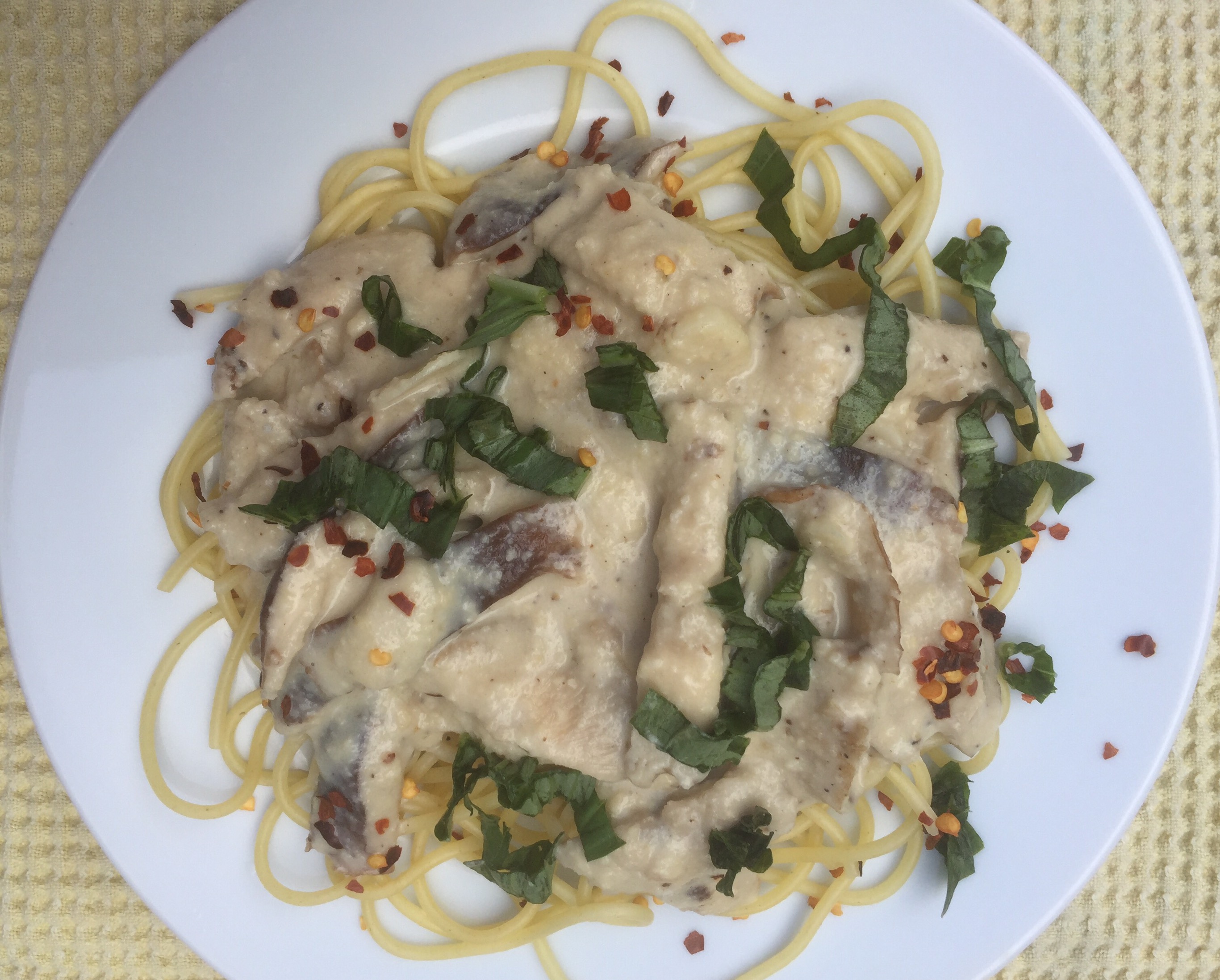
Luckily for me, I recently ran into a pile of loose shiitake mushrooms in my store that were plump, fresh, large and reasonably priced. I bought about a pound (half a kilo) of shiitake mushrooms and decided to try making a Shiitake Mushroom Stroganoff. I am sure this recipe would work with other types of sturdier mushrooms but shiitakes, becasue of their sweeper umami flavor, work exceptionally well.

I paired Shiitake Mushroom Stroganoff with some spaghetti for a satisfying dinner. You can make the dish gluten free if you need to by the right kind of pasta. Alternatively, you can serve with quinoa for a higher protein meal.


Shiitake Mushroom Stroganoff

What you’ll need:

1 lbs (454 g) shiitake mushrooms

5-6 cloves garlic

1 cup raw cashews, unsalted

3/4 cup almond milk, plain & unsweetened

2 tablespoons tapioca starch

1 tablespoon olive oil

freshly ground black pepper, to taste (optional)

fresh basil (for garnish, optional)

crushed red pepper (for garnish, optional)

1/2 pound spaghetti, cooked according to instruction on the box


What you’ll do:

  1. Cover the cashews with water and let them soak for at least 30 minutes, best overnight.
  2. The next day, rinse the cashews and place them into a blender. Add almond milk and tapioca starch, and blend until creamy. Set aside.
  3. Clean the shiitake mushrooms to remove the stems and any signs of visible dirt. Rinse them with water, pat dry with some paper towel and slice the caps intro strips.
  4. Peel the garlic cloves and slice them very thinly.
  5. Place a large pan over the medium heat and add olive oil to it.
  6. When the oil is hot, add mushrooms and garlic to the pan. Stirring frequently sauté the two for 5 to 10 minutes, until mushrooms have softened.
  7. Mix in the freshly ground black pepper to taste, then add cashew cream sauce and fold everything together.
  8. Simmer for another 10 to 15 minutes, until the sauce is rich and thick.
  9. Pour over your favorite pasta, quinoa or polenta, and enjoy with a sprinkle of crushed red peppers and fresh basil!

Copyright ©Eat the Vegan Rainbow, 2017

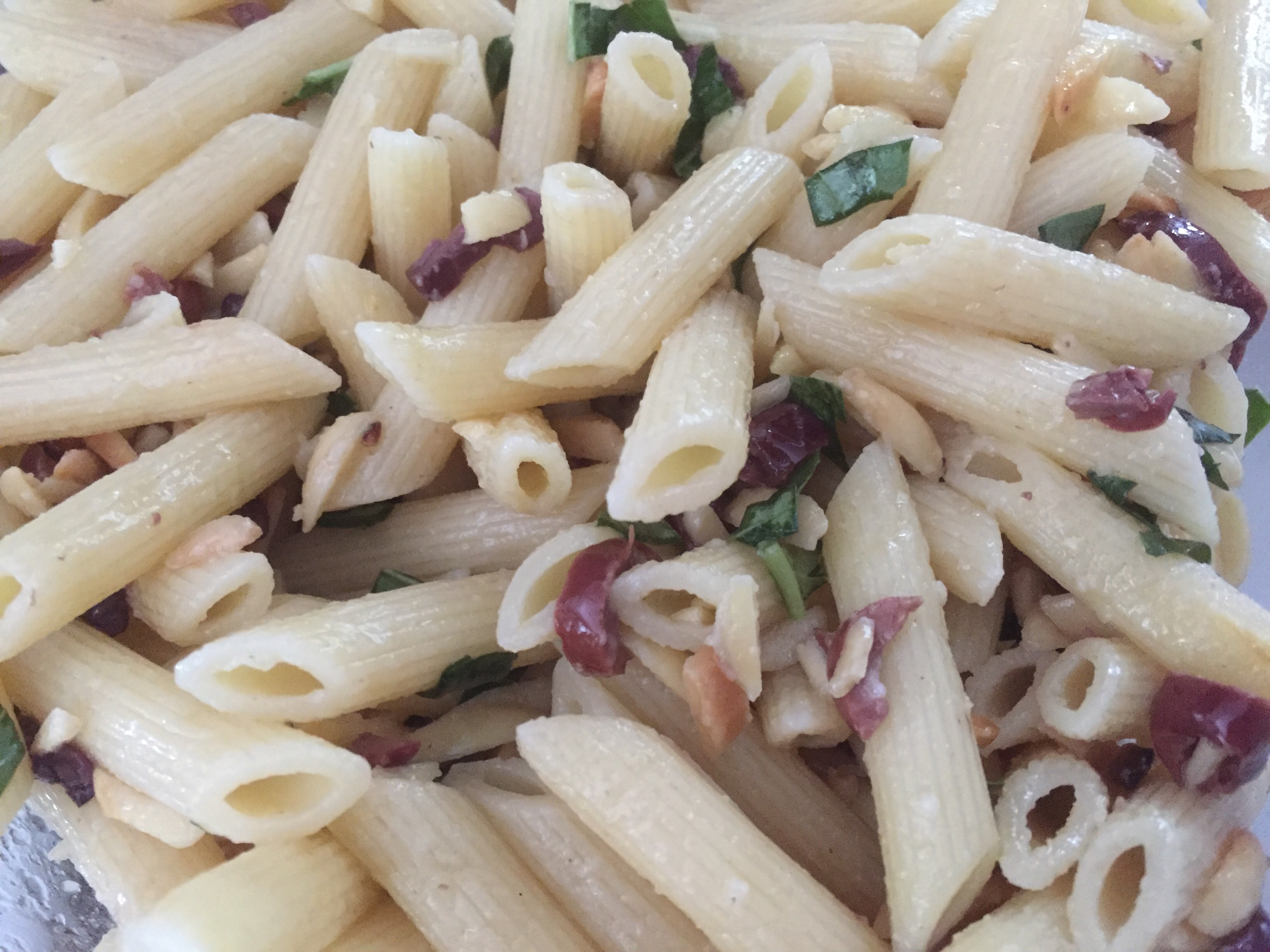
Simple Summer Pasta Salad

img_2143
Simple Summer Pasta Salad, via Eat the Vegan Rainbow

For me, pasta salad is a conceptually hard thing to swallow since I equate salads with (mostly) green leafy vegetables. Growing up, there was a clear separation between salads and pastas in my mother’s cooking and our family meals. But, after living in US for almost two decades, I’ve come around and appreciate that pasta salads have a place on my plate, especially if I am holding that plate during a large summer cookout or a potluck.

Having said that, I still think that many pasta salads leave a lot to be desired as they tend to be overloaded with mayonnaise, meat or even cheese. So, I decided to develop a pasta salad recipe that is simple and light, yet full of flavors and surprising textures.

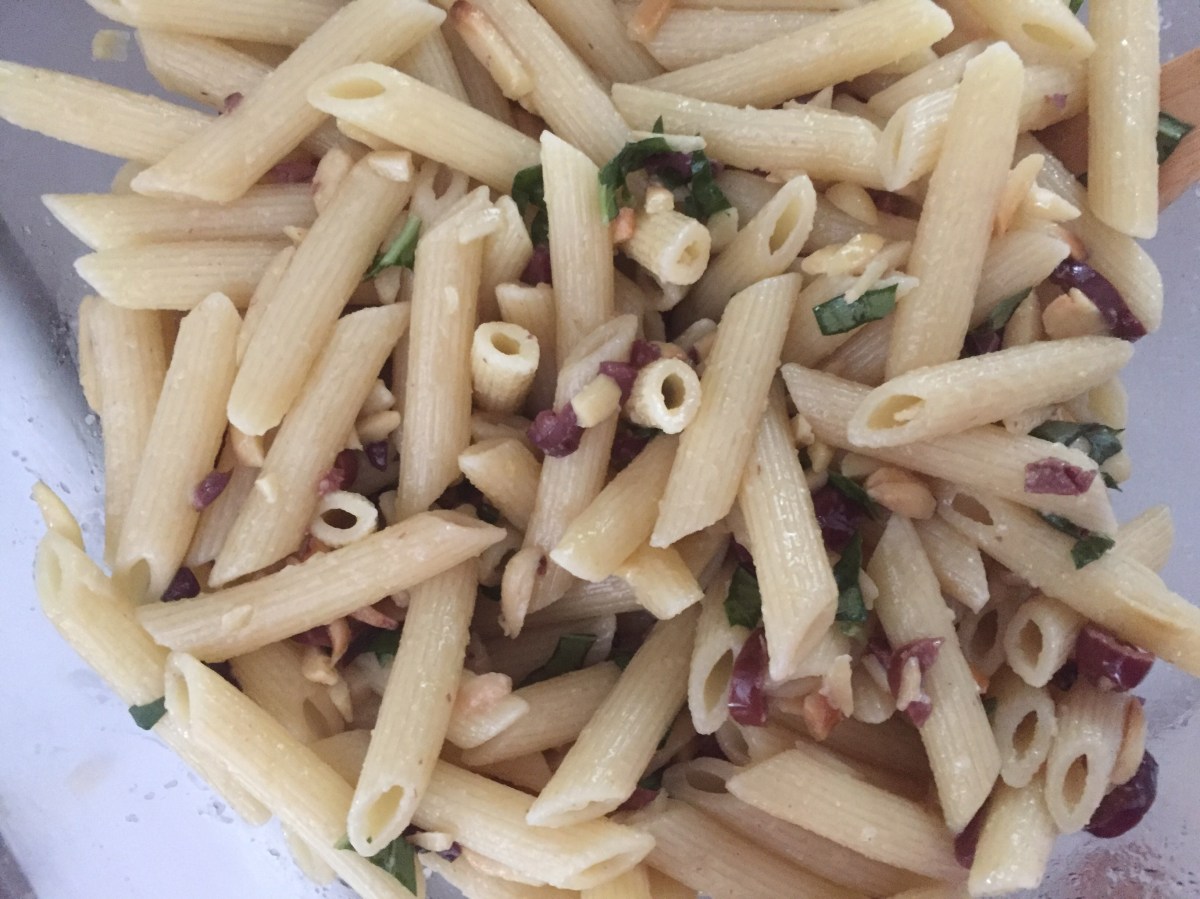
The recipe below really blew me away! It’s super simple, uses only six ingredients, it takes less than twenty minutes to make, and it is a perfect pasta salad for big get togethers because it is super inexpensive.

The recipe is very simple and self-explanatory. Few tips here are: don’t cook your pasta for too long, drain it well but don’t rinse; mix the pasta with the rest of ingredients while it’s still hot, and then let it cool while the flavors are developing and merging; and if using kalamata olives in oil, scale back on the amount of olive oil you actually add – otherwise you’ll end up with something that’s too oily, which will be too bad!

And speaking of olives – kalamata olives that I get come with a nice level of acidity so I don’t feel like I need to use extra vinegar when I’m using them. This means that my recipe below does not include vinegar. Now, if you like a bit more tang, feel free to add some lemon juice or a dash of red wine vinegar to adjust the acidity level in this salad to your personal taste.

Finally, if you don’t have a box of penne rigate on hand, don’t worry. You can use any spoon friendly pasta for this – meaning not long pasta. Why do I recommend NOT using long pasta? Well, if you are thinking of this salad as picnic, pot luck, sharing-with-friends-and-family friendly, then help your friends and family help themselves by not having to wrestle with long pasta. I also think that tubular pastas work better for this recipe than flat ones – think penne, ditalini, macaroni as better, and farfalle as perhaps less suitable for this recipe – as tubular pastas have a bit more surface area to absorb the subtle flavors. And among the tubular pastas, those with ridges will work just slightly better because of the same surface area availability principle I mentioned. Having said all this, and having dragged you through likely totally unnecessary details on how to choose just the right pasta for this recipe, I’d like to stress again – just grab a box of pasta you have on hand and it will be just fine!

STOP: I just remembered – I would not recommend black bean pasta for this. I did not like the flavor of that one when I paired it with my Clams-free “Clam” Sauce and can’t recommend it for this application either. 😦

Simple Summer Pasta Salad

What you’ll need:

12 oz (340 g) penne rigate pasta

1 cup kalamata olives, pitted and chopped

1 cup slivered almonds

1/4 cup olive oil, extra virgin

1 teaspoon garlic powder

3 tablespoons fresh basil

What you’ll do:

  1. Cook the pasta following the instructions on the box. Don’t overcook it – the pasta will be ready when it is slightly chewy to the bite.
  2. While pasta is cooking, chop the olives and the fresh basil leaves. Put to the side.
  3. Drain the pasta well and place in a large mixing bowl. Add oil, chopped kalamata olives, garlic powder, and mix well.
  4. Toast the almonds in a toaster oven or on the stove top in a heavy skillet. Watch the almonds constantly as they do burn quickly.
  5. Add the toasted almonds to the rest of the pasta salad, mix well and leave for an hour or so.
  6. Add fresh basil just before serving, toss everything together and enjoy. The result is fragrant, complex in flavors and textures, yet simple and cheap to make, perfect summer pasta salad.


Copyright ©Eat the Vegan Rainbow, 2017

A “Thank You” Cake, for All of You!

Dark Chocolate Brownie “Thank You” Cake, via Eat the Vegan Rainbow

10000 views… I can’t believe that my tiny,  homemade, low key, experimental, and very much just for fun blog recently hit a phenomenal milestone: 10000 views!

I am still in a bit of disbelief about it all, to be quite honest and totally humbled, yet thrilled.

Although I can’t explain how I went from my very first posted to 10000 views in less than 6 months, I’m guessing that this is a sign that there are many of you out there who are looking for guidance, inspiration and help in transitioning to 100% plant-based eating and cooking, while at the same time staying within a reasonable budget.

I can only hope that at least some of you have found my recipes to be yummy, homey, inviting, creative, entertaining and pure fun, which is what this entire transition to vegan cooking has been for me. Thank you for joining me on this journey and for helping me along the way with your kind comments, suggestions and many, many engagements.

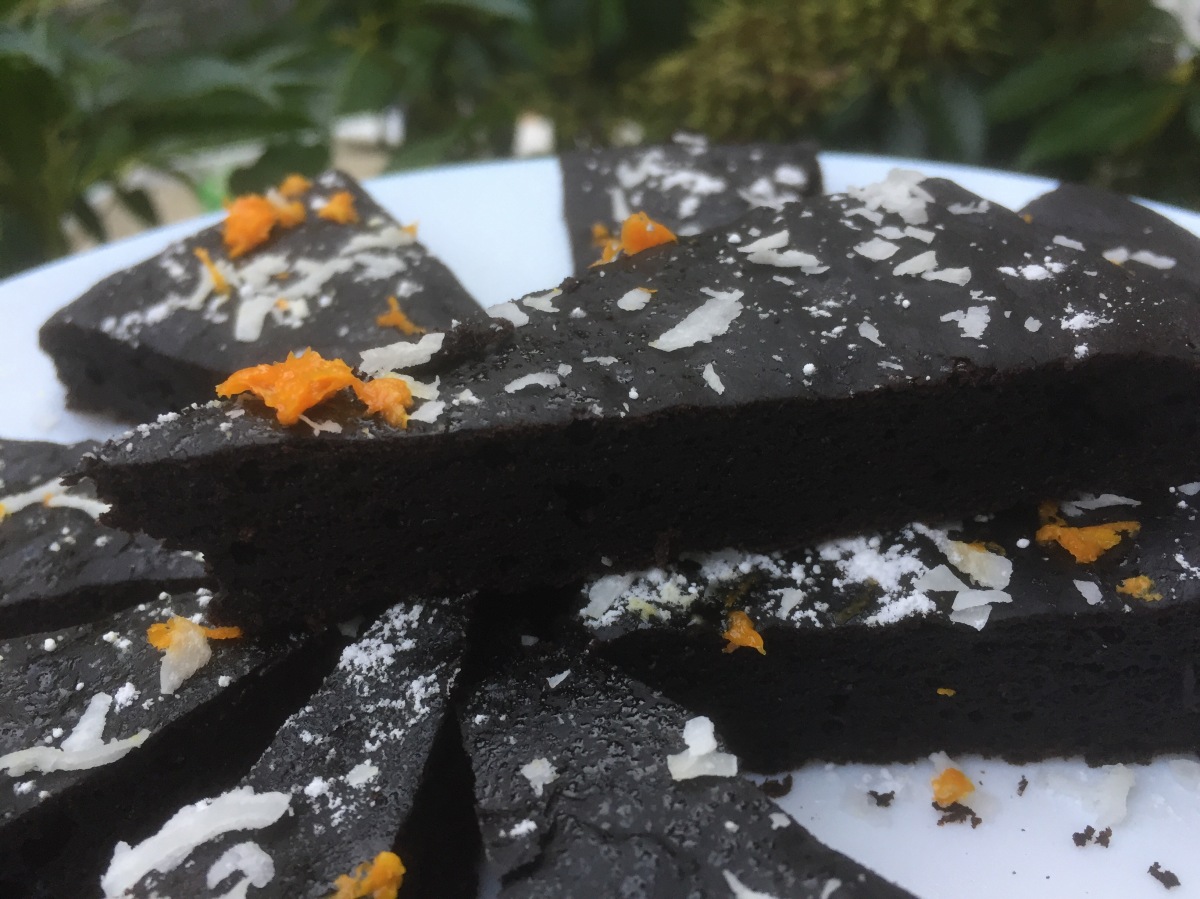
And… this being a vegan, plant-based, healthy cooking type of a blog I thought that it would be cool to say a huge “Thank You, All” with some cake. So, thanks everyone – I hope you enjoy this Dark Chocolate Brownie “Thank you!” Cake, and come back again for seconds!!!

The recipe is super simple and uses ripe bananas as an egg replacement, and lots of dark, Dutch process cocoa. It also uses a simple trick to transform almond milk into almond butter milk by adding a tiny amount of cider vinegar to almond milk and letting it stand for fifteen minutes at room temperature before using. Finally, to help the dark cocoa release its color you will need to use some hot water.

Putting all this together, you will start by mixing dry ingredients in a large mixer bowl separately from wet ingredients (all except water), combine them together and then add the hot water gradually as you mix, keeping a close eye on consistency. You want your batter to be smooth and fluid, but not completely liquid. The recipe below makes two 8 in (20 cm) round brownie cakes, or one 9 x 13 in (23 x 33 cm) rectangular cake. I recommend lining the bottom of your baking pan with some parchment paper, as this helps get the cake out. In principle you could bake this cake in a springform pan, and it should pop right out.

The cake tastes rich and decadent, yet it’s relatively light in terms of the ingredients and especially in terms of added sugar. The bananas help not only hold the cake together, but add natural sweetness to it, so you can use 1/3 amount of sugar that a cake of this size would normally use. Of course, you are not limited to sugar and can use a sweetener of your choice, including artificial sweeteners if that’s what you like or need to use.

Dark Chocolate Brownie “Thank You” Cake

What you’ll need:

1 1/2 cup all purpose flour

3/4 cup cocoa, Dutch-processed

2 teaspoons baking soda

1 1/2 teaspoon baking powder

3/4 cup almond milk, unsweetened

3/4 teaspoon apple cider vinegar

1/4 cup canola oil

2 bananas, pretty ripe, brown ok

1/2 cup powdered sugar, vegan (+ 1 tablespoon for dusting)

1 tablespoon vanilla extract

1/2 cup hot water

2 tablespoons coconut flakes, unsweetened (optional)

Zest of one orange (optional)

What you you’ll do:

  1. Preheat oven to 350 F (180 C).
  2. Mix the almond milk with apple cider vinegar (or lemon juice) and let stand for 10 to 15 minutes. This will be your almond buttermilk.
  3. In a large mixing bowl, or the bowl of your standing mixer, combine all your dry ingredients (flour, cocoa powder, baking soda, and baking powder).
  4. In a separate bowl, combine all wet ingredients except the hot water. Note that powdered sugar and the bananas count as a wet ingredients. I recommend that you use a blender to cream your bananas, although you could simply mush them with a fork. Either way, make sure that your wet ingredients are fully mixed together and as smooth as possible.
  5. Next, slowly add your wet ingredients into the dry ones. For this, I keep my standing mixer runing on low, and pour the wet ingredients in, bit by bit.
  6. Let everything combine before adding the hot water. I recommend adding 1/4 cup water at a time, slowly so that you are in full control over the consistency of your batter. It should be smooth and pour out with ease.
  7. Line two 8 in (20 cm) round cake pans with parchment paper and pour the batter in.
  8. Put in the oven for 25 to 30 minutes.
  9. Take the cake out, flip it out of the pan, and leave it to cool for 1-2 hours.
  10. Cut into wedges and sprinkle with powdered sugar, coconut flakes and orange zest. Serve and enjoy!!!
img_2724
Saying “Thank You!” with a Cake, via Eat the Vegan Rainbow

Copyright ©Eat the Vegan Rainbow, 2017

Good Morning, Sunshine! Smoothie

Good Morning, Sunshine! Smoothie, via Eat the Vegan Rainbow

It’s a bit ridiculous to share a smoothie recipe like it is a thing. After all, smoothie is nothing more than throwing couple of things in a blender and pressing a button. But, I’ve now made this version a few times, never straying from the original recipe and it is a keeper. Even people who usually refuse to drink almond milk were able to get behind this one, so I decided to share it with the world.

The recipe is super fast, super easy, super cheap, super convenient – all in a real superlative fest! All you need is a banana, five frozen strawberries, some almond milk, preferably unsweetened and vanilla flavored, a dash of unsweetened coconut flakes and a sprinkle of vegan mini chocolate chips. These last two ingredients are completely optional but they do elevate this smoothie to the seventh heaven.

I do recommend using frozen whole strawberries. First of all, they have great flavor all year round as most brands use the best looking whole strawberries for freezing. Note that you should stay away from chopped frozen strawberries because I am not so sure that you can tell what those looked likes before they were chopped, and you should definitely check that strawberries are the only ingredient in the bag, just to be on the safe side. Frozen whole strawberries are usually cheaper than fresh, and they are really handy to have on hand in your freezer to use for smoothies, or other recipes. For the purpose of this recipe you can definitely use fresh strawberries if you have some. In that case you may want to add an ice cube or two, if you like your smoothie cold. The benefit of using frozen strawberries is that no extra ice is needed – they give this smoothie a nice, subtle chill that is just fabulous for summer breakfast at home or on the go.

Final note for those who like a sturdier breakfast. This smoothie is light, has no added sugar and a minimal amount of fat that comes from the almond milk, coconut flakes and the mini chocolate chips. If you want to make this smoothie thicker and more filling, you can simply add two to three spoonfuls of rolled oats. If you are adding oats, I recommend you letting the smoothie rest for five minutes or so before enjoying to let the oats soften just a smidge.

Good Morning, Sunshine! Smoothie

What you’ll need:

1 banana

5 frozen whole strawberries (fresh will work too!)

1/2 cup almond milk, unsweetened, vanilla flavor

1 tablespoon unsweetened coconut flakes (optional)

1 tablespoon mini chocolate chips, vegan (like Enjoy Life) (optional)

2-3 tablespoons rolled oats (optional)

What you’ll do:

  1. Place chopped banana, strawberries and almond milk into a blender. If you are using oats add them now. Blend until smooth and to consistency you like.
  2. Pour into a glass or a travel jug if you are taking it on the road.
  3. Sprinkle coconut flakes and chocolate chips and walk into the sunlight, figuratively and/or literally!

Copyright ©Eat the Vegan Rainbow, 2017

Miso Glazed Tempeh, From the Grill!

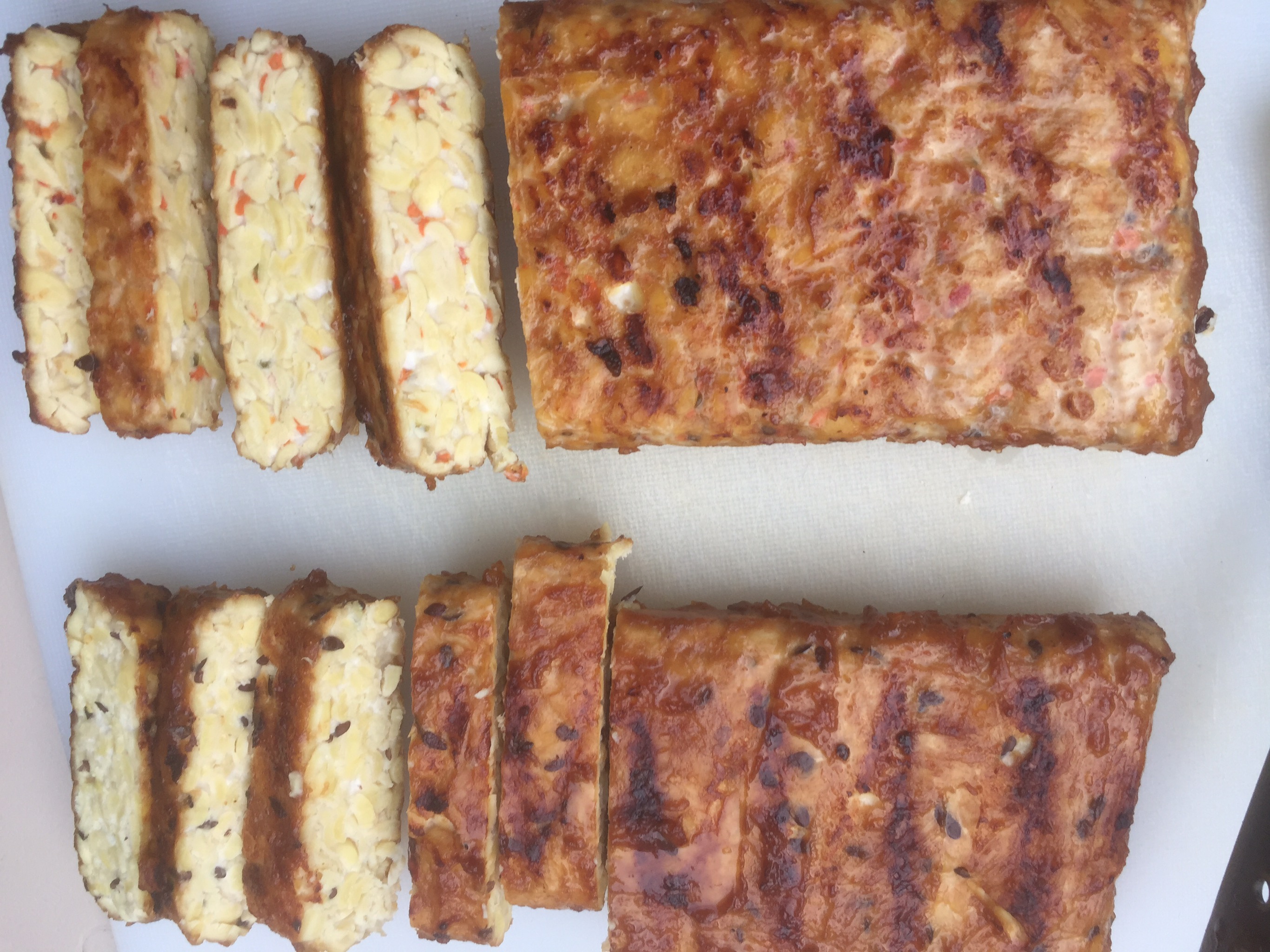
Miso Glazed Grilled Tempeh, via Eat the Vegan Rainbow

If you have not done so already, you should definitely try tempeh. I’ve been hearing about it for some time now, and seeing several different brands and varieties right next to the tofu that I usually get but I only got the first batch of tempeh just the other day. I bought several different varieties to try them out and spent few days reading about what’s tempeh good for and how to best cook with it. Tempeh is related to tofu because both are soy based. But, in terms of flavor and texture (and as far as I can tell in terms of how you actually make the two, based on what Wikipedia says), tofu and tempeh are quite different. Tempeh is firm, much firmer than the firmest tofu, and does not come in liquid. It is actually fermented soy beans mixed with rice [edited after reading comment from Mary S below – thanks Mary S, it’s good to get the facts all squared away. I am still a bit confused since the ingredients’ list of the tempeh I used did include rice; at the end of the day my confusion does not matter change the fact that the food was delicious], so although it is dry, it does feel sticky to touch and just a bit slimy. FYI: I am not saying this to freak you out, rather to forewarn you so that you are not as surprised when you start handling it as I was – I thought my tempeh has gone bad and wanted to throw it out! But, I double-checked the date on the bag, regained my cool and went for it.

I decided to start simple and build from there, so this Miso Glazed Grilled Tempeh is more or less my starting point. The brand of tempeh I got is Lightlife and the two varieties I started with are their Organic Garden Veggie and Organic Soy Tempeh. Each package is half a pound (about 250 g), and the block of tempeh comes in a vacuumed-sealed package, that’s within a sealed plastic bag, so there are two bags to remove! I used both blocks at the same time, since one just did not seem enough to make for the end of the week Friday dinner.

The first thing I did was to fire up the grill. I have a gas grill and it takes it about ten to fifteen minutes to get to be sizzling hot, with burners going at full blast and the lid down. That was just enough time for me to prep the tempeh and the glaze. For tempeh, I placed the pieces into a pan large enough to keep the pieces flat, covered with water, brought to boil and boiled for four to five minutes per side – I did flip the pieces over once since the pan I was using was shallow and the water did not fully cover the tempeh, so if your tempeh is fully covered you will not need to do the flip! After about ten minutes I took the tempeh out, pat dried the pieces, and left them uncovered on some paper towels.

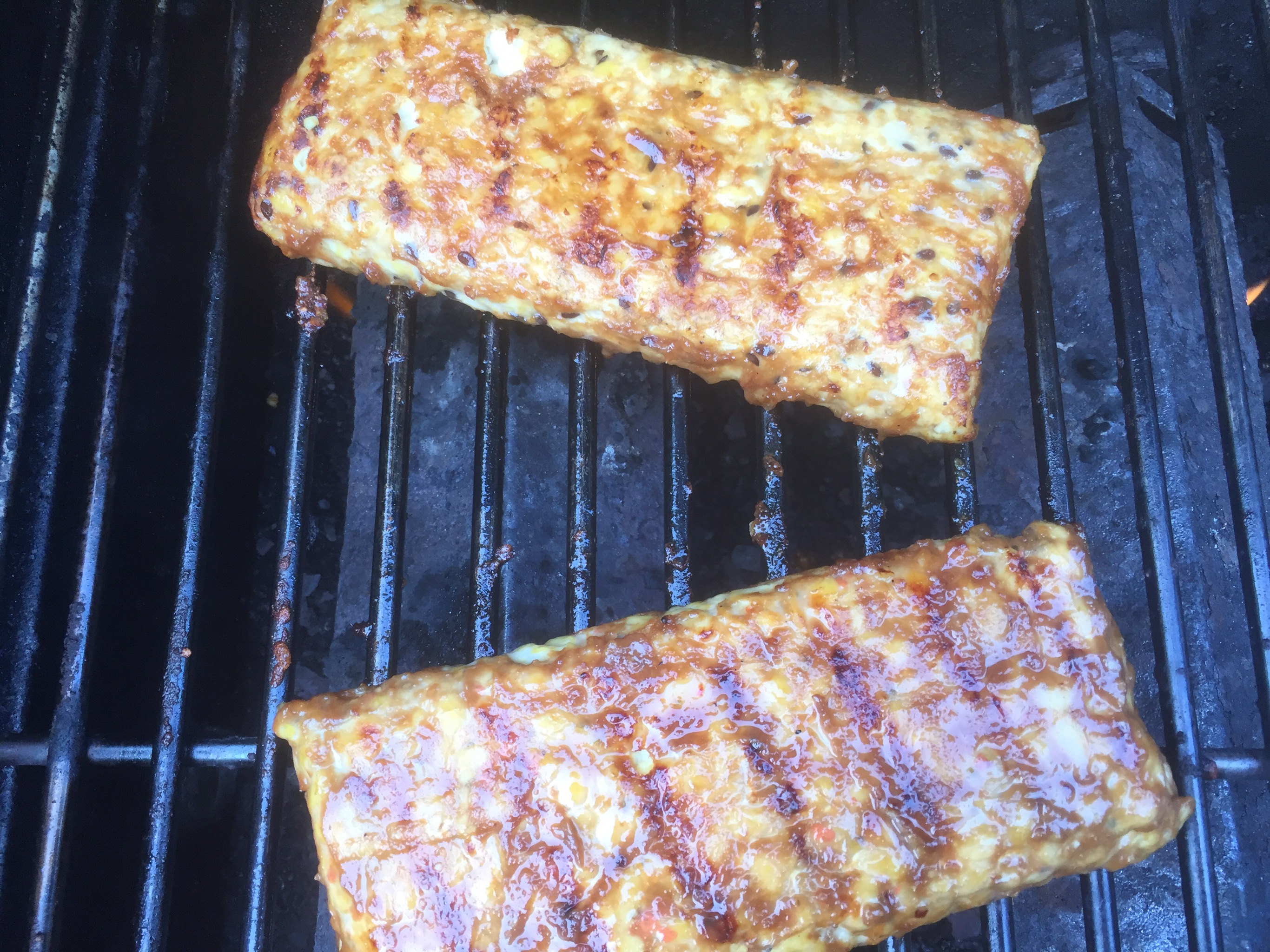
While the tempeh was boiling and the grill was heating up, I mixed together a simple glaze with some soy sauce, Worcestershire sauce, white miso glaze and vegetable oil. I spread the glaze over the tempeh pieces just before placing them on the grill the glazed side down. Then I glazed the top and let it grill for about five to six minutes. By that time the grill marks will be perfect, and the pieces ready to be flipped. I did reglaze both sides again and flipped again, so that at the end each side got two layers of glaze and about eight to ten minutes of grilling, so in total the grilling bit took less than twenty minutes. If you are in a rush, you can definitely skip the reglazing, but if you are outside hanging around the grill with friends and family and enjoying the lovely summer evening, then why not give tempeh extra love, glaze and grill time?

Let grilled tempeh rest for just a second, then slice and serve. You can serve it in a hamburger or a hot dog bun with the usual trimmings, but note that condiments, like mustard and ketchup, are going to overpower the flavor of the grilled tempeh. So, I recommend serving tempeh with a side of coleslaw and baked, or barbecue beans, which is how I had mine. Add to that a glass of cold beverage of choice, and what can be better?

Miso Glazed Grilled Tempeh Sliced, via Eat the Vegan Rainbow

Miso Glazed Grilled Tempeh

What you’ll need:

2 8 oz (227 g) blocks of tempeh (any variety and brand you like)

2 tablespoons soy sauce, reduced sodium

2 tablespoons white miso paste

2 tablespoons vegetable oil

1/2 tablespoon Worcestershire sauce (vegan)

Oil for oiling the grill grates


What you’ll do:

  1. Prepare your grill like you normally do. I recommend getting the grill really hot and letting any bits and pieces from the previous grill session burn off, then scrapping the grates with an appropriate type of a brush (please be careful here because you can really damage your grill grates if you don’t follow the manufactures instructions and recommendations), and then oil them generously with a paper towel dipped in vegetable oil – please use long tongs here to prevent getting burned!
  2. Take tempeh out of the wrapping and palace in a pan large enough to hold it flat and straight. Cover with water, bring to boil and let it boil for 5 to 10 minutes. Make sure you flip the tempeh half way through if your tempeh is not fully submerged in water. If it is, no mid-way flipping is needed!
  3. While tempeh is boiling and the grill is getting hot, mix together the glaze by whisking together soy sauce, vegetable oil, miso paste and Worcestershire sauce. The glaze should be smooth, but even if you have few lumps in there don’t worry about it – it won’t matter at the end.
  4. Place the boiled tempeh onto some paper towels and gently dry.
  5. Using a (silicone) food brush spread the glaze liberally ove the tempeh and place the piece of tempeh glaze side down on the hot grill. Keep the gas grill on medium high heat, or if you are using a charcoal grill keep it as hot as you would when grilling vegetables, veggie burgers, or mushroom or tofu steaks. Grill the glazed tempeh 5 to 6 minutes on one side, and while it is grilling apply the glaze on the other side, flip over, grill for 4 to 5 minutes, glaze, flip, grill, repeat for as long as you like.
  6. Let stand for just a moment or two, slice and serve!!! This Miso Glazed Grilled Tempeh will work as an appetizer, finger food, as well as dinner, especially with some grilled corn, veggies, coleslaw, baked or barbecue beans, or as a salad topping…

Copyright ©Eat the Vegan Rainbow, 2017

Roasted Tofu Steak Tips

Beef steak tips are tough and chewy, and slightly annoying but these tofu steak tips will have you asking for more!
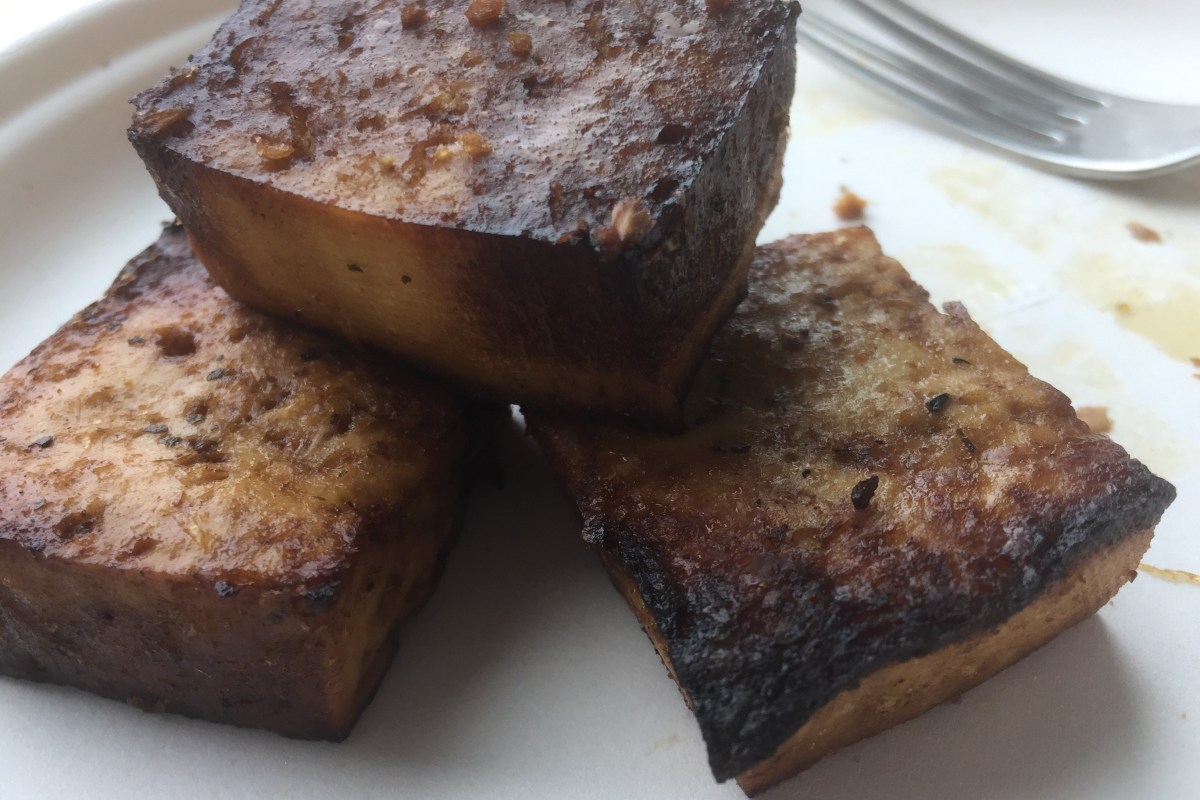
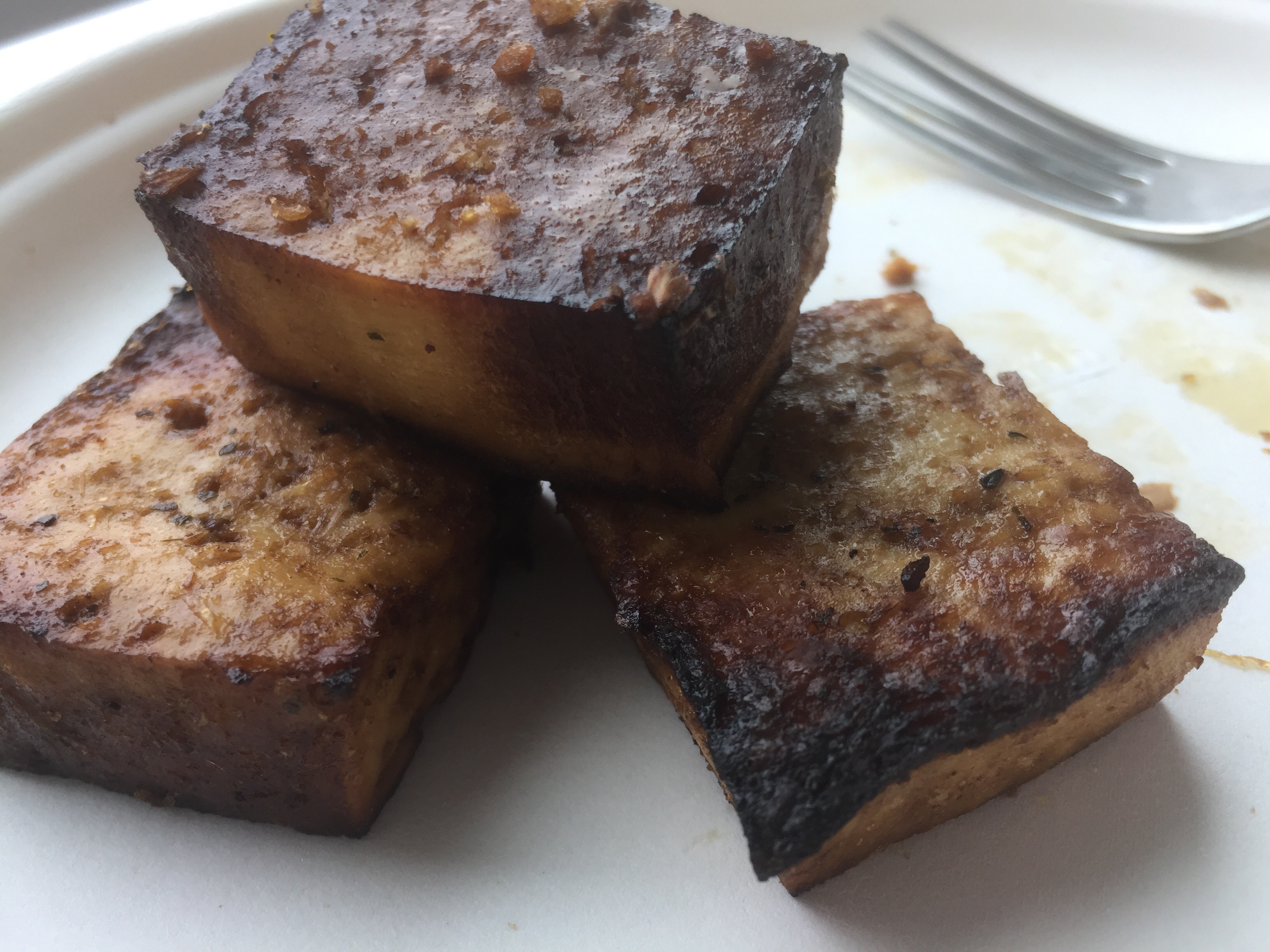
Roasted Tofu Steak Tips, via Eat the Vegan Rainbow
One of the most frequent questions that I get when I tell people that I am vegan is: “What do you eat?”. And when I explain I eat plants, then the next question is almost without a fail: “Where do you get your protein from?”.

Putting aside the fact that gluten is a protein and that, therefore, you can get protein from eating wheat bread, there are numerous other plant sources of protein. Peas and quinoa come to mind, as well as beans and chickpeas, edamame, nuts and nut butter, tempeh and tofu. This last one, tofu, does raise some eyebrows and comments along the lines of “Tofu is so bland… How do you make it taste any good?”.

Being bland is what makes tofu perfect. It is a blank canvas, ready for you to paint flavors on. I use tofu all the time, and it works in Indian inspired dishes, like Saag Paneer and Mango Chickpea Curry Tofu, in Pad Thai, grilled, as well as Popovers. An eye opening moment for me came when I realized how super easy it is to transform tofu into incredible bacon!

Tofu comes in couple of different consistencies and textures so you can pick and choose from silken to extra firm to match the recipe you are making. Extra firm tofu works well for applications where it is critical that the final product is solid and slightly chewy and that’s why I went with extra firm tofu in this Roasted Tofu Steak Tips recipe.

Most tofu recipes start with tofu pressing and draining. You can go professional and get yourself a tofu press, but I am keeping it low tech (for now) and usually just take a block or two of extra firm tofu, drain it and then leave it in a strainer for couple of hours. That usually does the trick for me. Once pressing and draining is completed, you can slice the tofu any way you like or crumble it if you are making something like a ground beef substitute.

Next comes adding flavors, which usually involves marinating, meaning letting your tofu sit in a mix of species, aromatics, and usually some liquids (oil, vinegar, citrus juice of choice, liquid smoke, or other sauces). I recommend being patient and leaving the tofu to marinate for at least an hour. But, if you are pressed for time you could use the marinade ingredients and cook the tofu in them. You will end up with something really flavorful that way as well, just not necessarily grill or broiling friendly.

These tofu steak tips can be roasted, as I did here, but they can also be made into kebabs and grilled. That was my original plan but rain interfered and I went from outdoor grilling straight into the hot oven. The tofu steak tips did not mind at all and come out absolutely delicious!

These Roasted Tofu Steak Tips are a great summer food. They are also very grill friendly and easy to transform into kebabs!
Roasted Tofu Steak Tips, Plated via Eat the Vegan Rainbow

Roasted Tofu Steak Tips

What you’ll need:

2 16 oz. block tofu, extra firm

1/3 cup olive oil

1/3 cup Worcestershire sauce (vegan)

1/3 cup soy sauce

1/3 cup balsamic vinegar

3 cloves garlic pressed

1 tablespoon dry basil

1 tablespoon dry oregano

Zest of one lemon


What you’ll do:

  1. Drain the tofu and press it using a method that works for you. I usually leave my blocks of tofu in a strainer for few hours on the kitchen counter or overnight in the refrigerator. You can do whatever your normally do to prep your tofu.
  2. Once drained, cut the tofu into 1 in x 1 in (2.5 x 2.5 cm) cubes.
  3. Combine all the other ingredients in a large freezer or food storage bag (or a large container with a flat bottom) and mix everything together. Add tofu cubes and let the tofu marinate for 1-2 hours.
  4. Preheat the oven to 450 F (230 C).
  5. Line the baking sheet with parchment paper and spread the marinated tofu cubes on it. Make sure to leave some space between them for more even roasting.
  6. Put the tofu into the oven and roast for 15 minutes. Check, turn over if needed and roast for another 10 minutes. The tofu steak tips should be brown, with charred edges. You can adjust the roasting time to fit your taste preference – I like my steak tips charred and blackened!
  7. Take out of the oven and enjoy with a salad, roasted corn, mashed potatoes, coleslaw, corn bread, pasta salad, or anything else you like. These tofu steak tips are versatile and are a great match for many of the summer favorites. And as I already mentioned they can be made into fantastic kebabs and grilled!

Copyright © Eat the Vegan Rainbow, 2017
Spicy and Cheesy Corn Muffins


img_2024
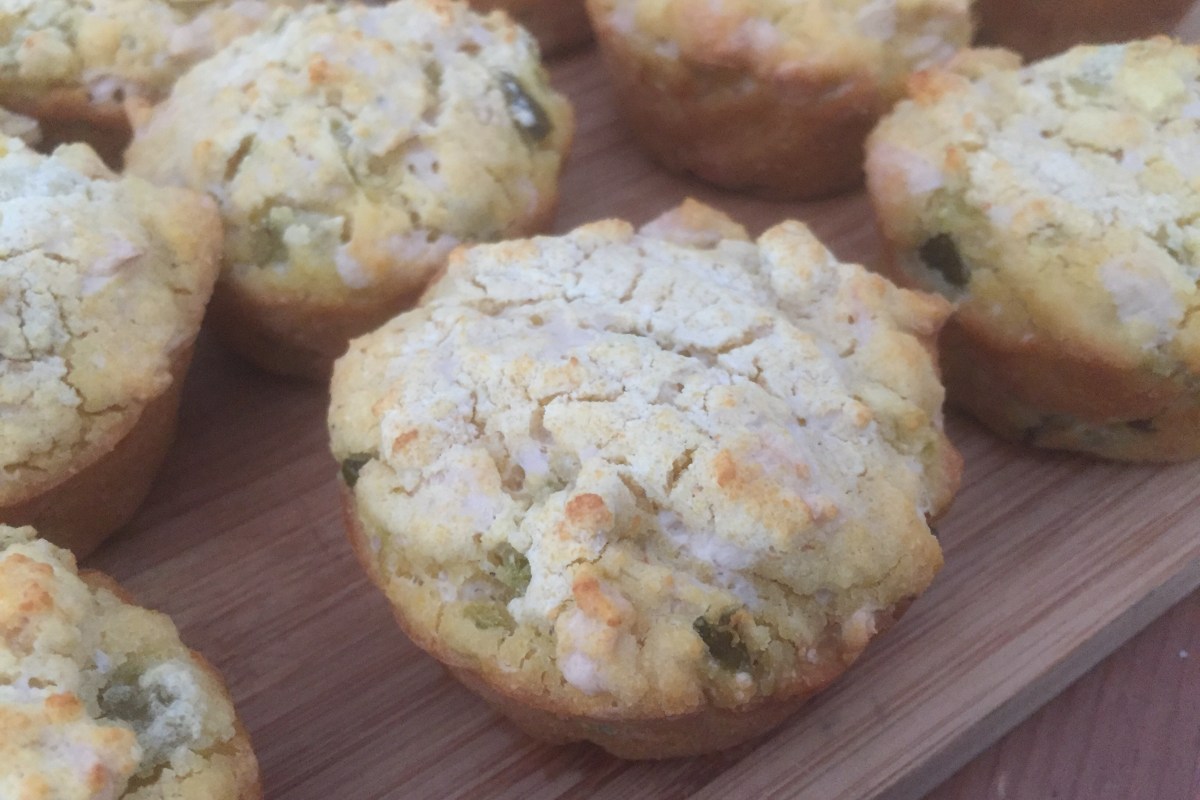
Spicy and Cheesy Corn Muffins, via Eat the Vegan Rainbow
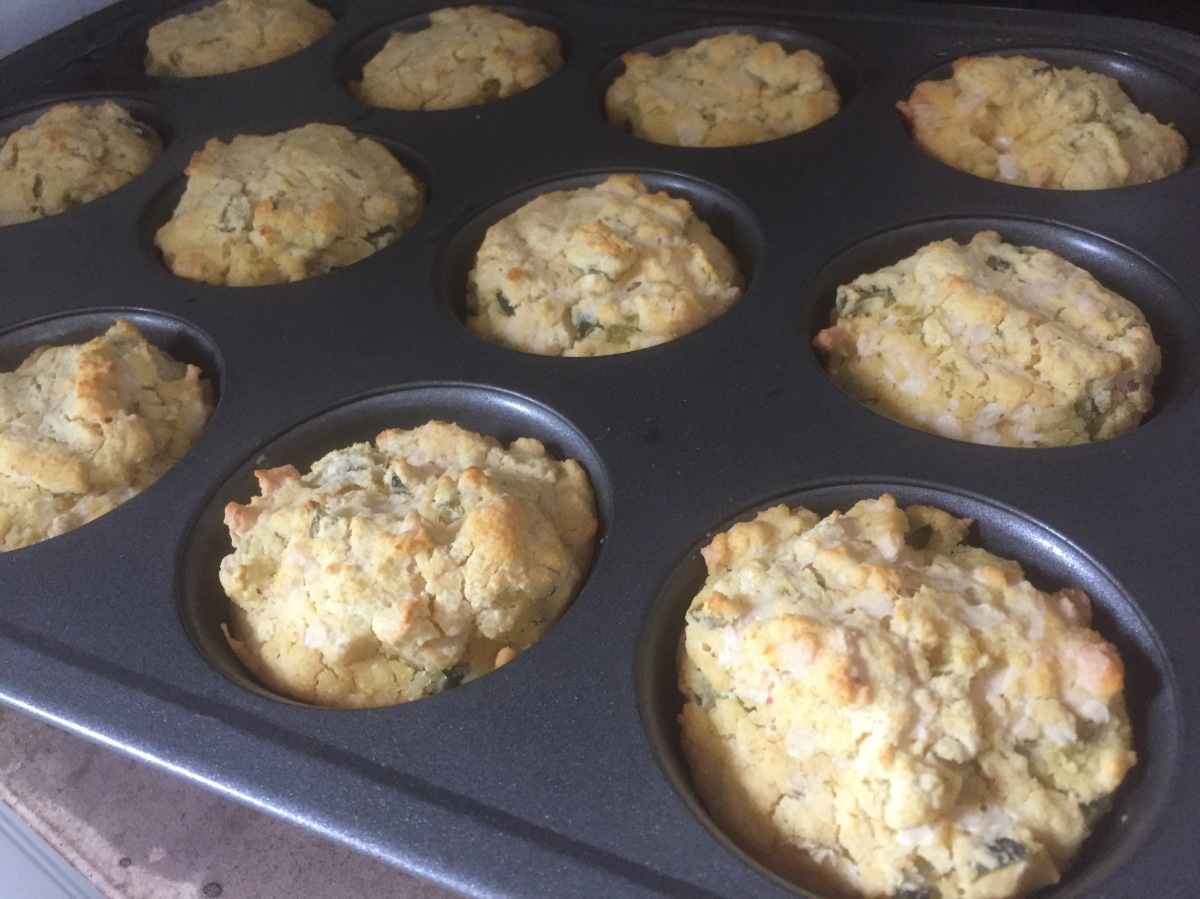
Corn bread and corn muffins are a great way to enjoy freshly baked bread but without the agony of waiting for dough to rise and wondering whether the yeast is still alive. Corn bread and corn muffins are also very customizable – you can make them into a sweet tasting treat or you can add savory ingredients and make them into a complex tasting appetizers or breakfast items.These corn muffins are spicy, thanks to a good amount of fire roasted green chili peppers and vegan pepper Jack cheese. They also include a secret ingredient- pickles! Pickles add a bit of acidity and crunch to the muffins, pushing them over the edge of plain and into the area of edgy and fabulous.

What can you serve these with? Well, they go really well with a chili or a soup like the Bean & Leek Soup with Soy Chorizo, or Balkan Cabbage and Bean Stew. The muffins are somewhat similar to Balkan Style Cornbread but they do use green chilis and pickles whit gives them a very specific and spicy flavor. This means that they work well as appetizers, especially when paired with some guacamole. They are great for breakfast or a quick snack, and would complete any salad. They are best fresh from the oven, but should keep well for couple of days.

img_2027
Spicy, and oh, so cheesy, Corn Muffins, via Eat the Vegan Rainbow

Spicy and Cheesy Corn Muffins

What you’ll need:

1 1/2 cups yellow corn meal

1/2 cup corn starch

1 cup rice flour

1/2 teaspoon baking soda

1 teaspoon baking powder

1/4 teaspoon salt

2 pickles, finely chopped

4 oz (113 g) fire roasted diced green chiles

1 cup shredded pepper jack cheese, vegan

1 1/4 cup seltzer water

Cooking spray

What you’ll do:

  1. Preheat the oven to 400 F (205 C).
  2. In a large mixing bowl combine all the ingredients except seltzer water and mix well.
  3. Add 1 cup of water and mix. Keep adding the last 1/4 cup gradually to make sure your batter is smooth but not runny. Let stand for 10 min.
  4. Spray the muffin tin with cooking spray and divide the batter into 12 even amounts.
  5. Place the muffins in the oven for 10 min, then lower the heat to 350 F (180 C) and bake for another 25 to 30 minutes.
  6. These corn muffins come out bright yellow and are ready to eat after you let stand and cool for 10 to 15 minutes.


Copyright © Eat the Vegan Rainbow, 2017